Collections
Distinct characters.
A shared sense of place.
Veyra
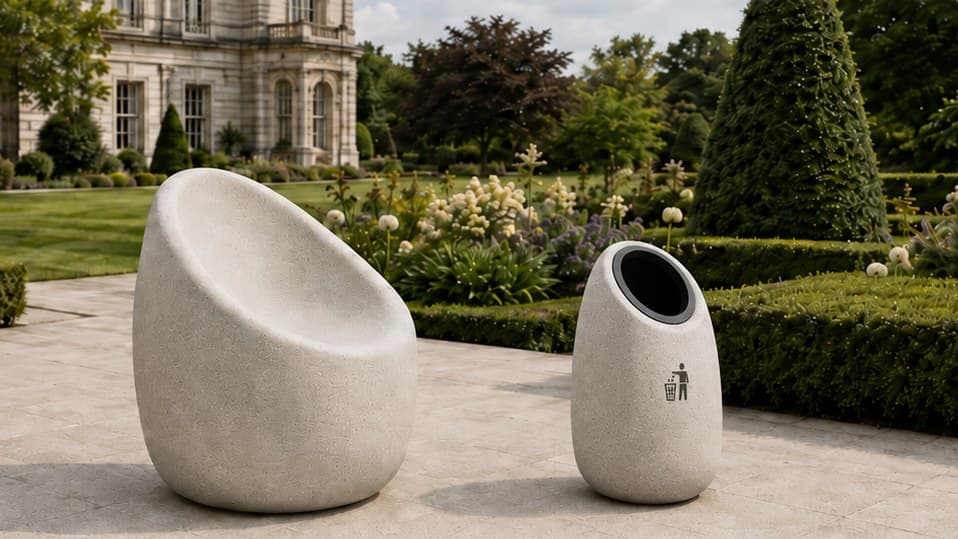
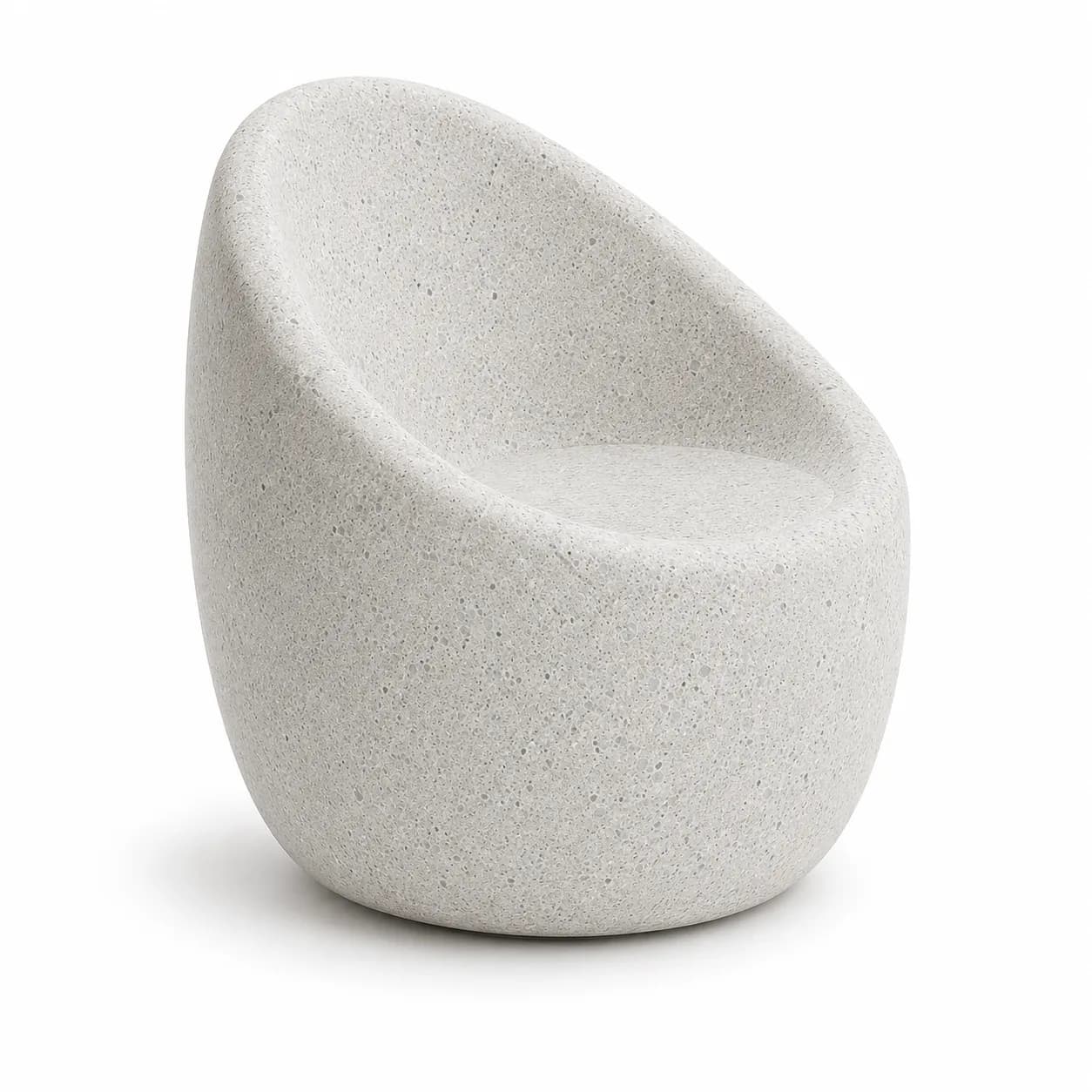
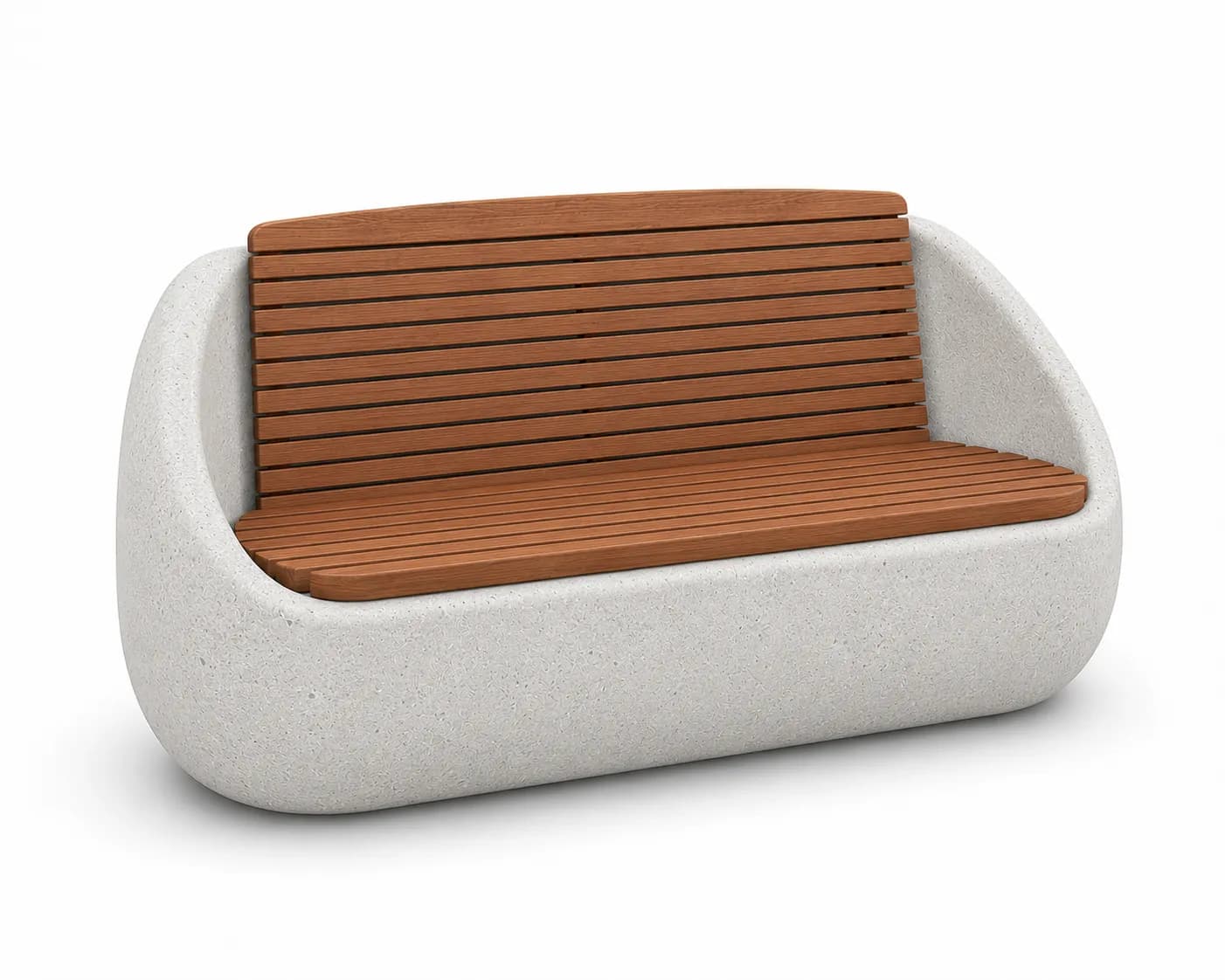
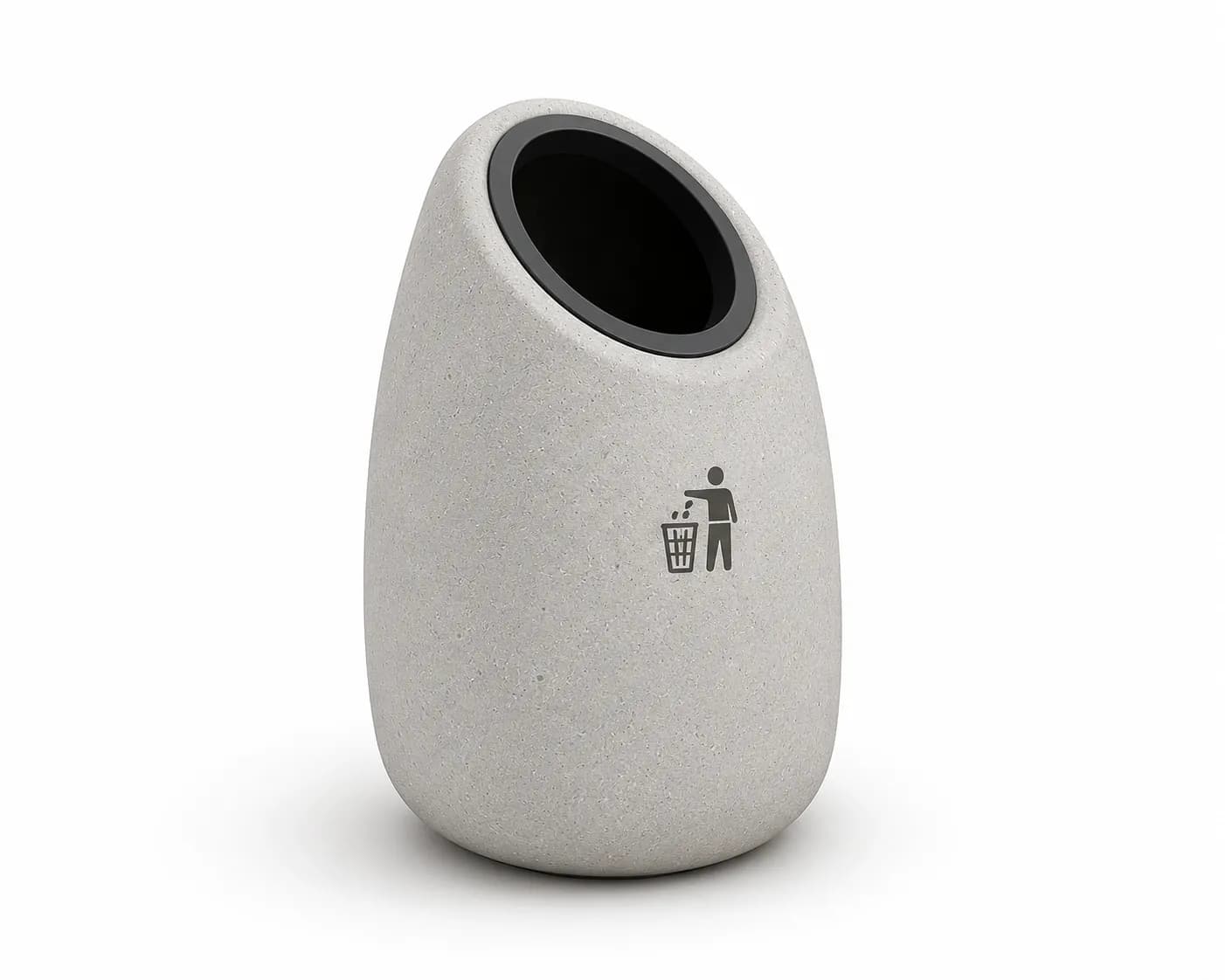
Veyra is an urban furniture family that reinterprets the strength and permanence of concrete through soft, continuous surfaces. Rounded volumes and fluid transitions give each element a sculptural character that can be perceived from every direction, without relying on a dominant front or rigid geometry.
Read the design story
From the single seat to the bench and litter bin, the family develops one formal idea across different functions. In the bench, the solid concrete volume embraces a warm wooden surface, creating a deliberate balance between material weight and tactile comfort while clearly defining the seating area. In the single seat, the same language evolves into a simple, embracing volume shaped around the user.
Veyra's calm geometry is designed to coexist with architecture rather than compete with it. It can stand confidently as an individual object in plazas, pedestrian areas and parks, while combinations of different Veyra elements establish a consistent spatial identity across the public realm.
Arvia
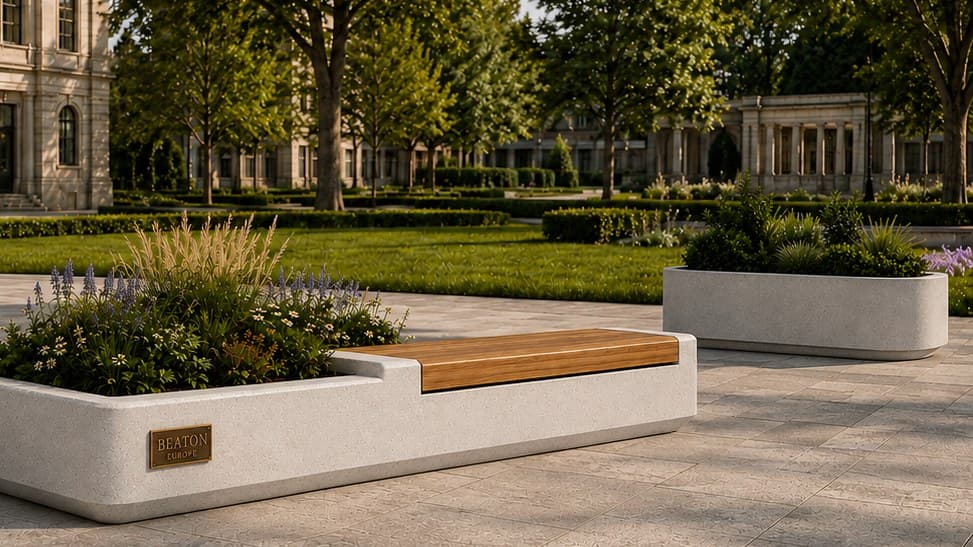
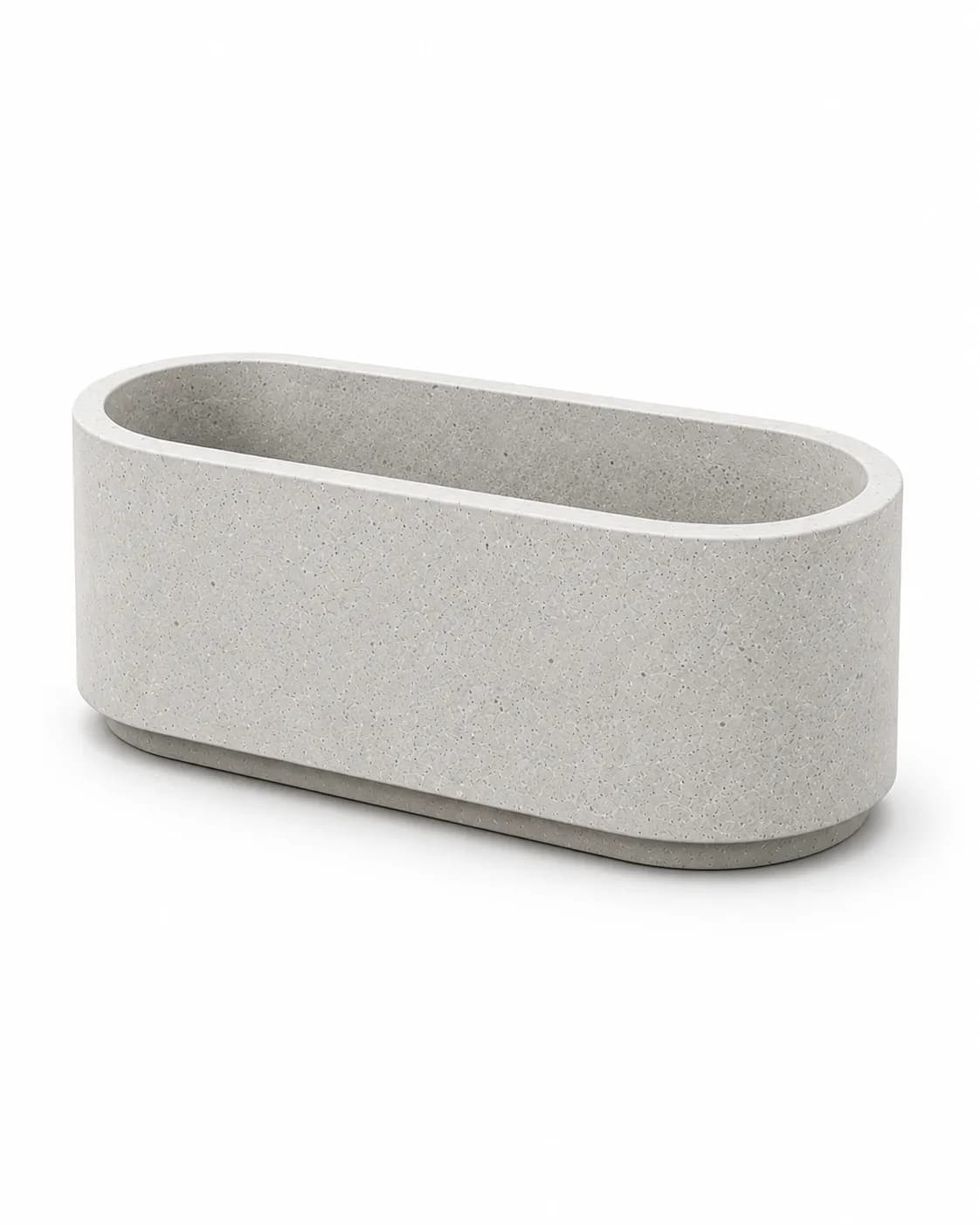
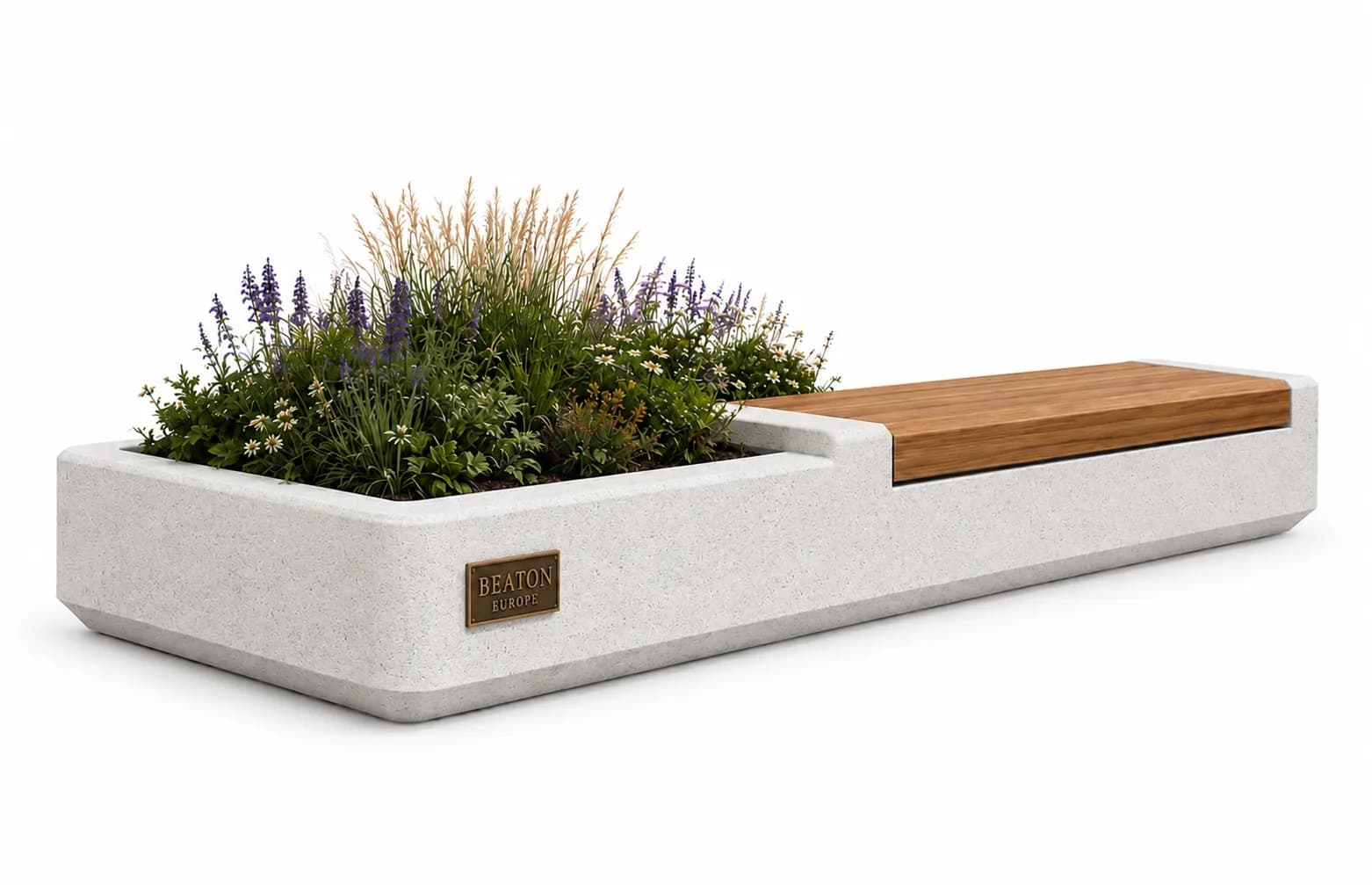
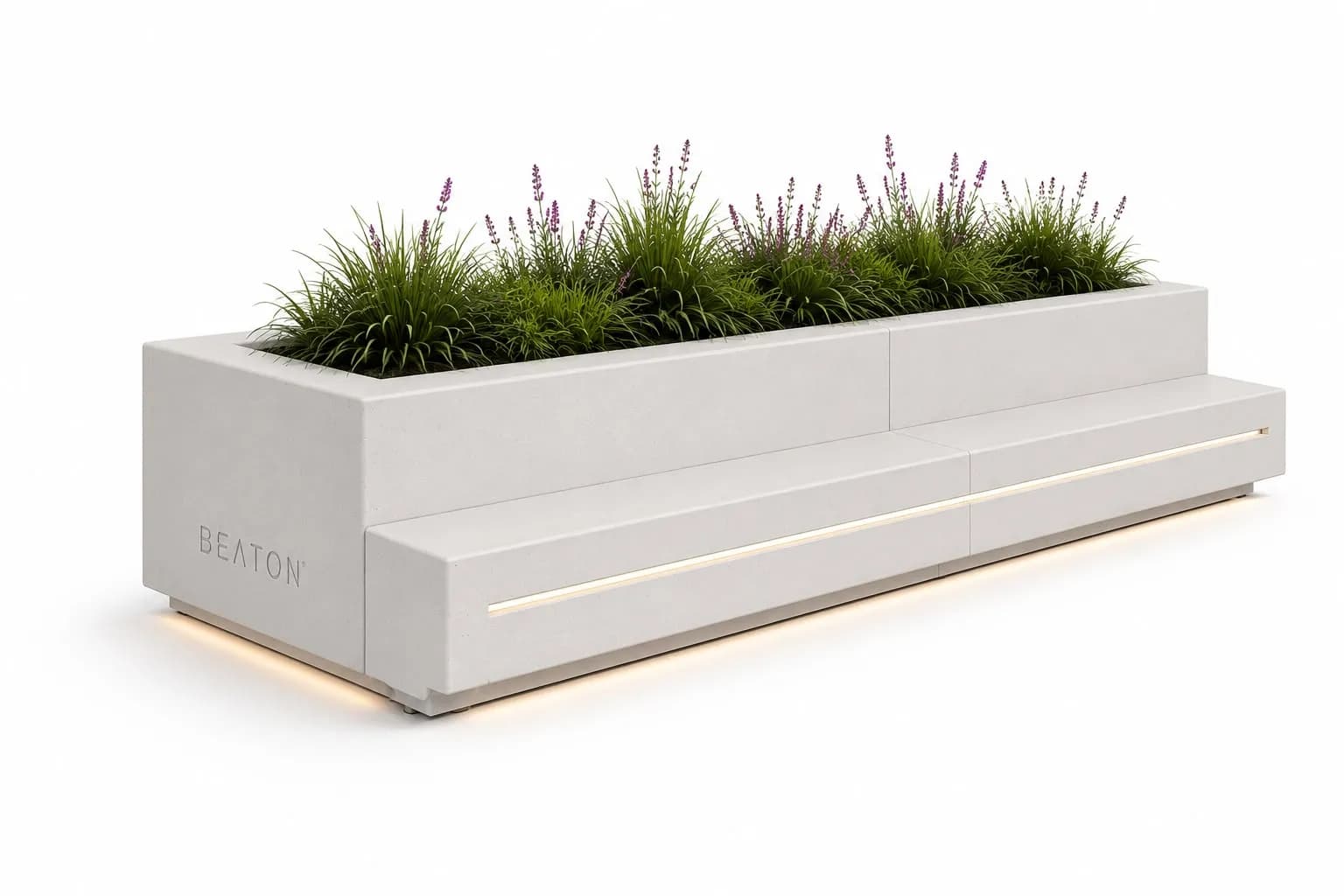
Arvia is an urban furniture family that brings planting and seating together within a calm and architectural composition. Its elongated horizontal form and softened corners give the design a strong yet restrained presence, allowing landscape to become an integrated part of the public realm.
Read the design story
In the planter, the generous planting area introduces greenery into hardscape environments while the compact body creates a clear and orderly boundary. In the seating version, the timber surface adds warmth to the concrete mass and establishes a direct relationship between the user and the surrounding planting. By allowing both functions to continue along the same horizontal line, Arvia reads as a unified composition rather than a combination of separate elements.
Suitable for plazas, pedestrian areas, campuses and institutional outdoor spaces, Arvia can define landscape, create places to pause and bring visual order to the surroundings. Its restrained geometry allows it to complement architecture without competing with it, giving the family a balanced and timeless character.
Belvar
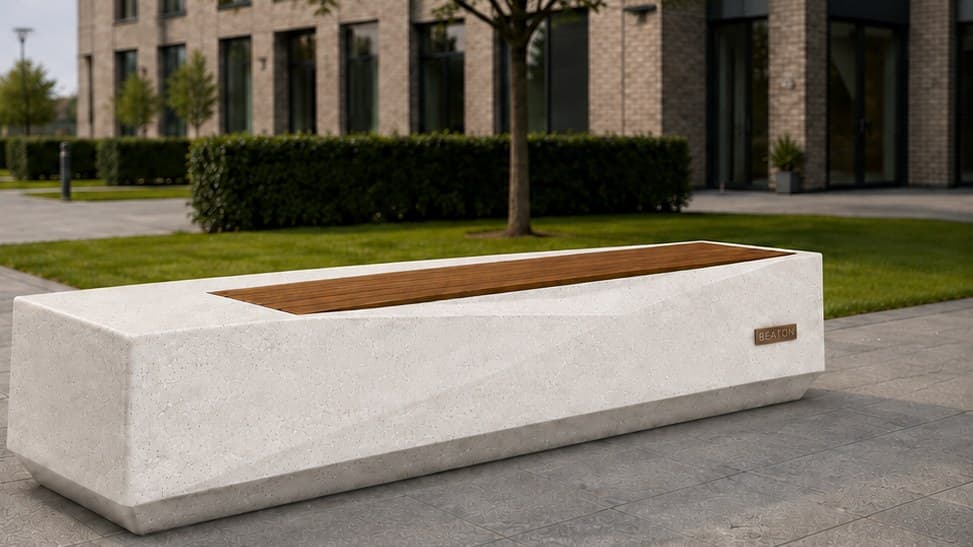
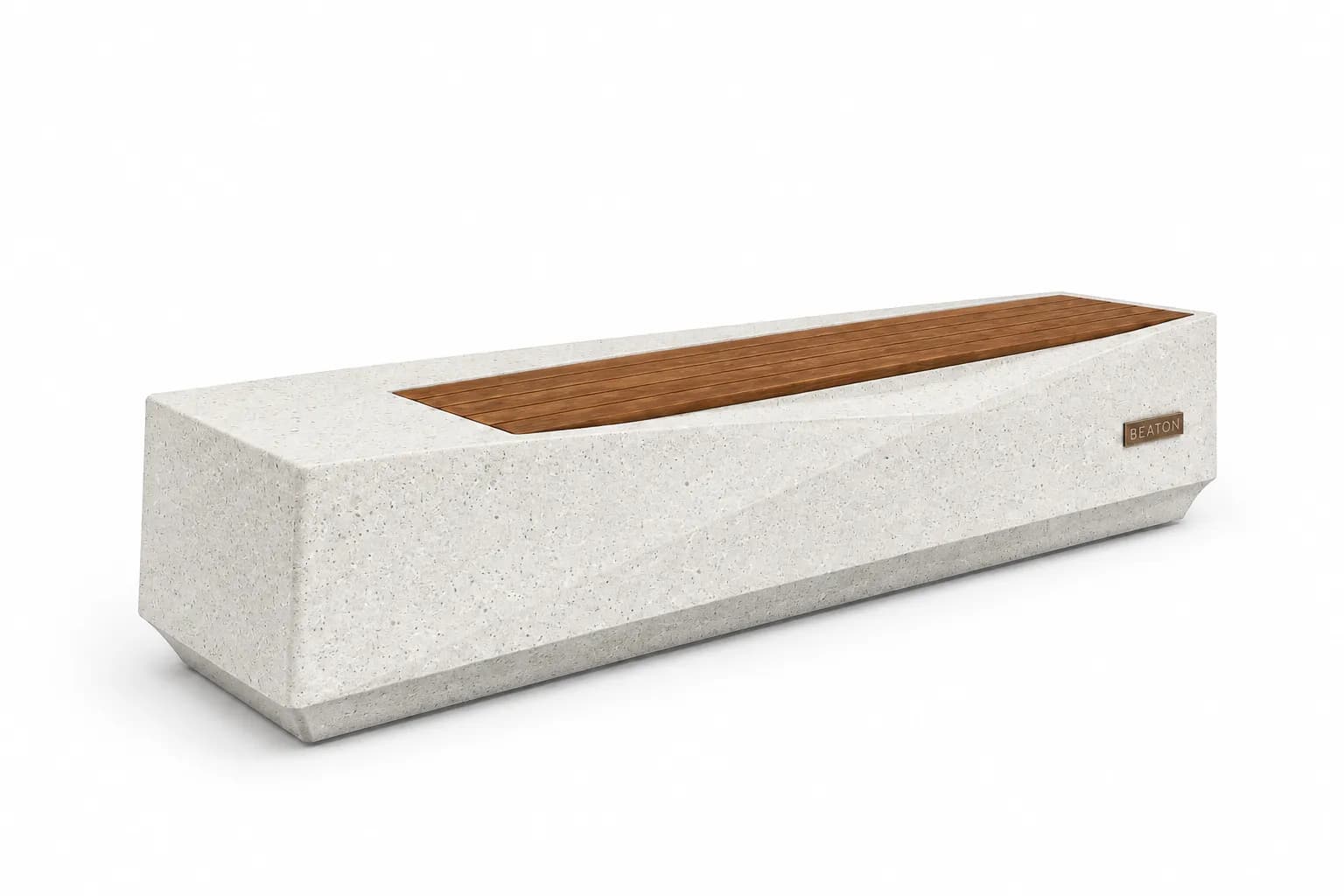
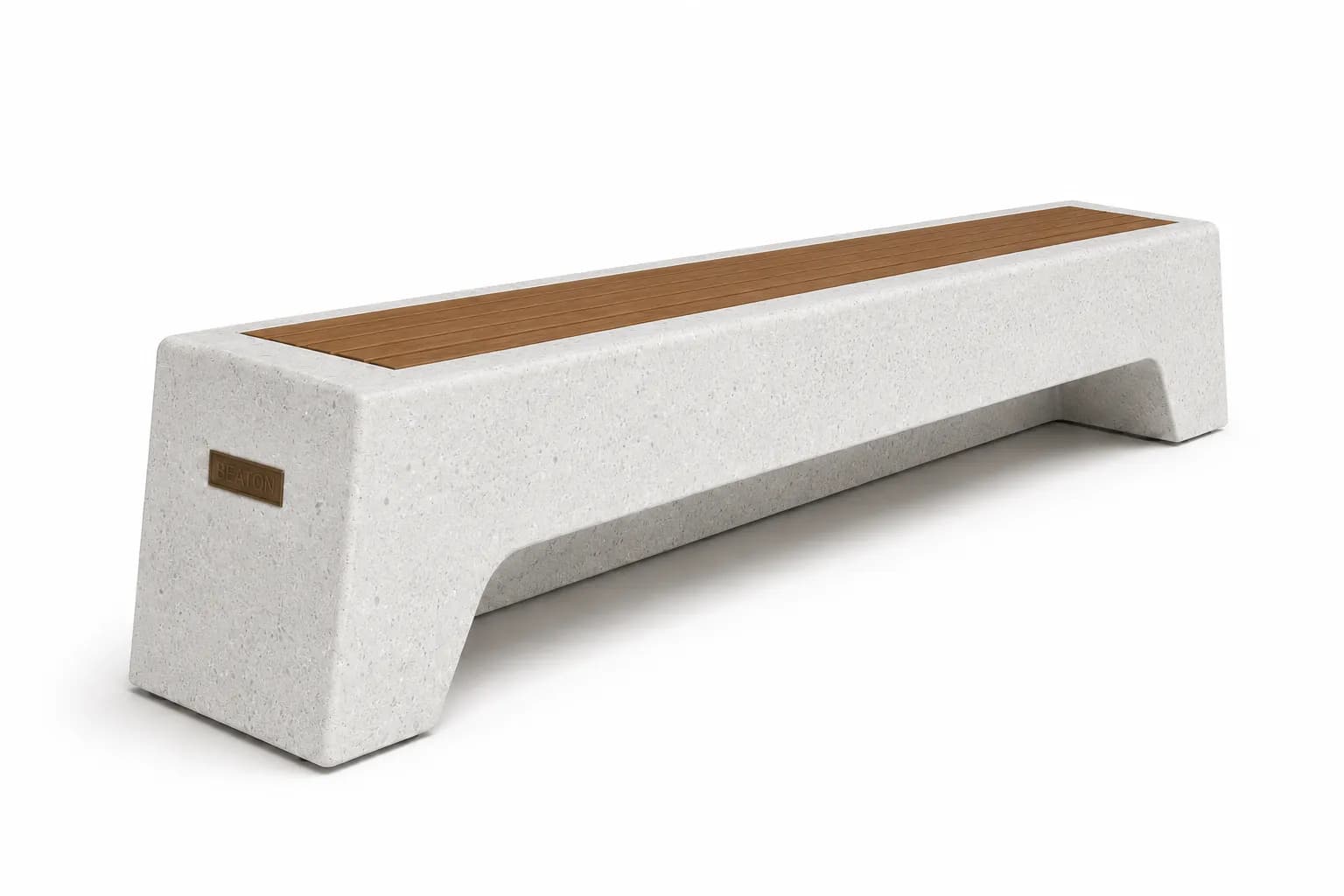
Belvar is an urban furniture family defined by a strong massing language refined through simple and controlled detailing. Its long, low concrete body establishes a clear horizontal line within the landscape, while the faceted transitions along the lower edge introduce movement and visually lighten the solid volume.
Read the design story
A timber seating surface creates a deliberate contrast with the concrete, adding warmth at the point of contact with the user. The broad uninterrupted surfaces give Belvar a calm and substantial presence, while the recessed lower profile reduces its visual weight and creates a more balanced relationship with the ground.
Belvar is suited to plazas, institutional outdoor areas, pedestrian routes and contemporary architectural settings where a restrained but distinctive seating element is required. Without relying on decorative gestures, it creates a strong architectural presence through proportion, surface and material balance.
Cresa
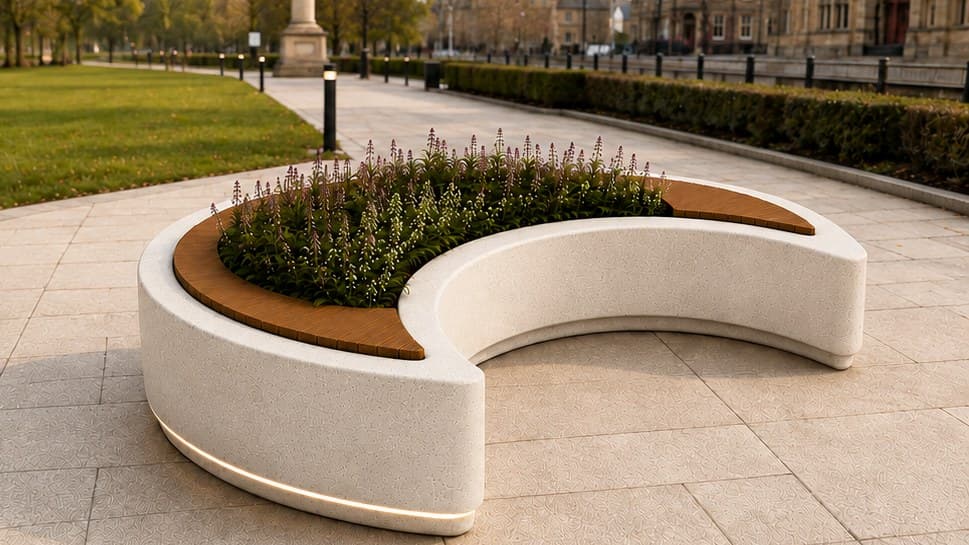
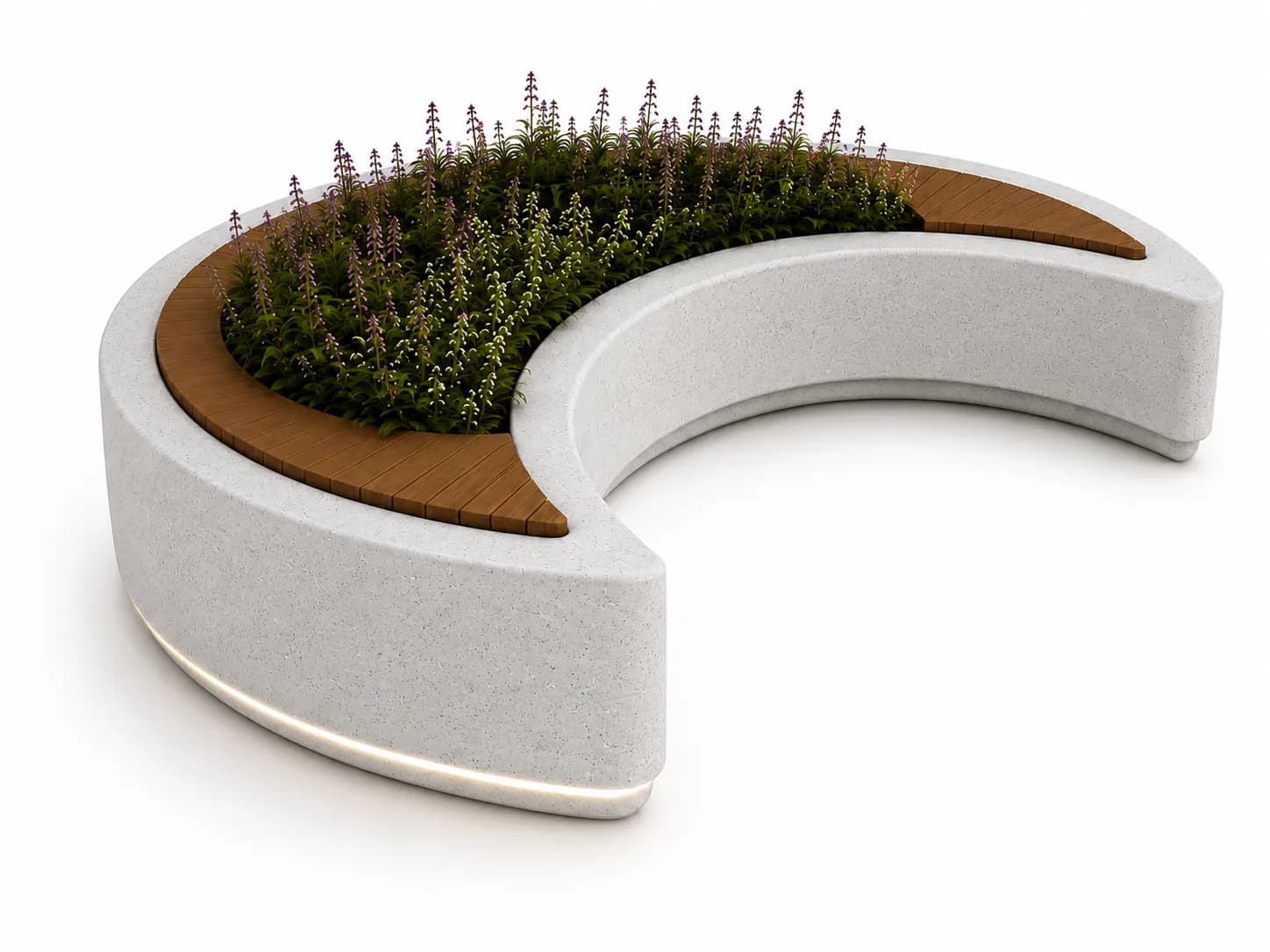
Cresa is an urban furniture family that brings planting and seating together around an open curve, creating a clear sense of direction within public space. Its continuous yet incomplete circular form embraces the user while allowing movement to flow freely through and around the composition.
Read the design story
The broad concrete curve defines a strong landscape focus, while timber seating surfaces introduce warm and inviting points of contact within the solid structure. By positioning seating at different points along the arc, Cresa supports varied orientations and encourages more natural forms of encounter. Integrated lighting along the lower edge extends the movement of the form into the evening, reinforcing its presence after dark.
In plazas, parks, campuses and generous pedestrian environments, Cresa works as more than a place to sit. It becomes a small-scale landscape element that helps organize circulation, frame greenery and create opportunities for social interaction within the public realm.
Halo
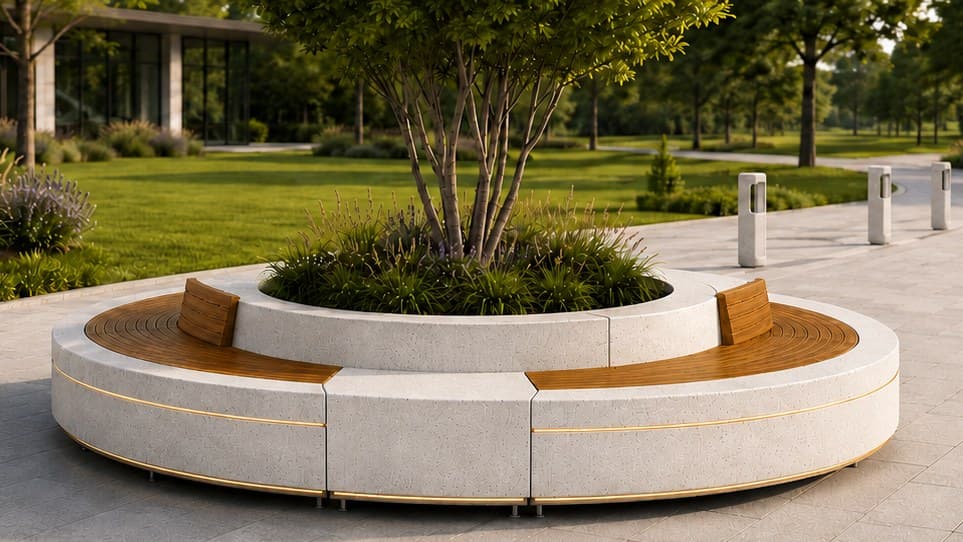
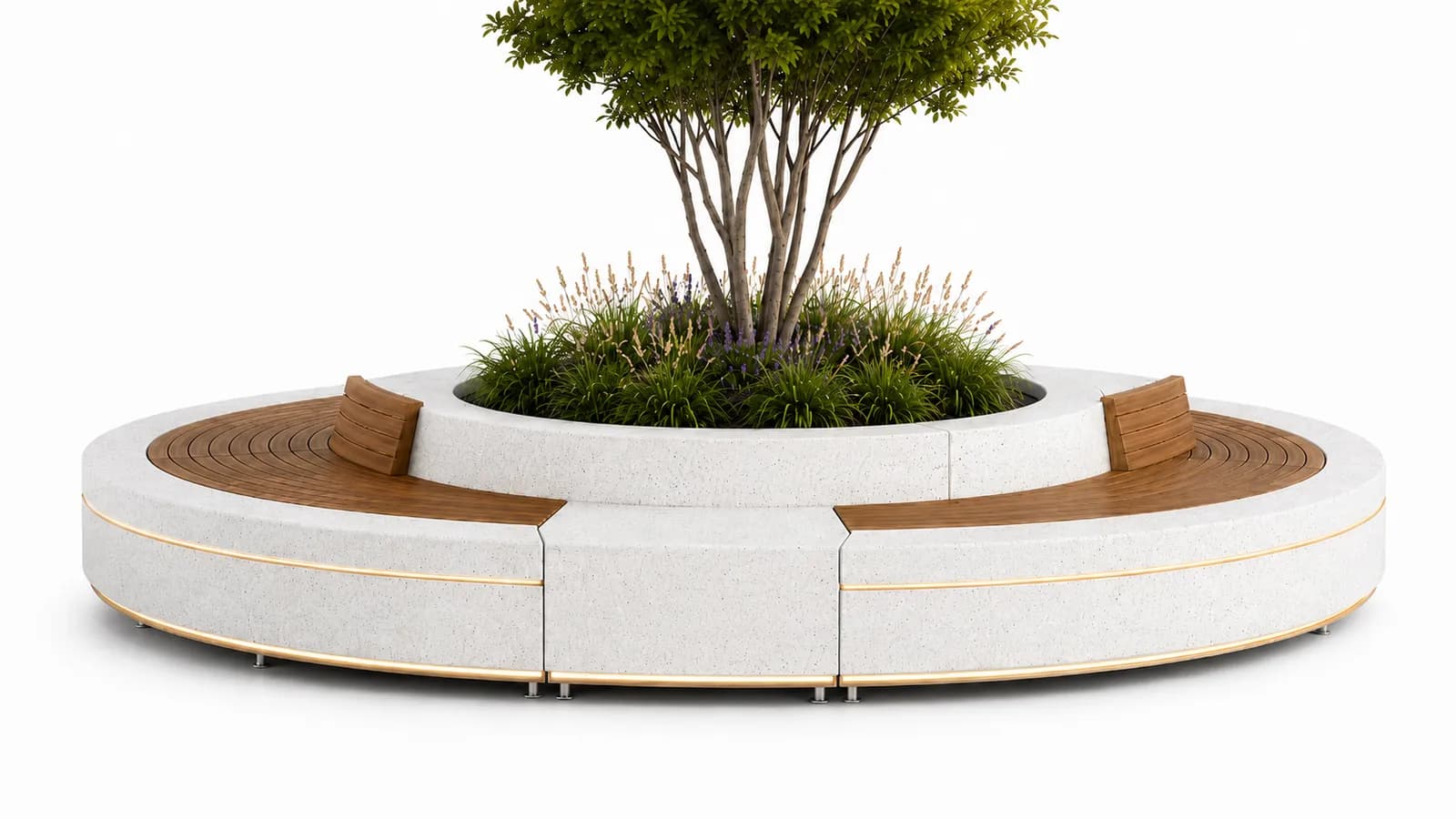
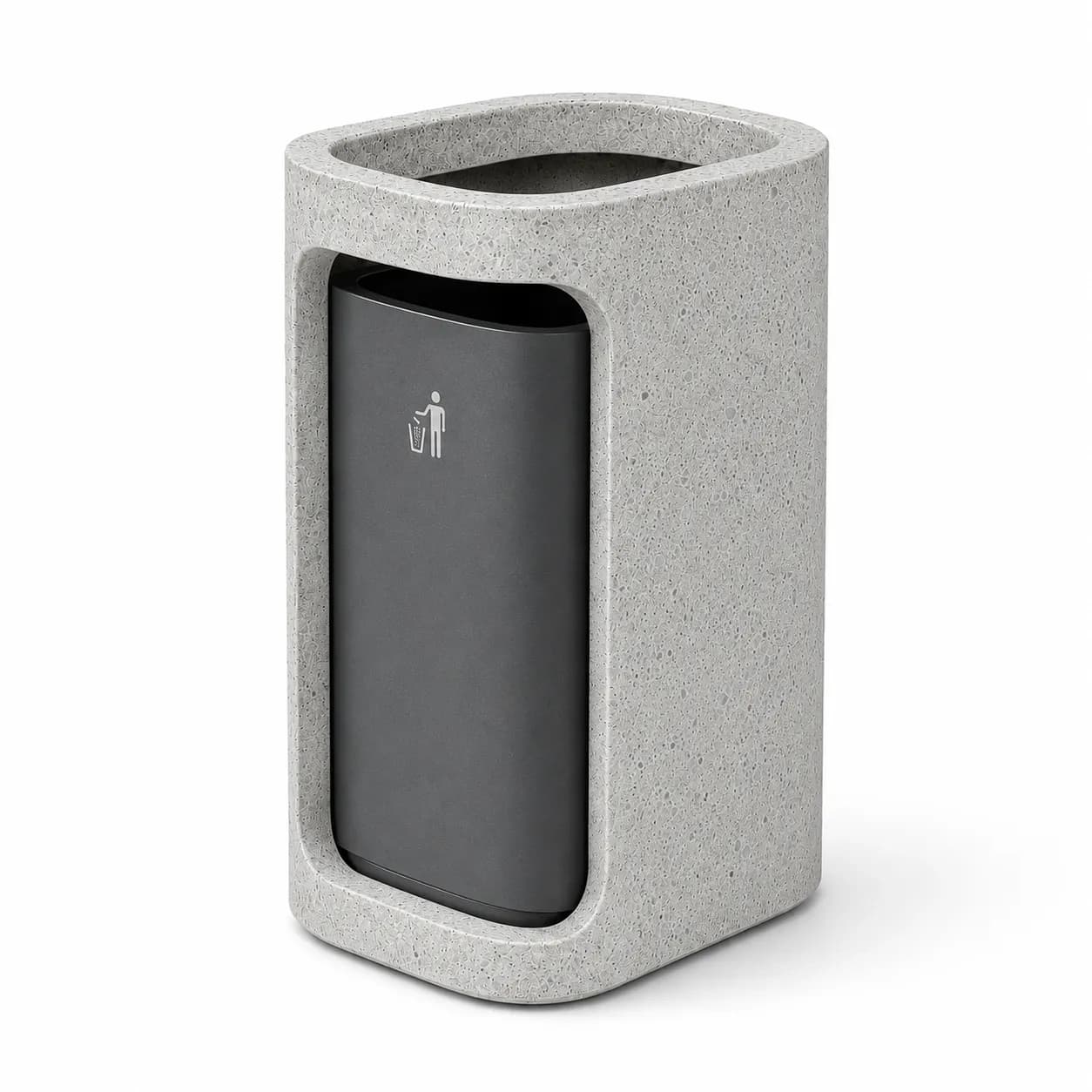
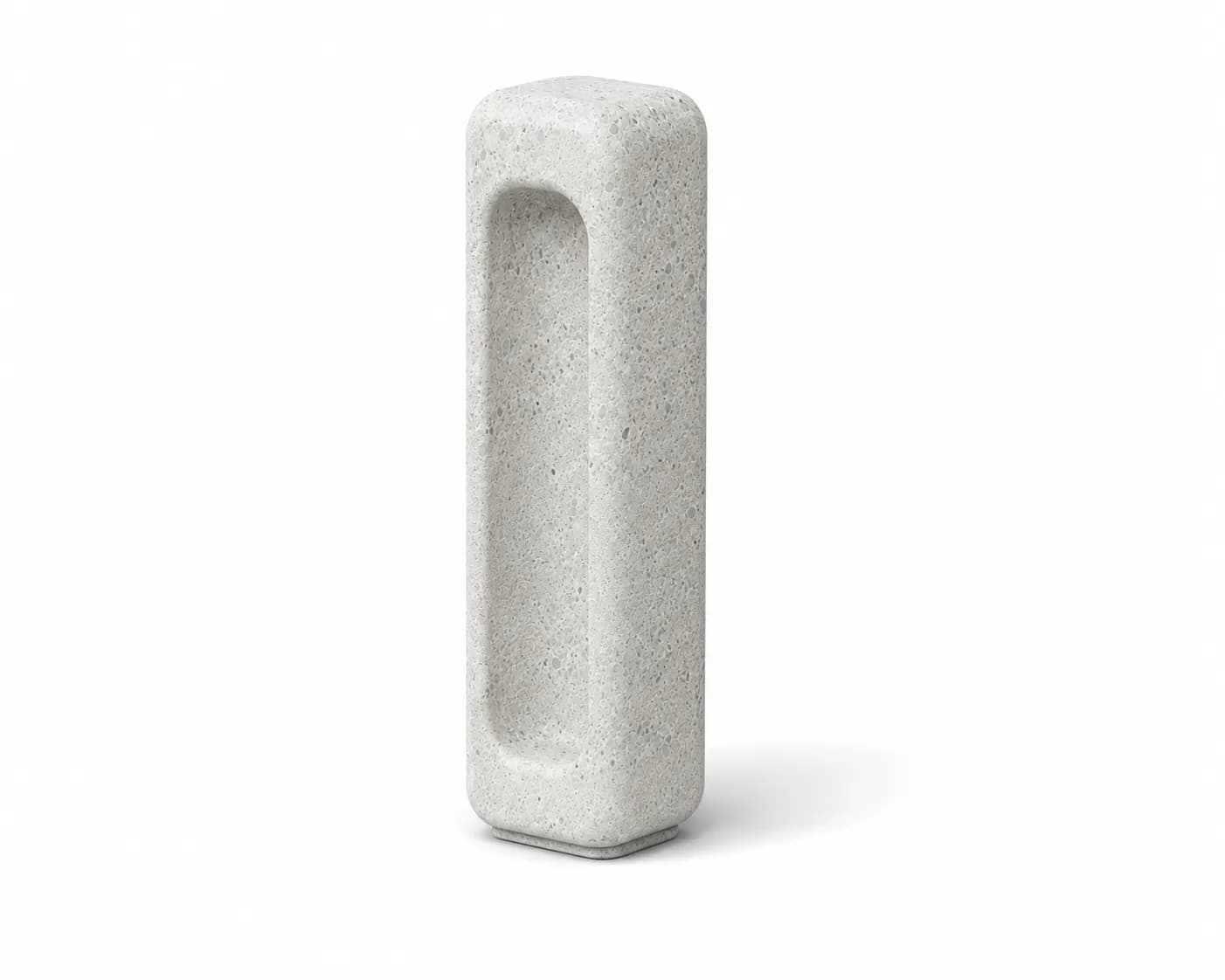
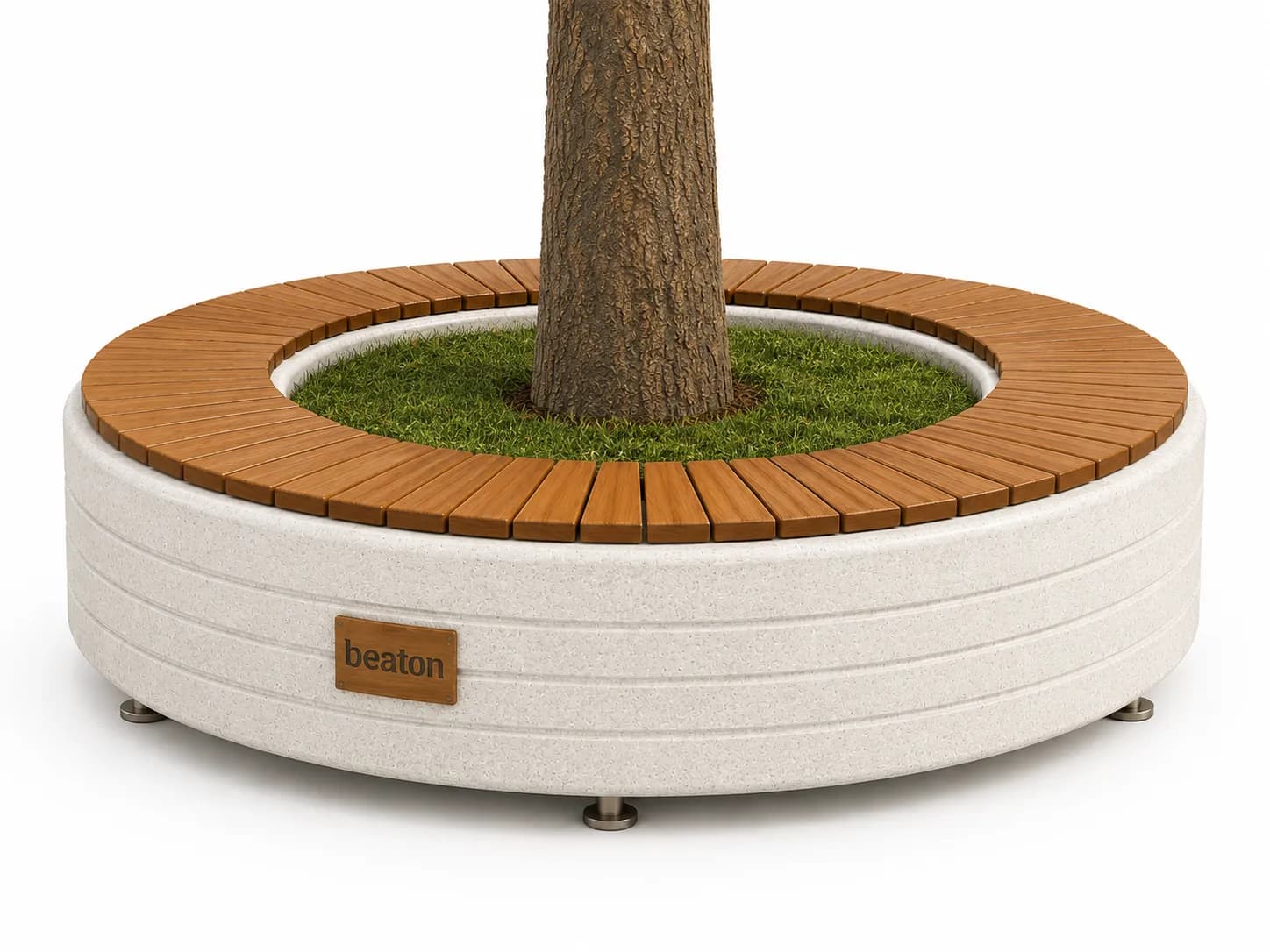
Halo is an urban furniture family built around the idea of enclosure and the relationship between solid form and open space. Softened rectangular and circular geometries define deliberate voids at the centre of each element, creating a strong yet restrained visual identity.
Read the design story
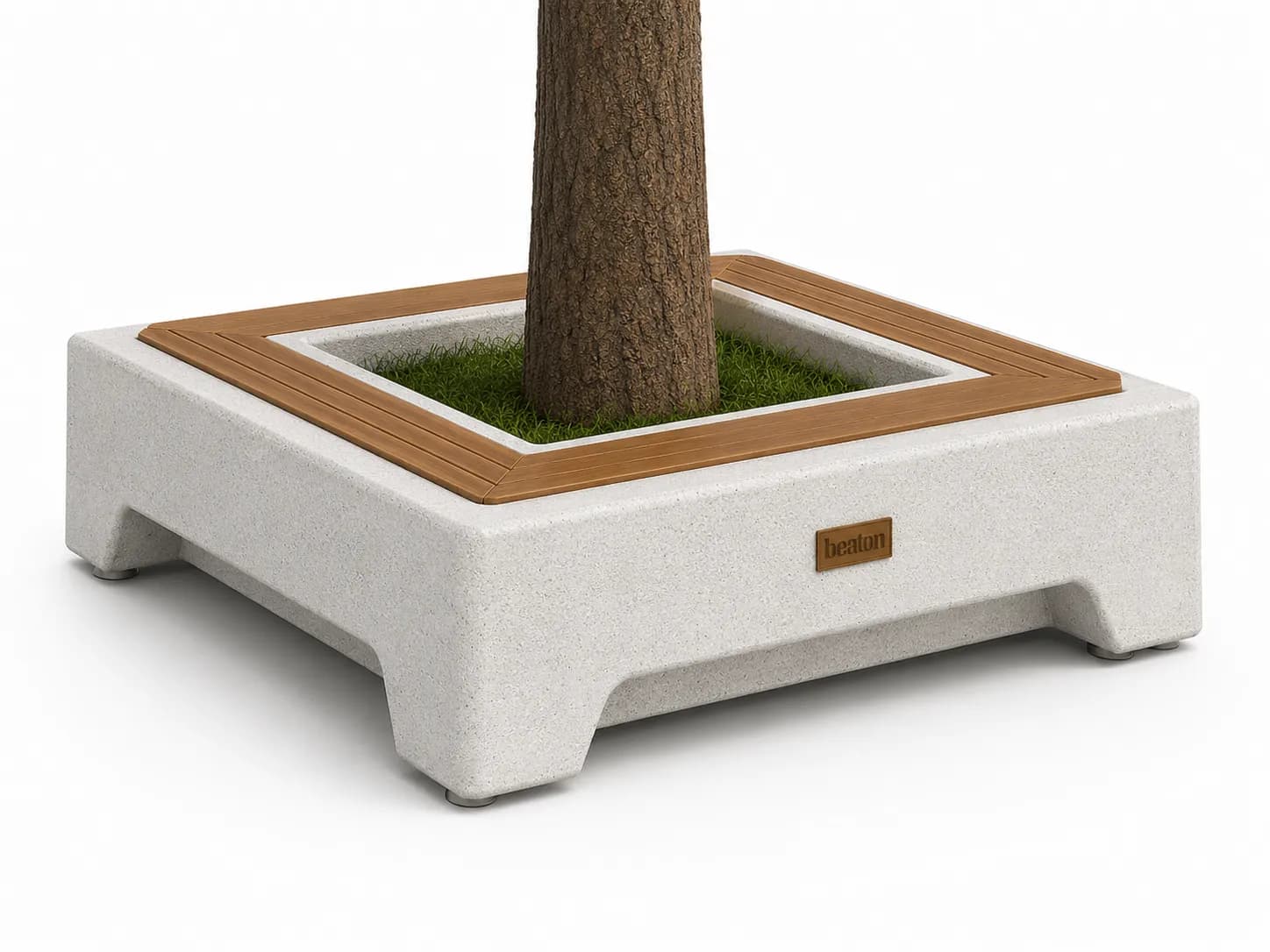
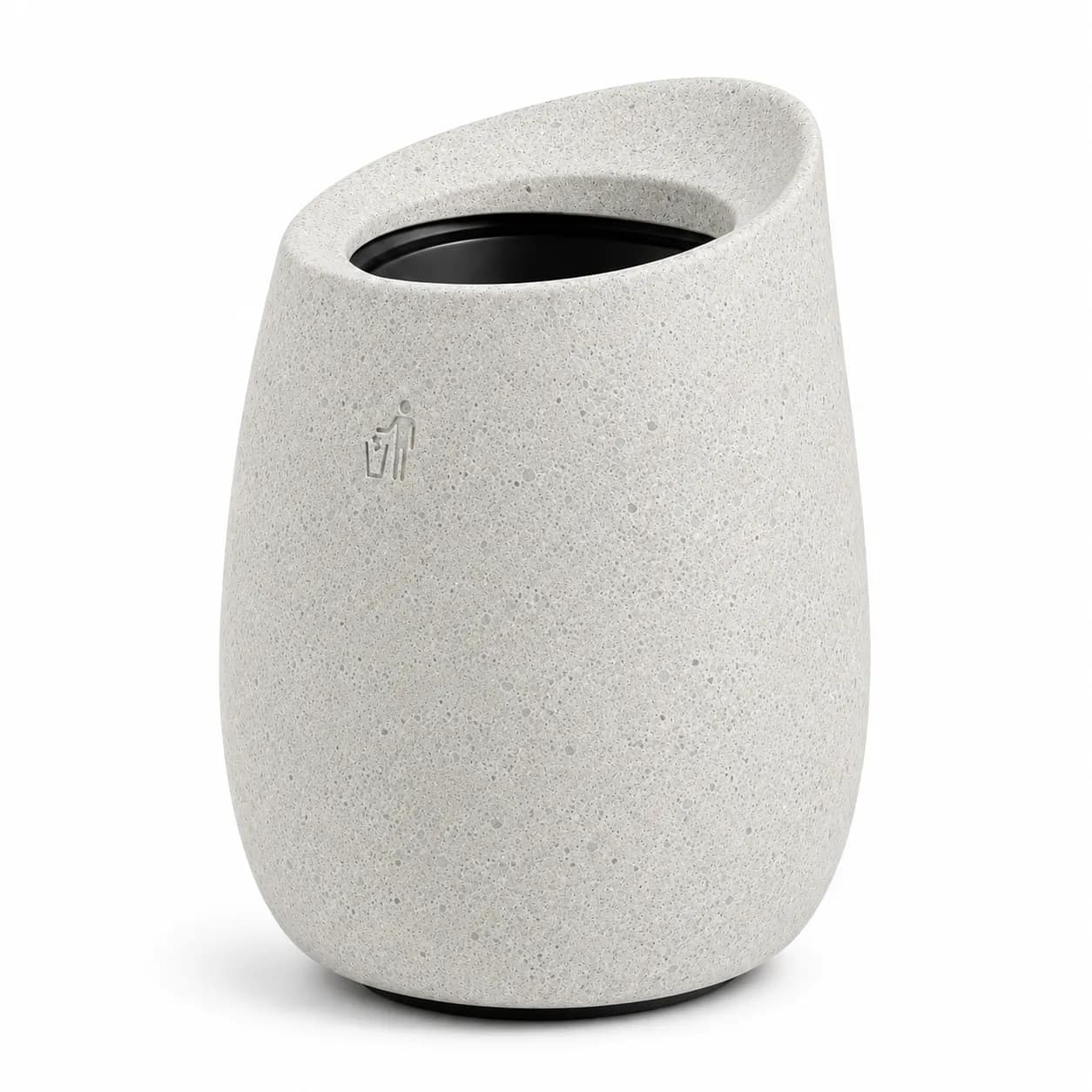
In the tree bench, this principle becomes a circular gathering space organized around landscape. The timber seating surface forms a continuous line around the tree, while the concrete body and integrated lighting clearly define the boundary of the composition. In the litter bin, the outer shell frames the functional inner volume; in the bollard, the same language is reduced to its purest expression, where an open void becomes the defining feature rather than a solid mass.
Through this recurring principle of framing and enclosure, Halo creates a recognizable family identity across different functions. From parks and plazas to pedestrian areas and campuses, it brings seating, waste management and boundary elements together within one coherent design language.
Liora
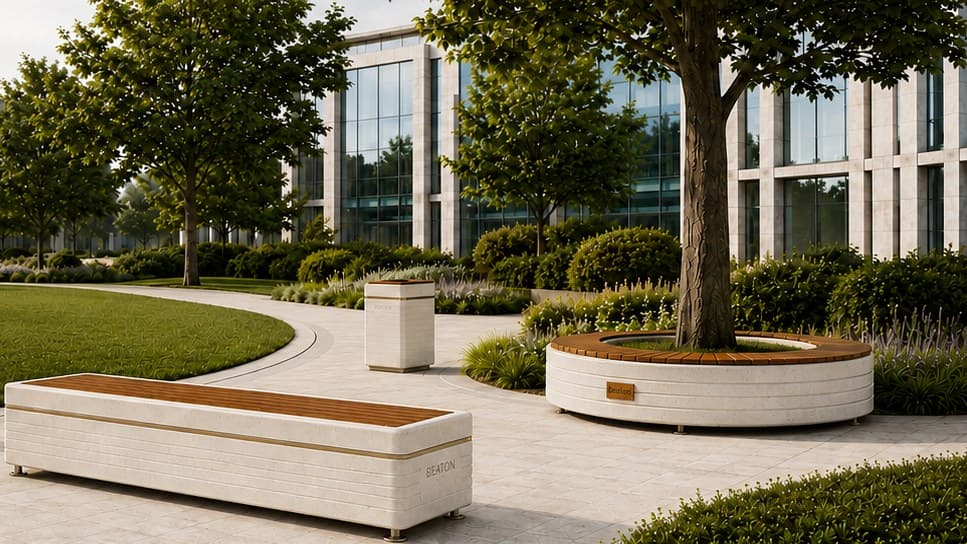
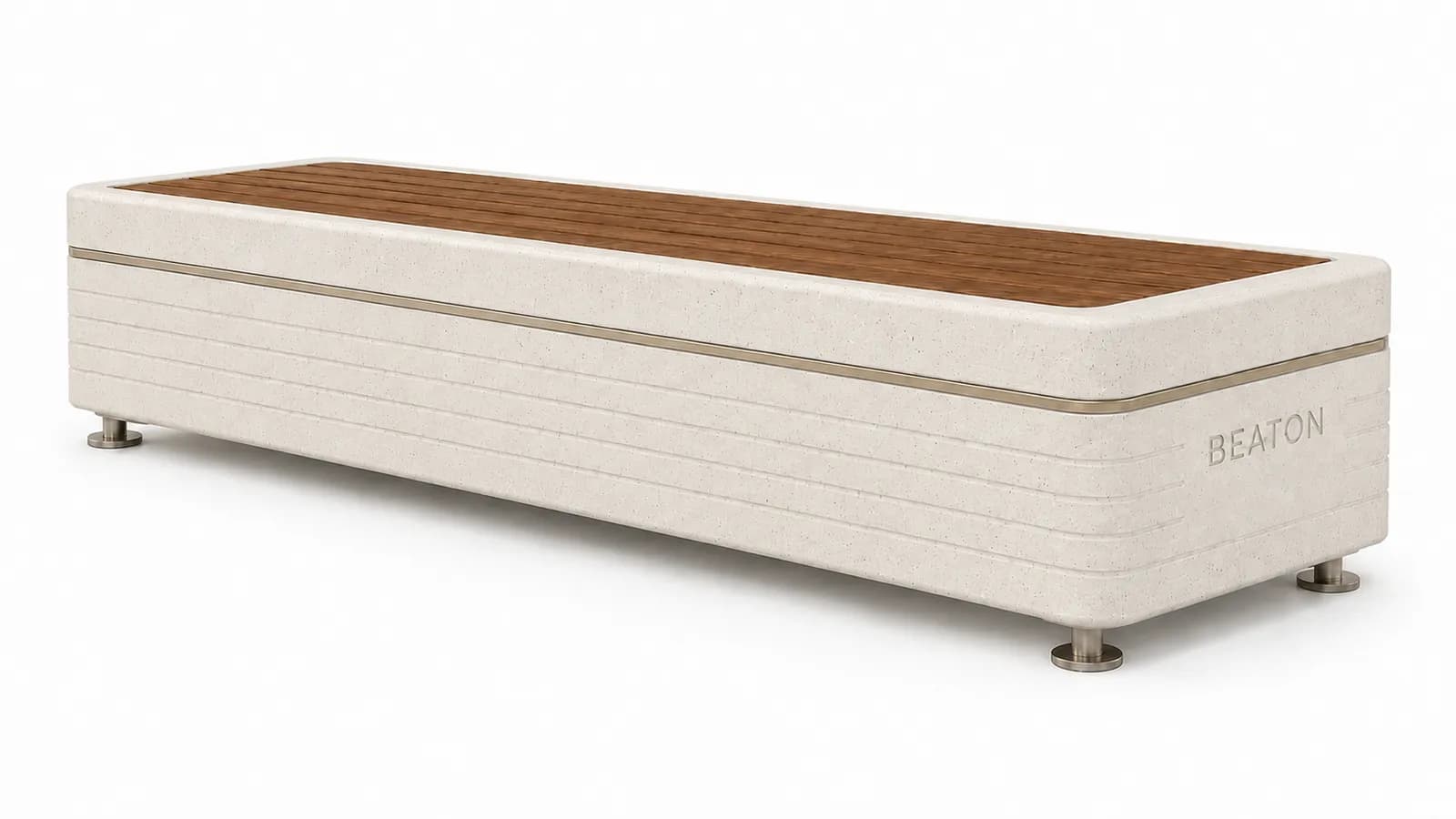
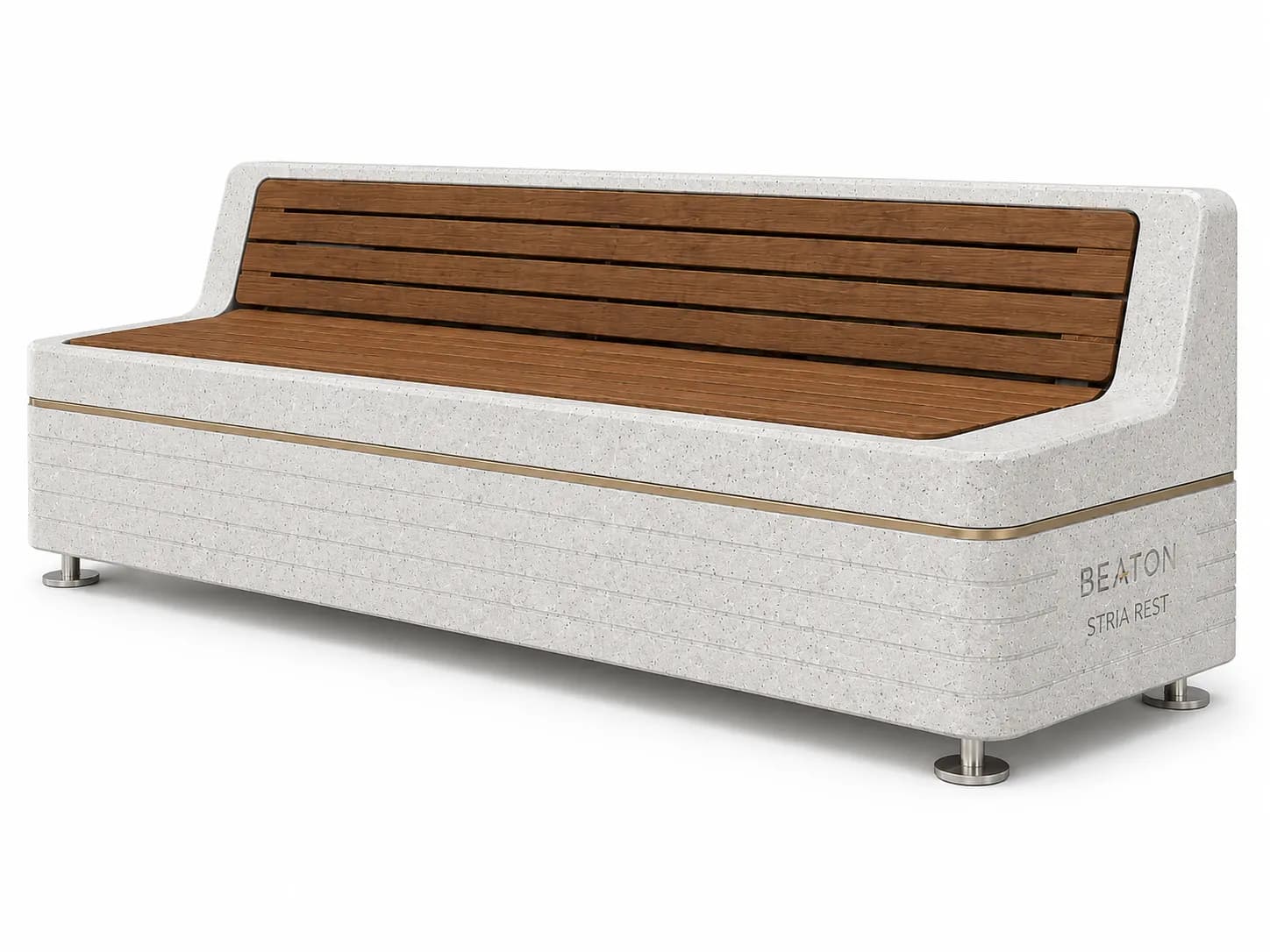
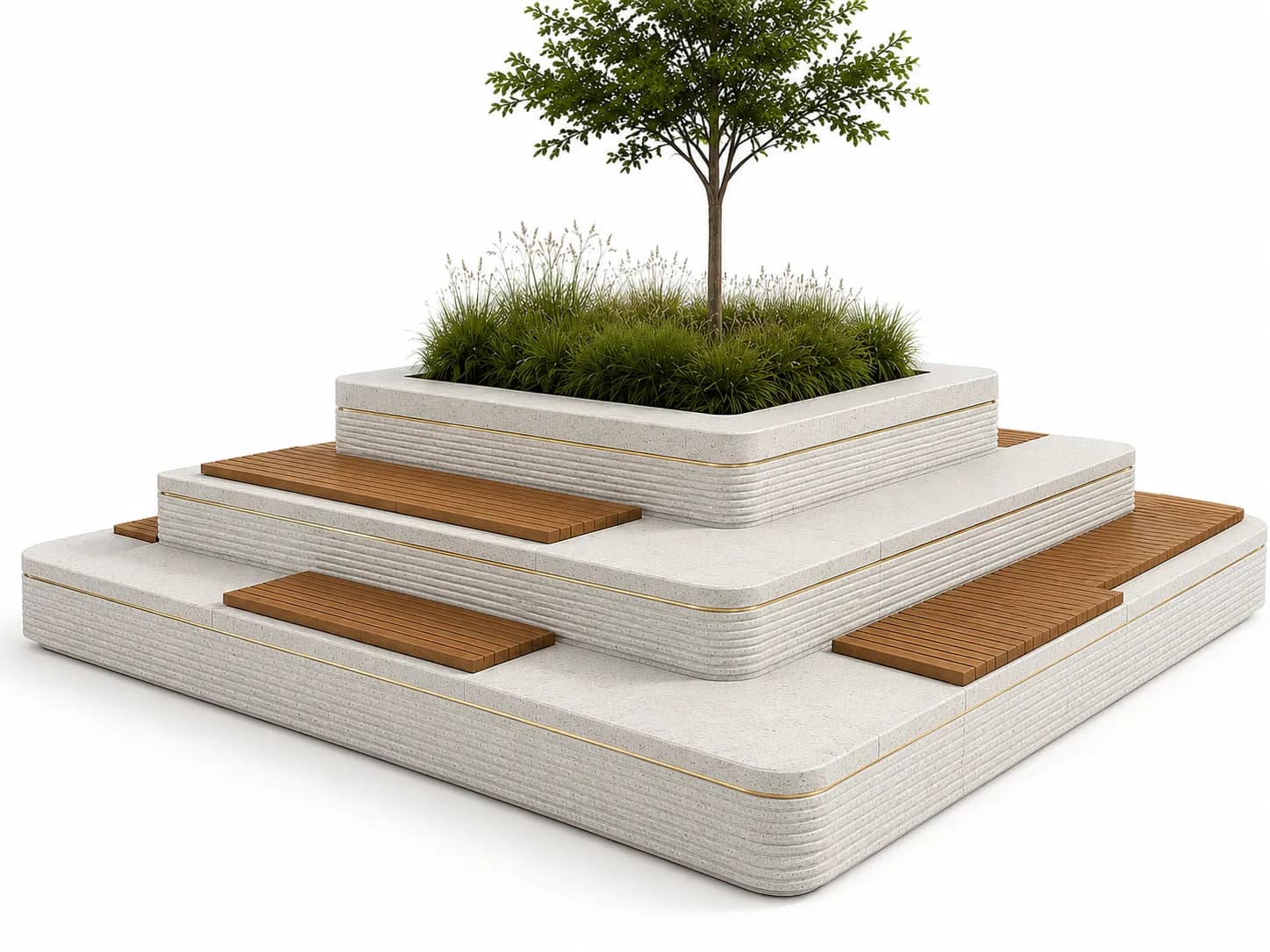
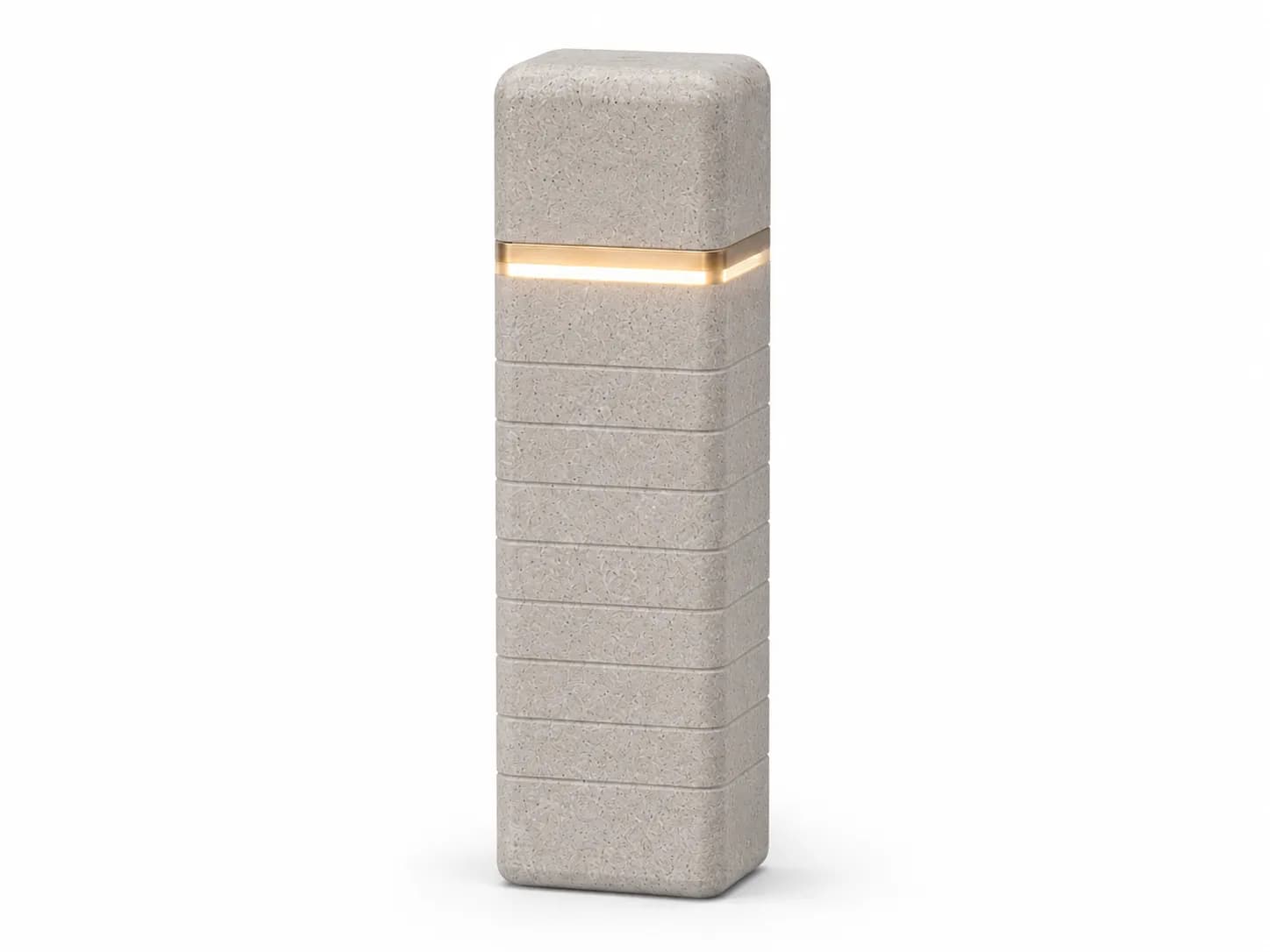
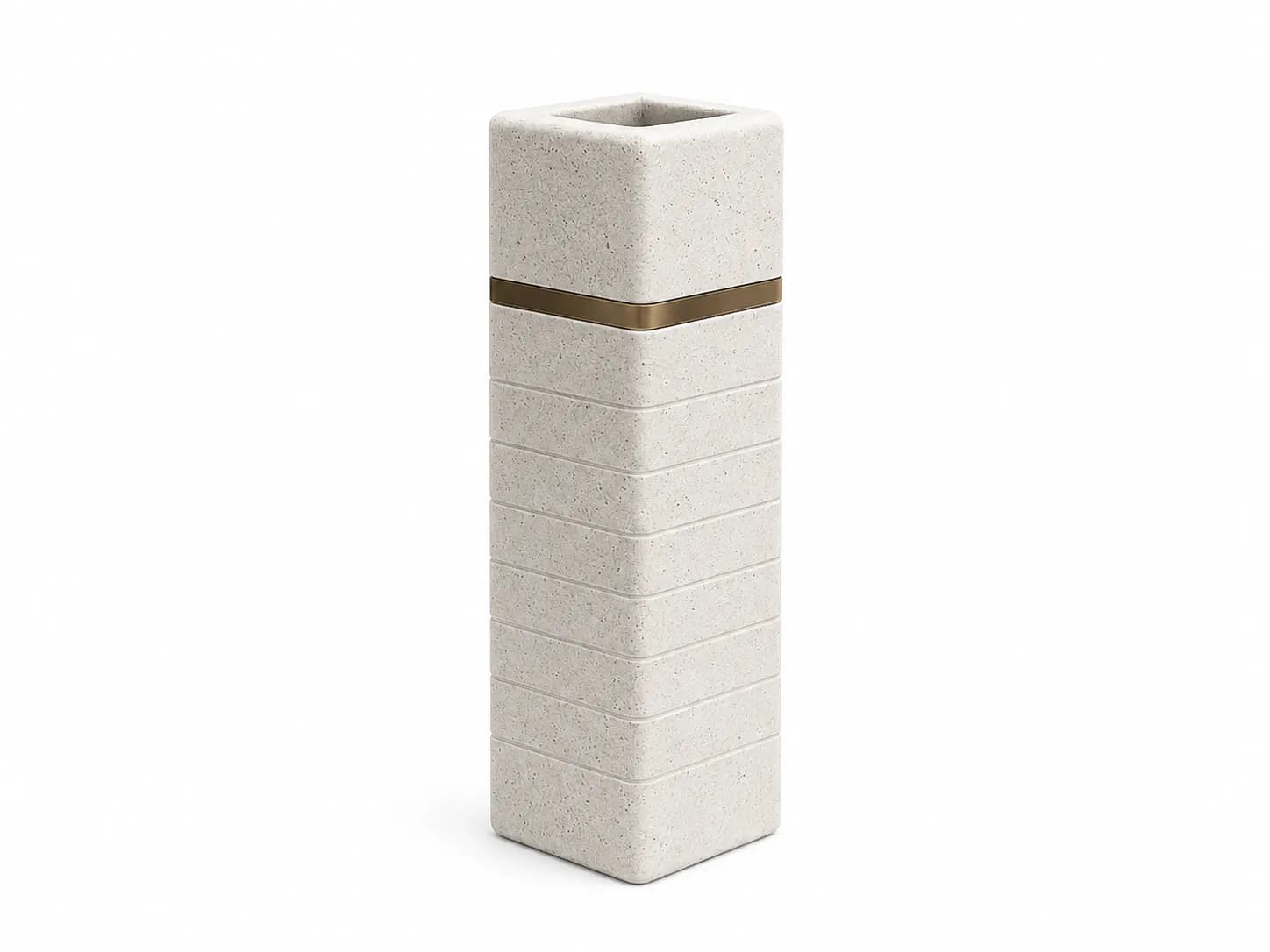
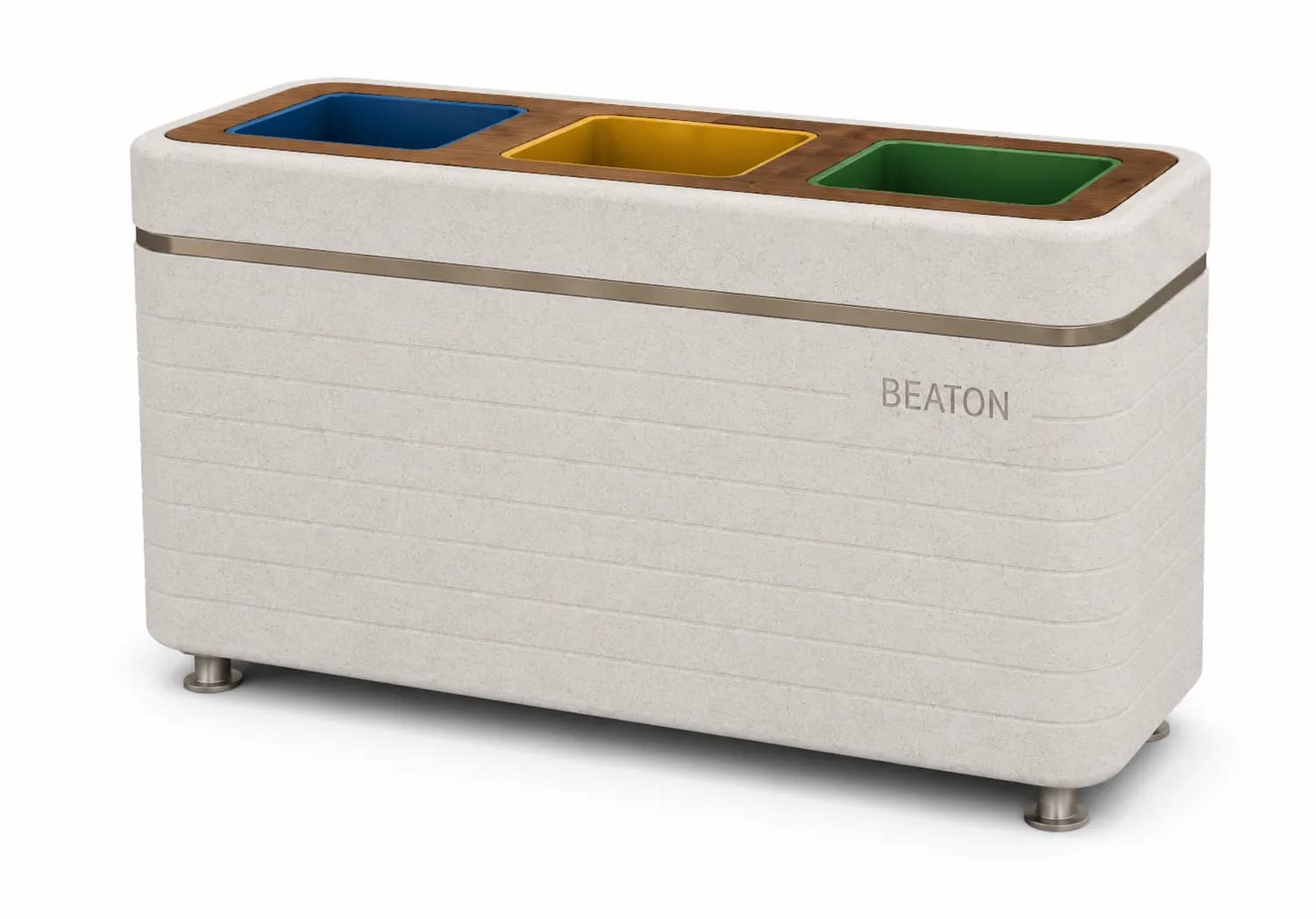
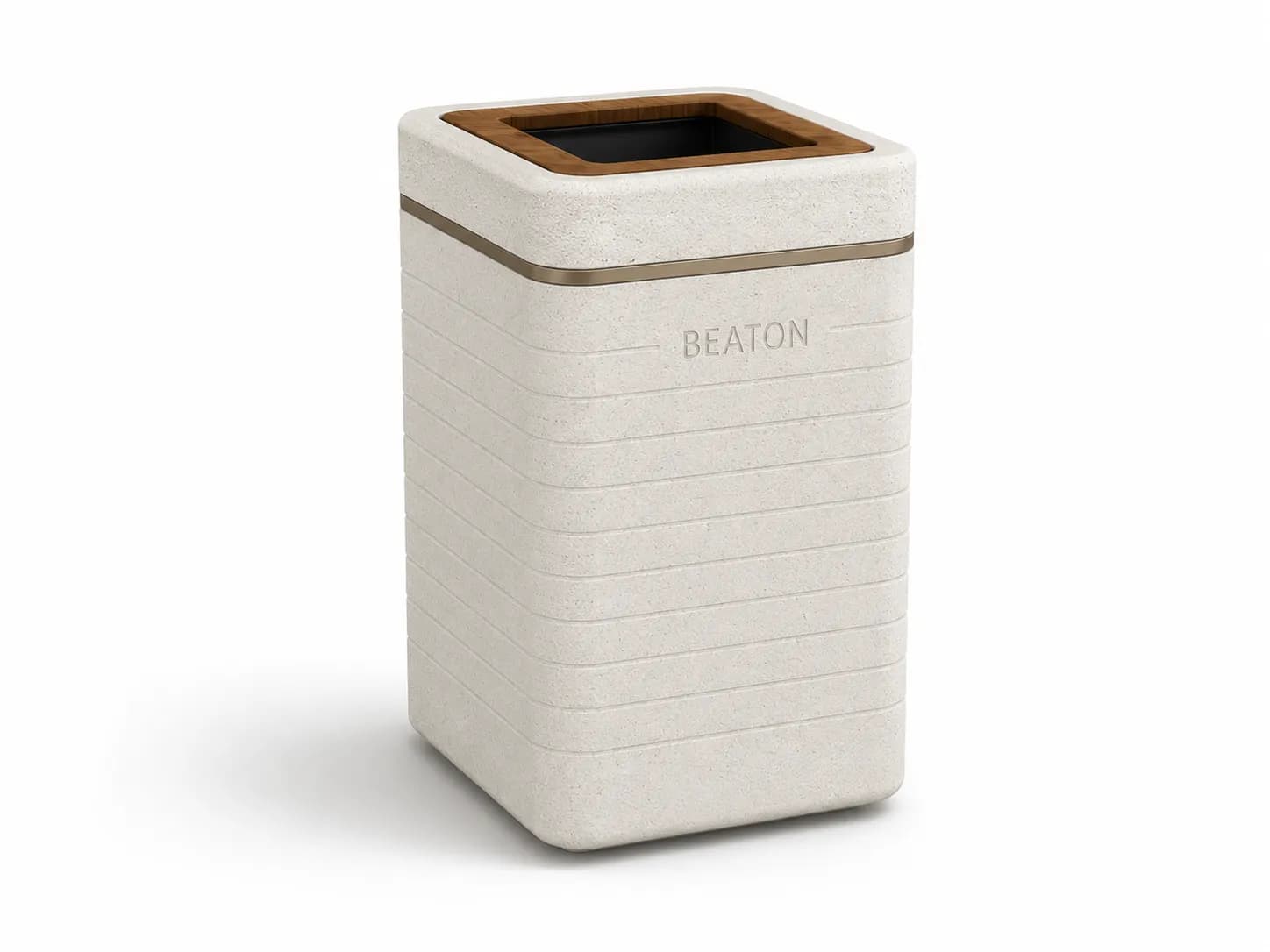
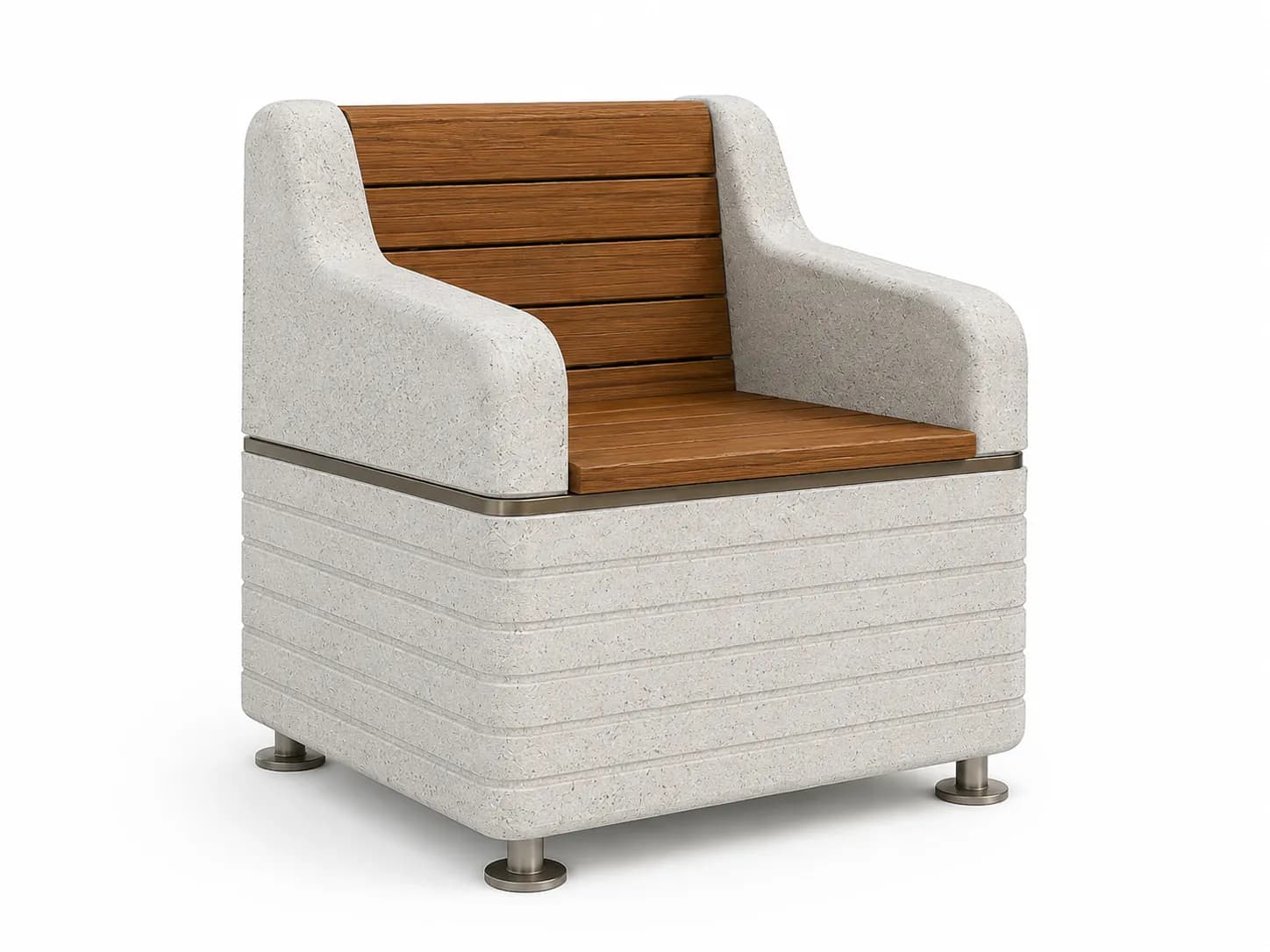
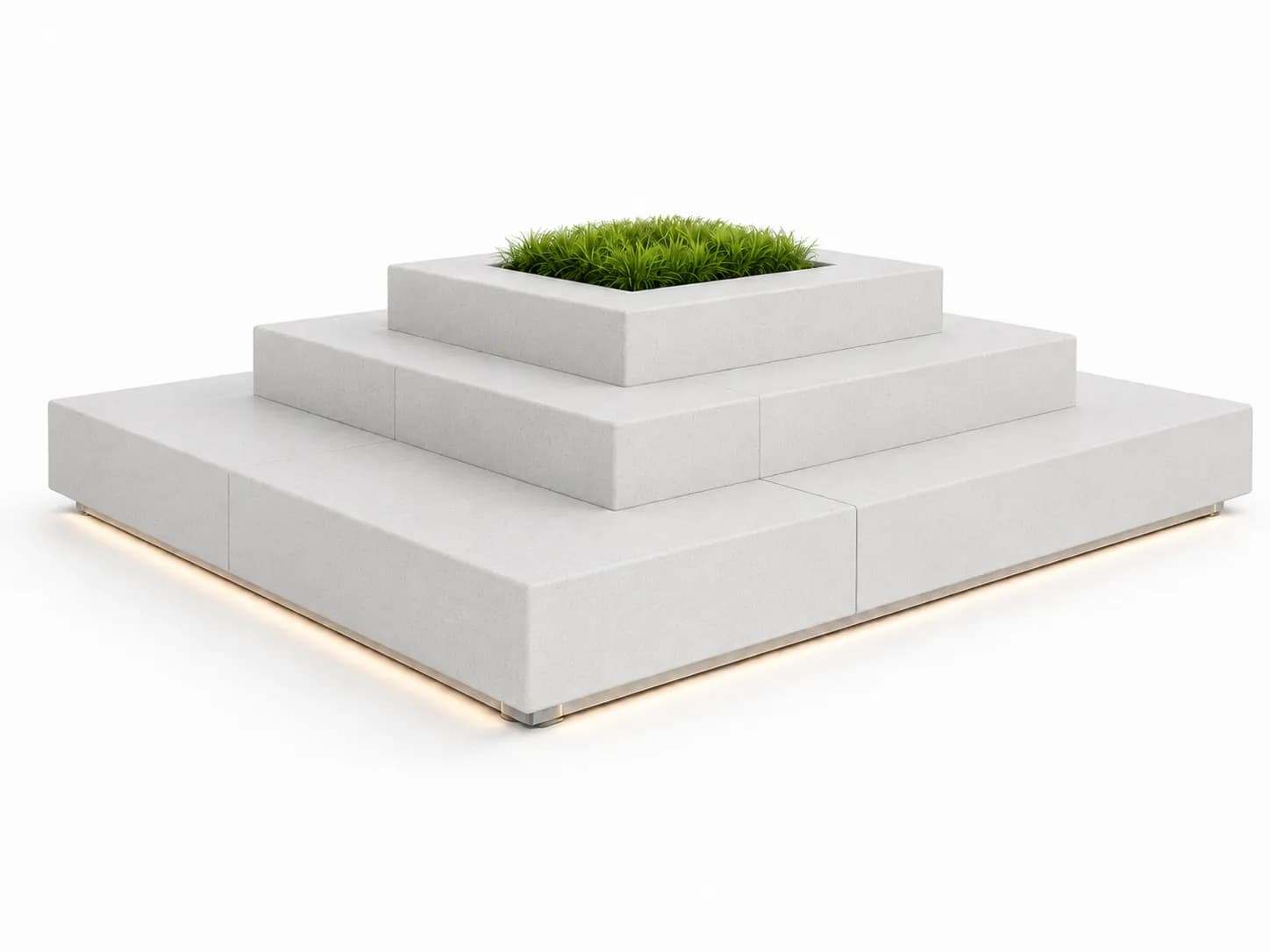
Liora is a comprehensive urban furniture family that brings the different needs of public space together through a shared architectural language. Horizontal lines, softened corners and a fine metallic accent wrapping around the body reappear across different scales, creating a strong visual continuity from seating to lighting and supporting elements.
Read the design story
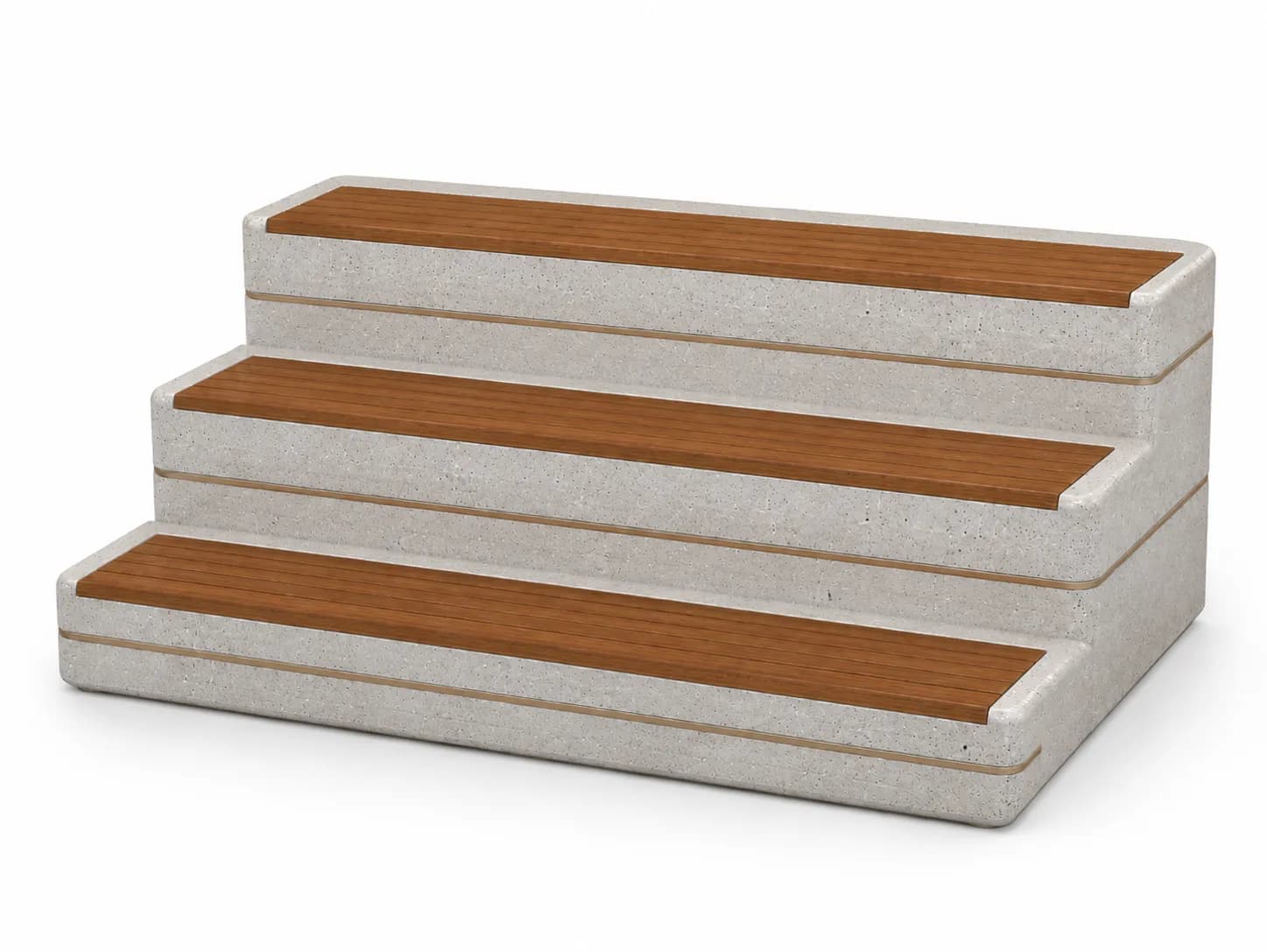
Rather than focusing on a single object, Liora is conceived around the way an entire space can be composed. Linear benches create calm places to pause, while stepped seating supports more collective forms of use. Solutions developed around trees and planting integrate landscape directly into the seating arrangement, while bollards, lighting, litter and recycling units extend the same rhythm across the other functional layers of the public realm.
The balance between the substantial presence of concrete, the warmth of timber and refined metal details allows Liora to form coherent compositions across plazas, campuses, parks and expansive pedestrian environments. More than furnishing a space, the family helps define its rhythm, patterns of use and overall identity.
Montea
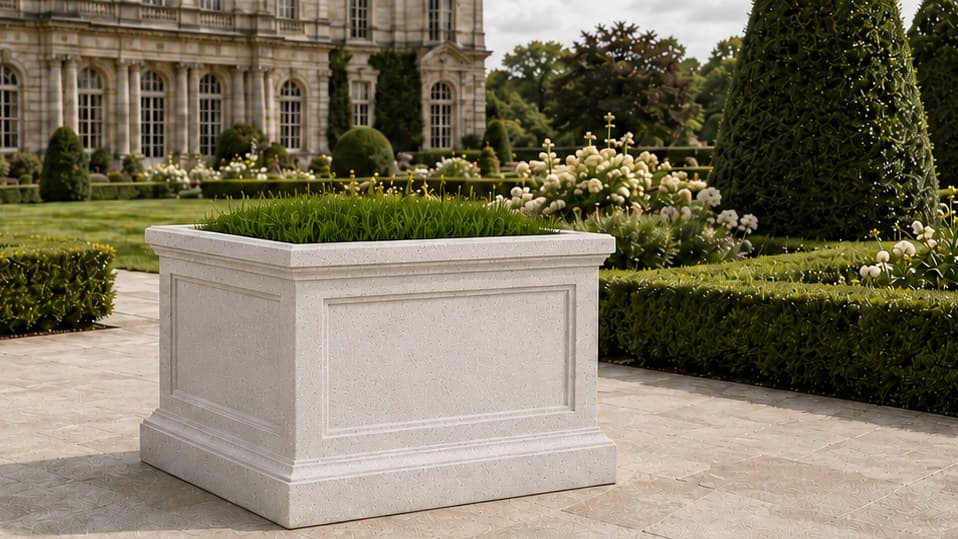
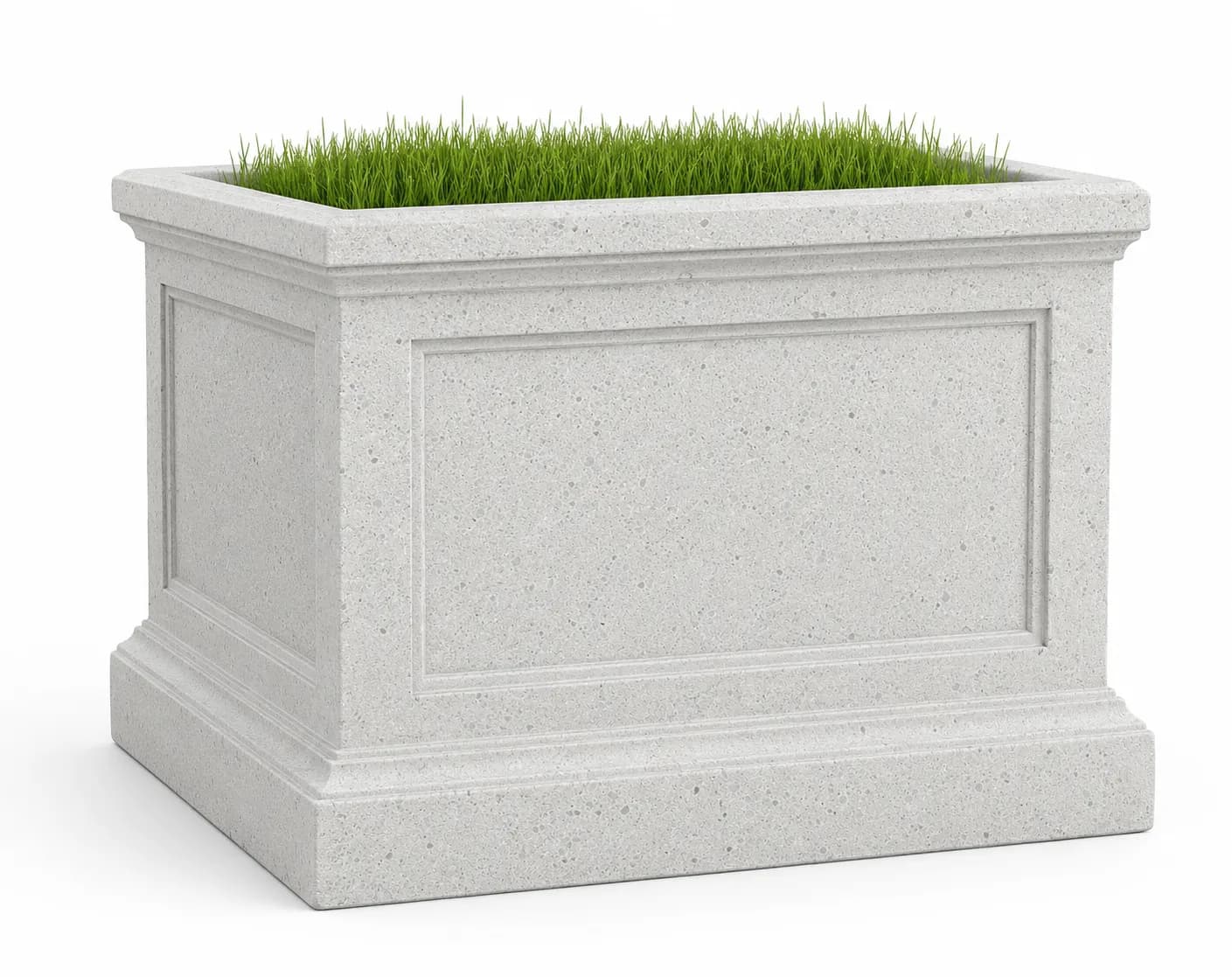
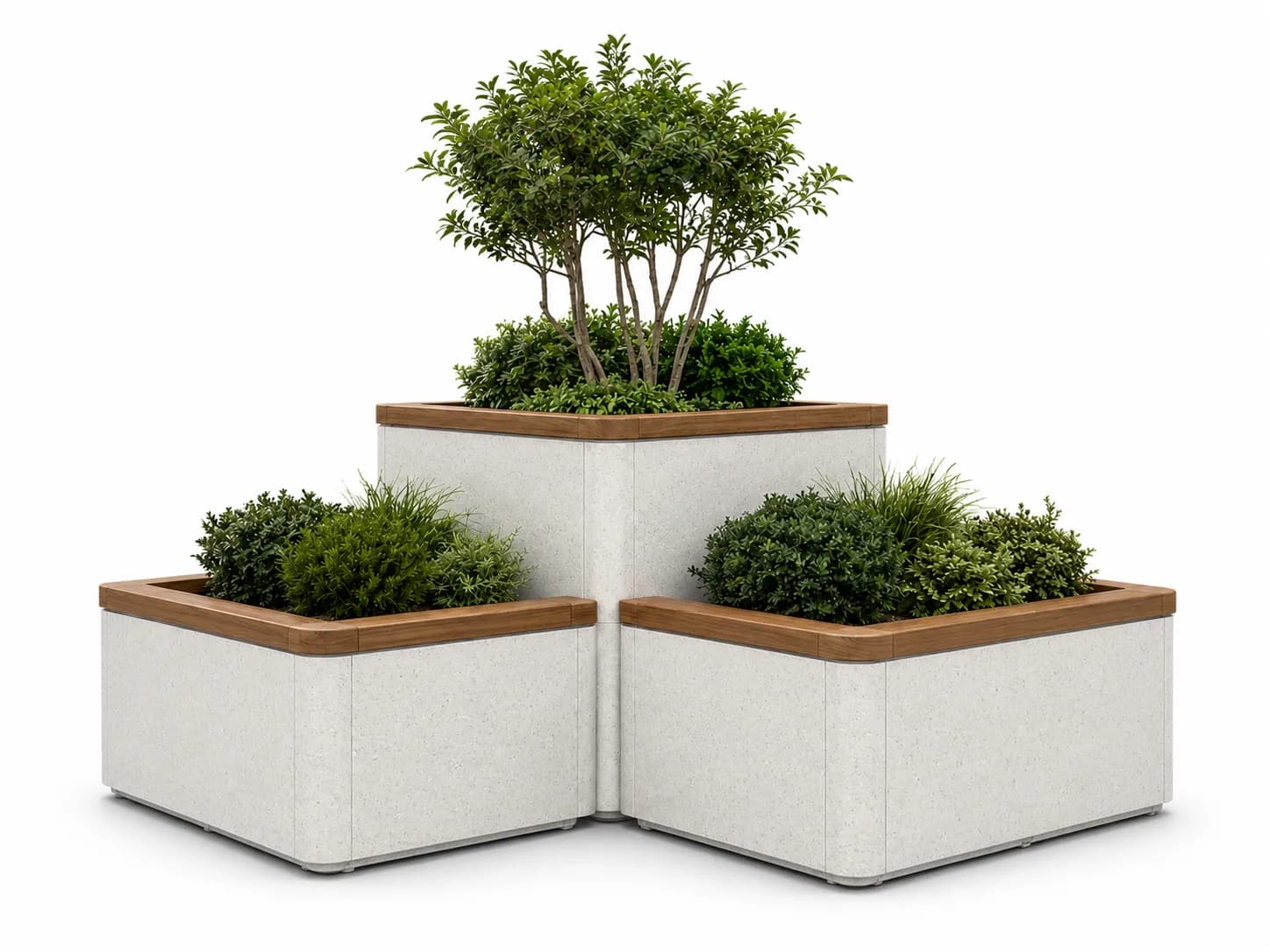
Montea is an urban furniture family that translates the proportions and detailing of classical architecture into a contemporary, timeless form. Its layered base, framed surfaces and balanced geometry give the design a distinctly architectural presence rather than a purely decorative one.
Read the design story
The profiles running around the planter recall the mouldings and framed compositions found in traditional façades, allowing the object to establish a natural dialogue with its architectural surroundings. Its solid concrete body creates a deliberate contrast with planting, balancing permanence with the softness of vegetation.
Montea is particularly suited to historic squares, representative public spaces, institutional entrances, boulevards and environments defined by a more classical architectural language. Rather than imitating its surroundings, it responds to their rhythm and proportion, turning planting into a clearly articulated part of the wider urban composition.
Norden
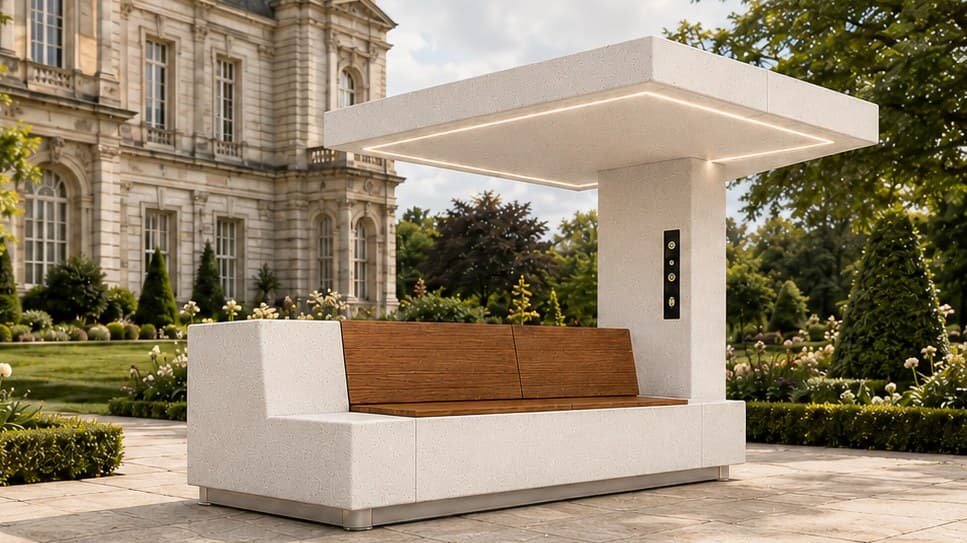
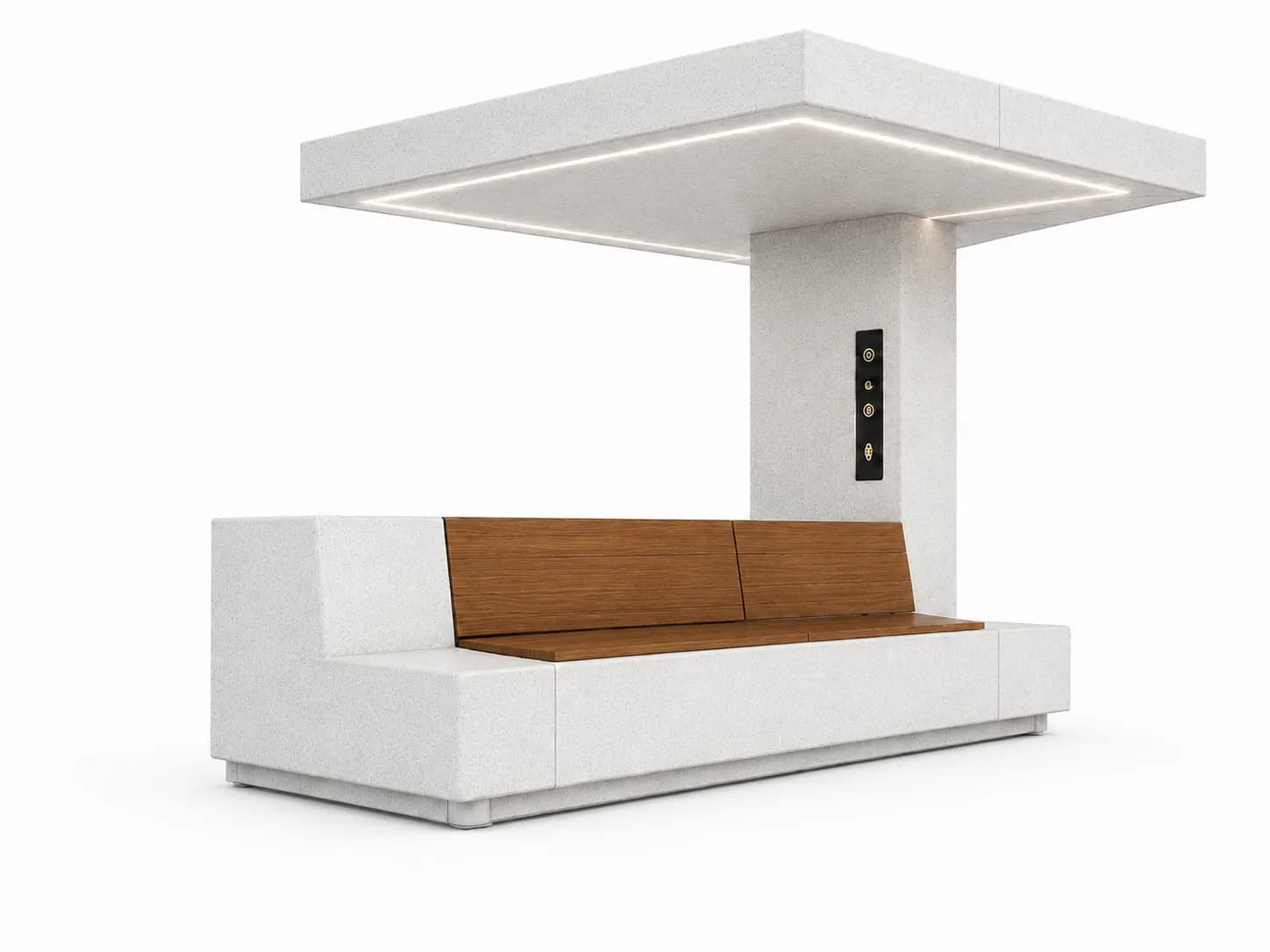
Norden is a multifunctional urban furniture family conceived around the idea of creating a small place of its own within the public realm. Its strong geometric structure brings seating, overhead shelter, lighting and integrated technology together as a single architectural composition.
Read the design story
The solid presence of concrete defines Norden's spatial boundaries, while timber introduces warmth and comfort at the points of human contact. Linear lighting beneath the canopy emphasizes the geometry of the structure and supports its use throughout different times of the day. A technological interface integrated into the vertical surface becomes a natural part of the architecture rather than an additional component.
Designed for plazas, campuses, transport environments and busy pedestrian areas, Norden offers more than a temporary place to sit. By combining seating, shelter, illumination and contemporary urban infrastructure within one element, it creates a recognizable and comfortable meeting point — a piece of urban furniture that operates almost as a compact architectural space.
Orlen
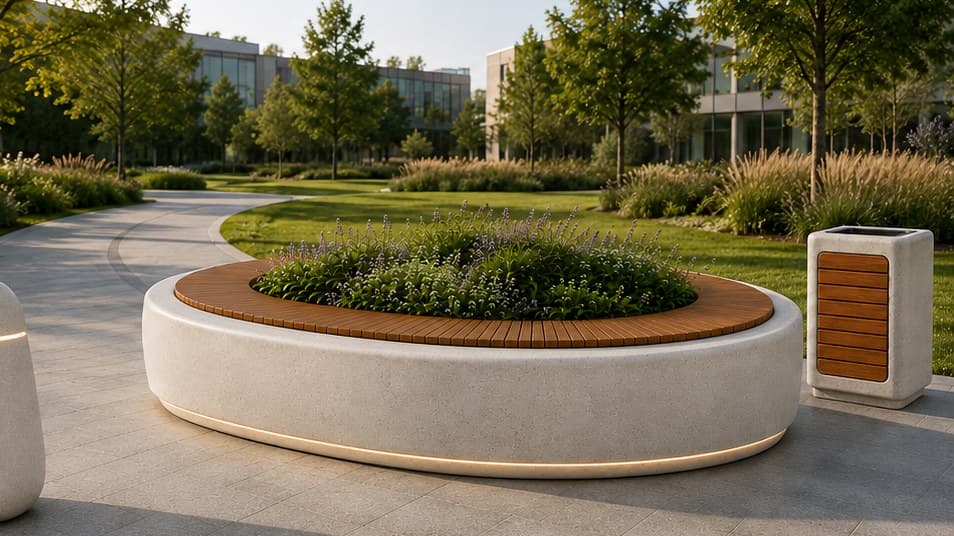
Orlen is an urban furniture family that brings different public-space functions together through a balanced and timeless formal language. Softened corners, compact proportions and continuous surfaces give each element a clear presence, while creating a calm and consistent rhythm when the products are used together.
Read the design story
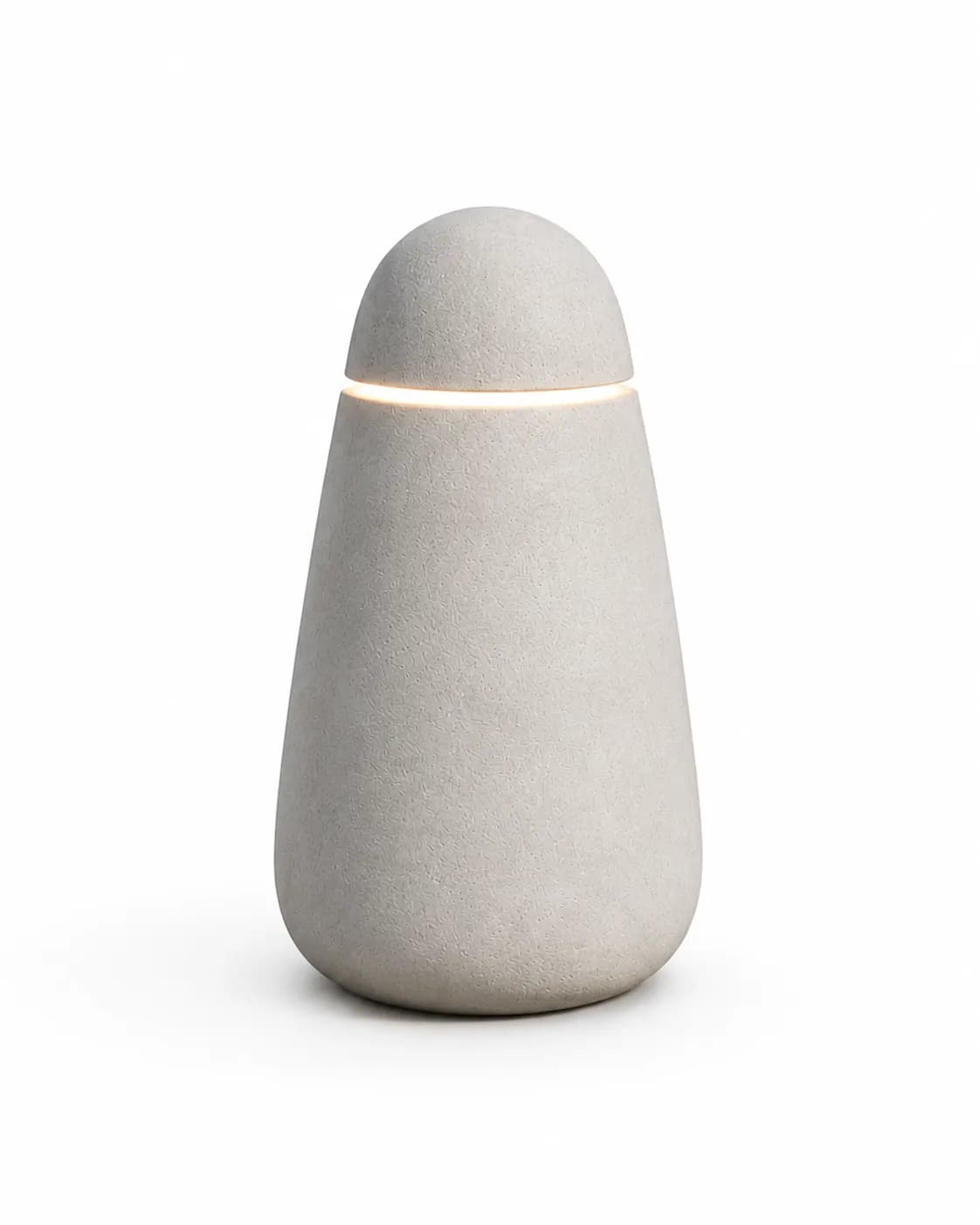
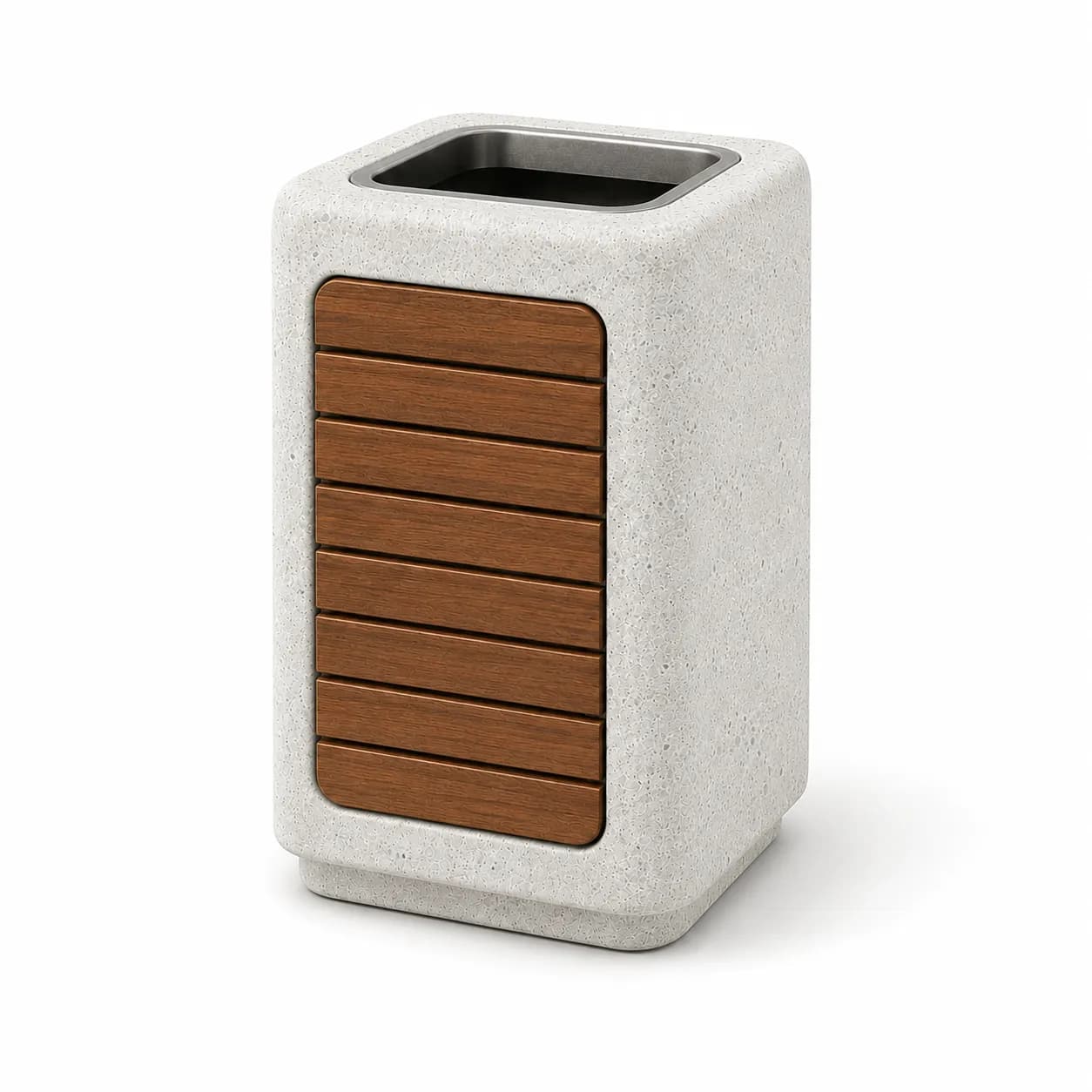
In the seating and planting element, the solid concrete volume is balanced by the warmth of timber and the presence of greenery. On the litter bin, the timber detail softens the functional body and gives it a more defined character, while the illuminated line of the bollard makes its simple geometry visible after dark.
Orlen is designed so that different elements can coexist within the same environment without competing for attention. Across plazas, pedestrian routes, parks, campuses and corporate outdoor spaces, the family addresses seating, guidance, boundary and waste-management needs within a coherent visual system. In doing so, Orlen creates a quiet yet distinctive identity that brings continuity to the different layers of the public realm.
Ovena
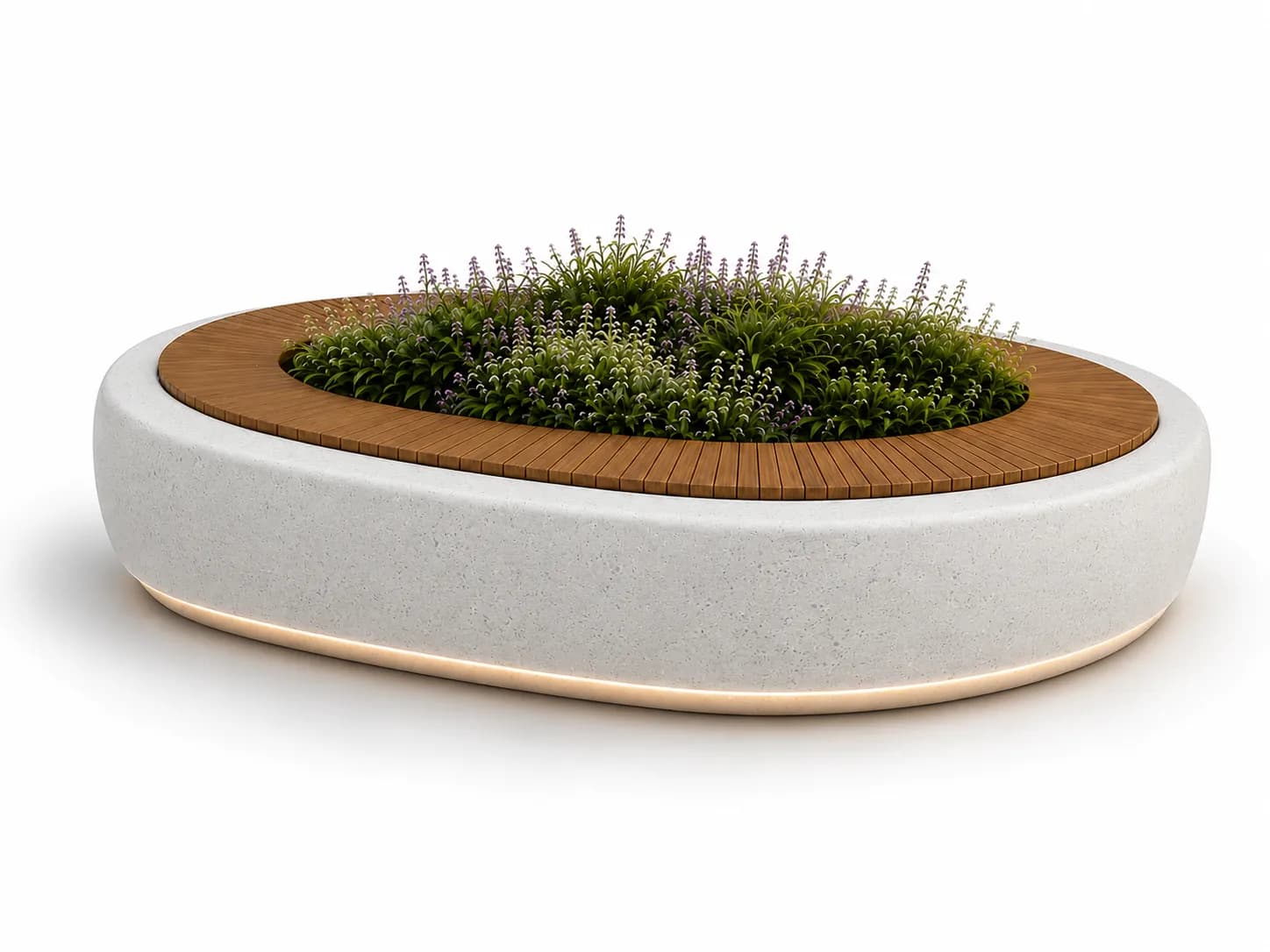
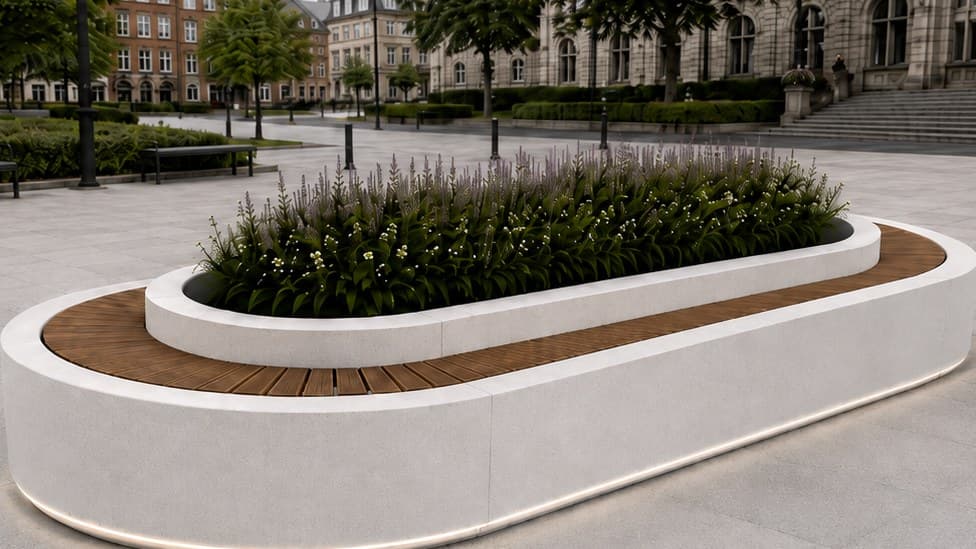
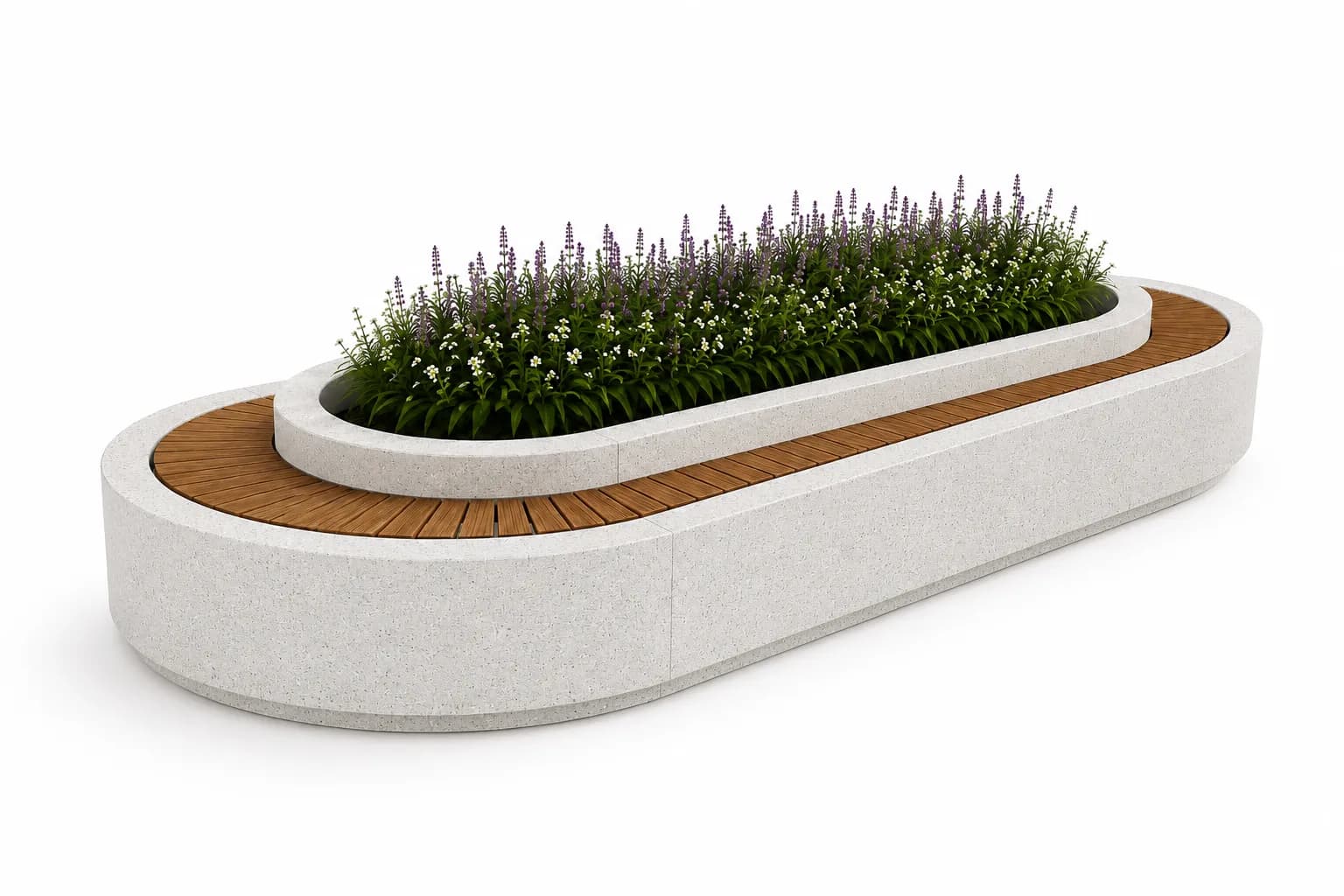
Ovena is an urban furniture family that places greenery at the centre of public life, bringing seating and planting together within a single spatial composition. Its elongated oval geometry establishes the planted area as a strong focal point, while the continuous seating surface around it allows the element to be approached and used from different directions.
Read the design story
The uninterrupted concrete body defines the form, while the timber surface softens its solid presence and creates a warmer point of contact for the user. By wrapping the seating around the planted core, Ovena supports different sitting orientations and encourages more natural forms of encounter within public space.
From large plazas and parks to campuses and pedestrian areas, Ovena works not merely as a place to sit, but as a small landscape island around which activity can develop. By bringing greenery, material and human use within the same boundary, it creates both a distinctive spatial focus and a calm place to pause.
Solvia
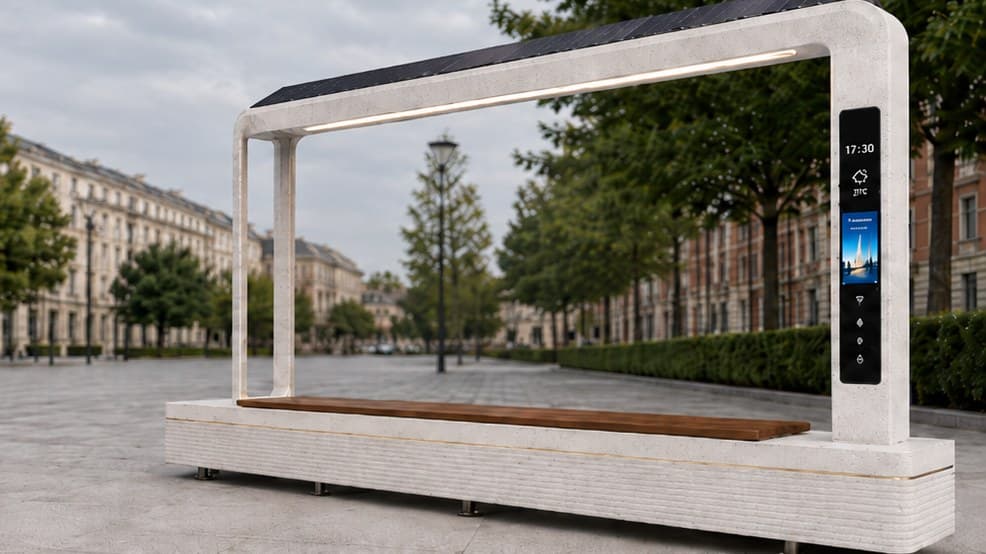
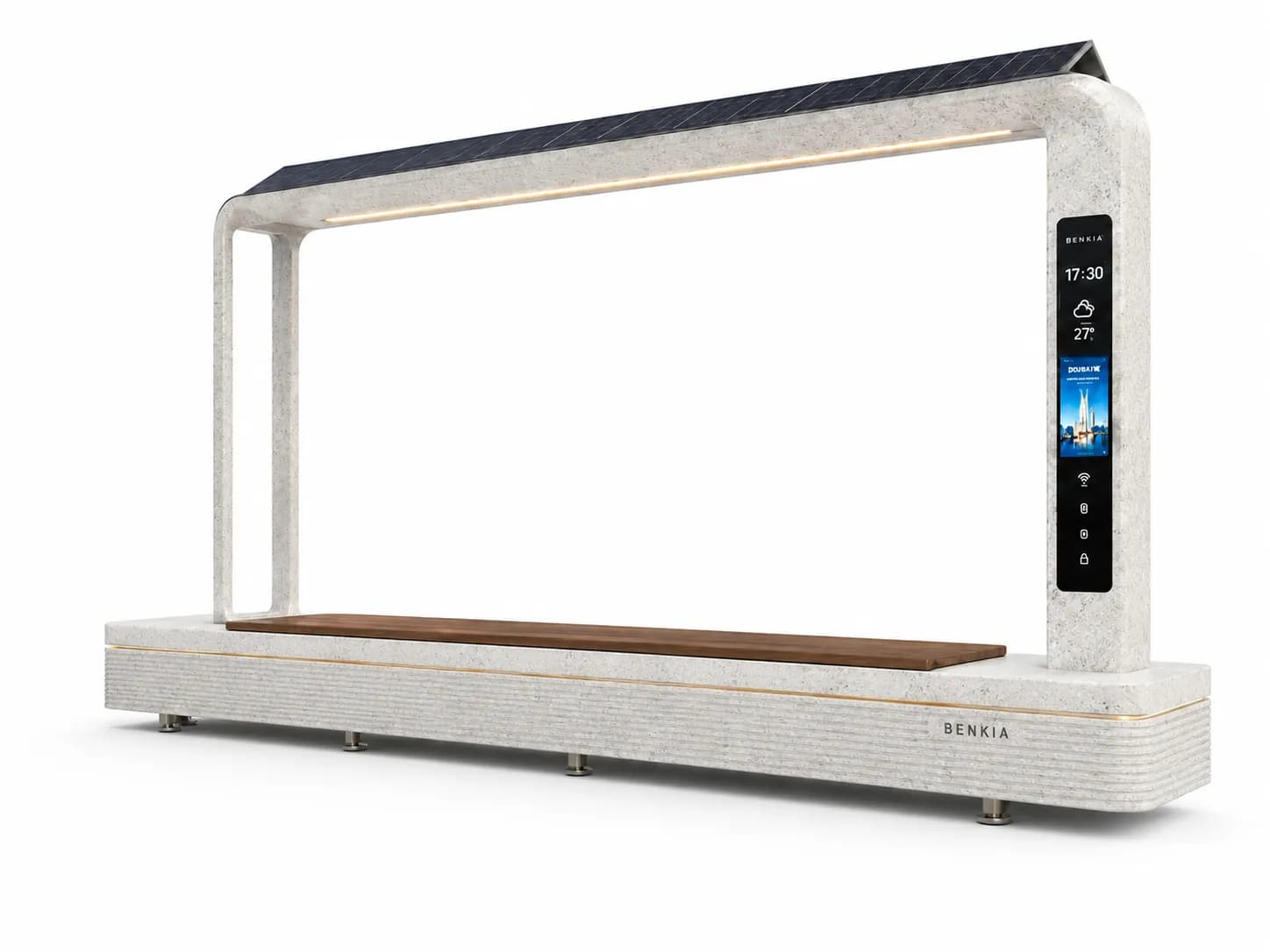
Solvia is a multifunctional urban furniture family that brings together moments of rest, technology and contemporary public infrastructure. Its strong architectural frame integrates seating, lighting, a solar-energy surface and a digital interface within a single composition, making technology a visible yet carefully balanced part of the design.
Read the design story
Concrete forms the durable structural backbone, while the timber seating surface introduces warmth where the user meets the object. Fine lines of integrated light and digital details visually soften the solid volume, giving Solvia a changing presence throughout the day. The solar panel incorporated into the upper surface further expresses the relationship between energy and public use as an inherent part of the design rather than an added feature.
Designed for plazas, campuses, transport environments and busy pedestrian areas, Solvia moves beyond the conventional idea of a bench. It creates a contemporary public interface where people can pause while connecting with the city through information, technology and the surrounding urban environment.
Caven
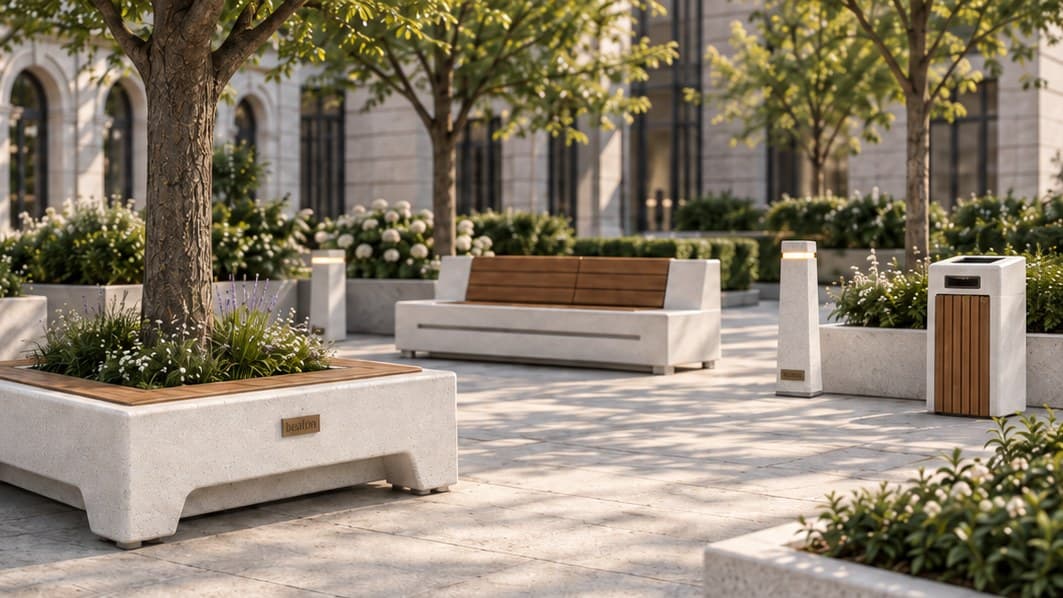
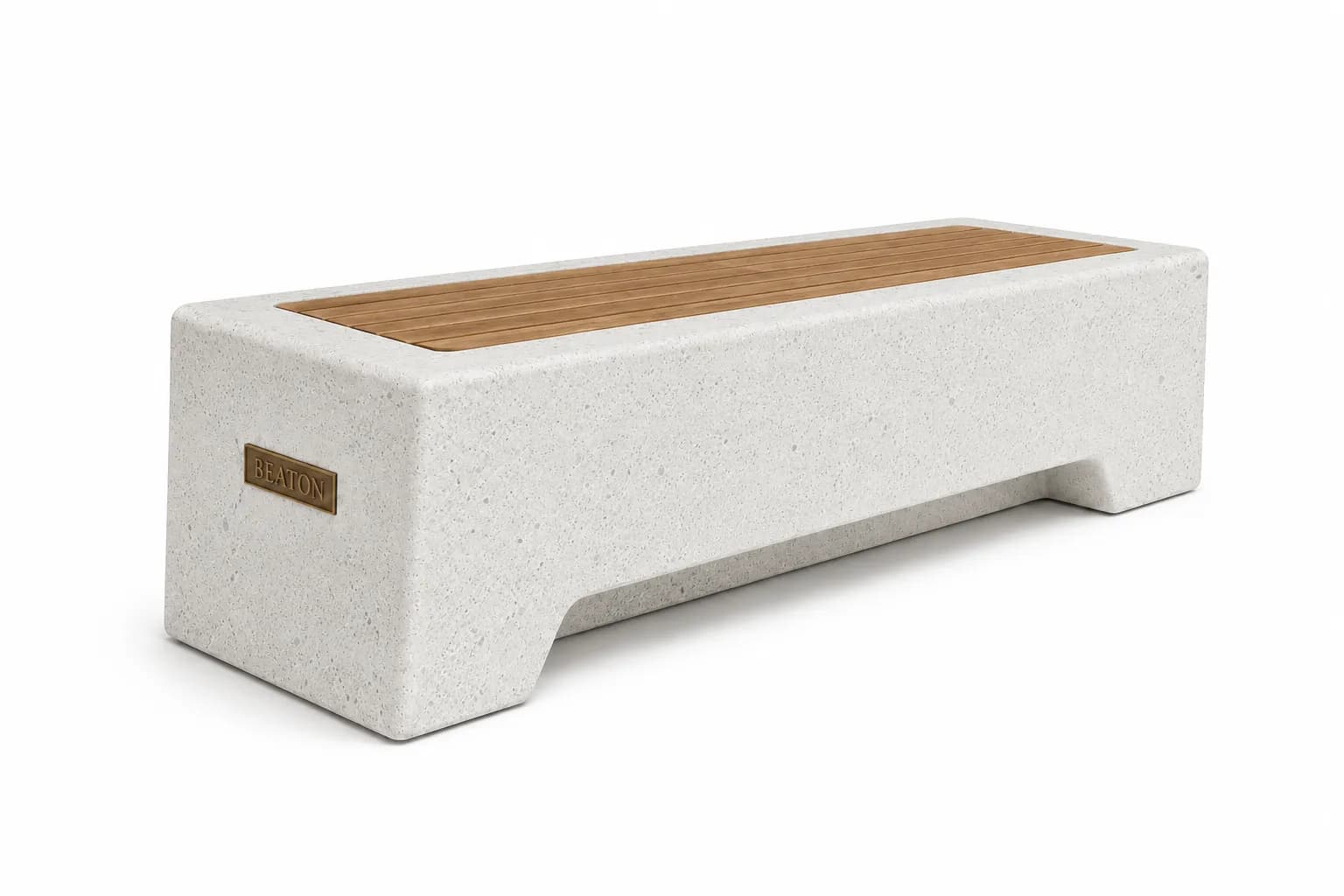
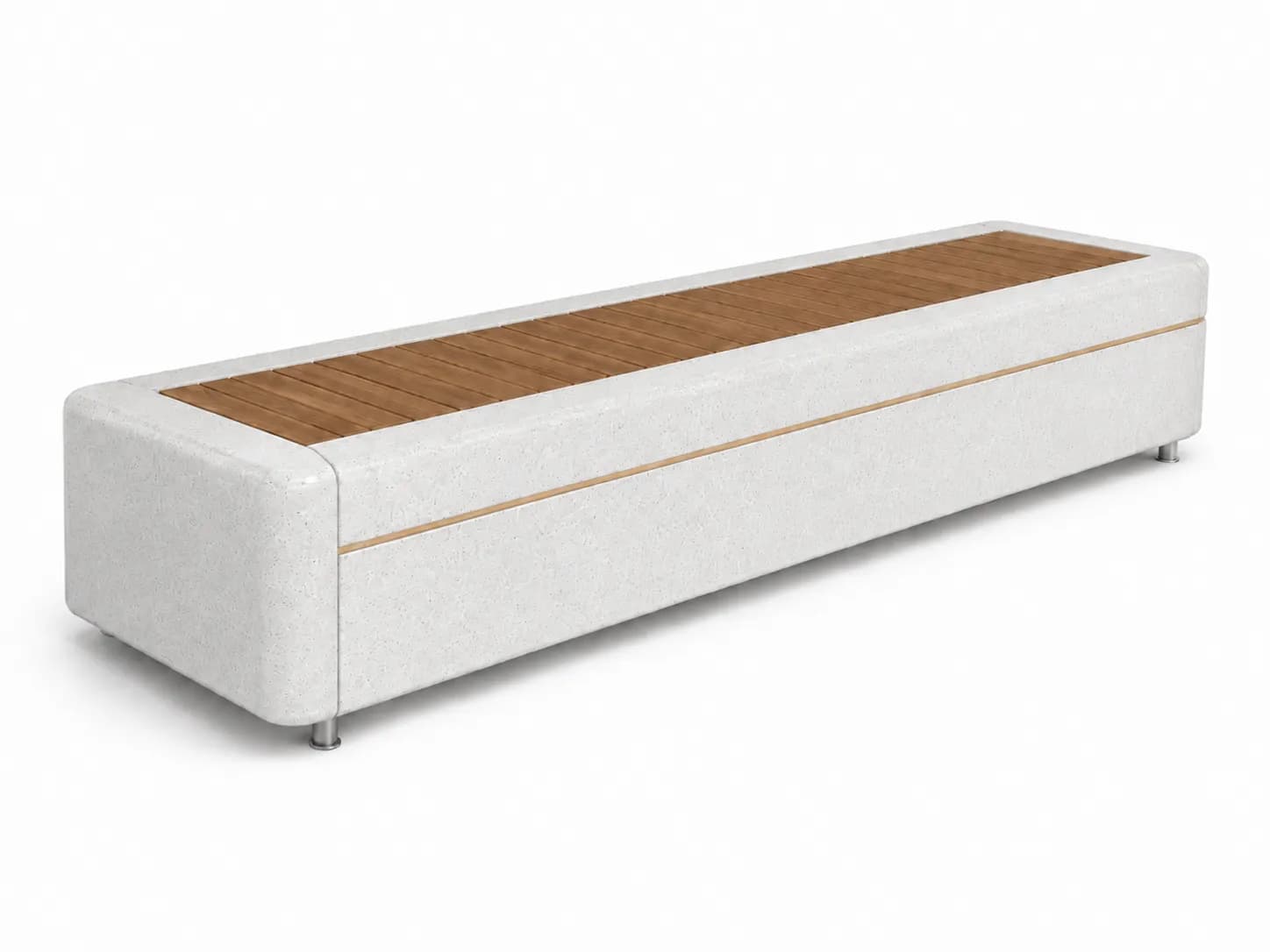
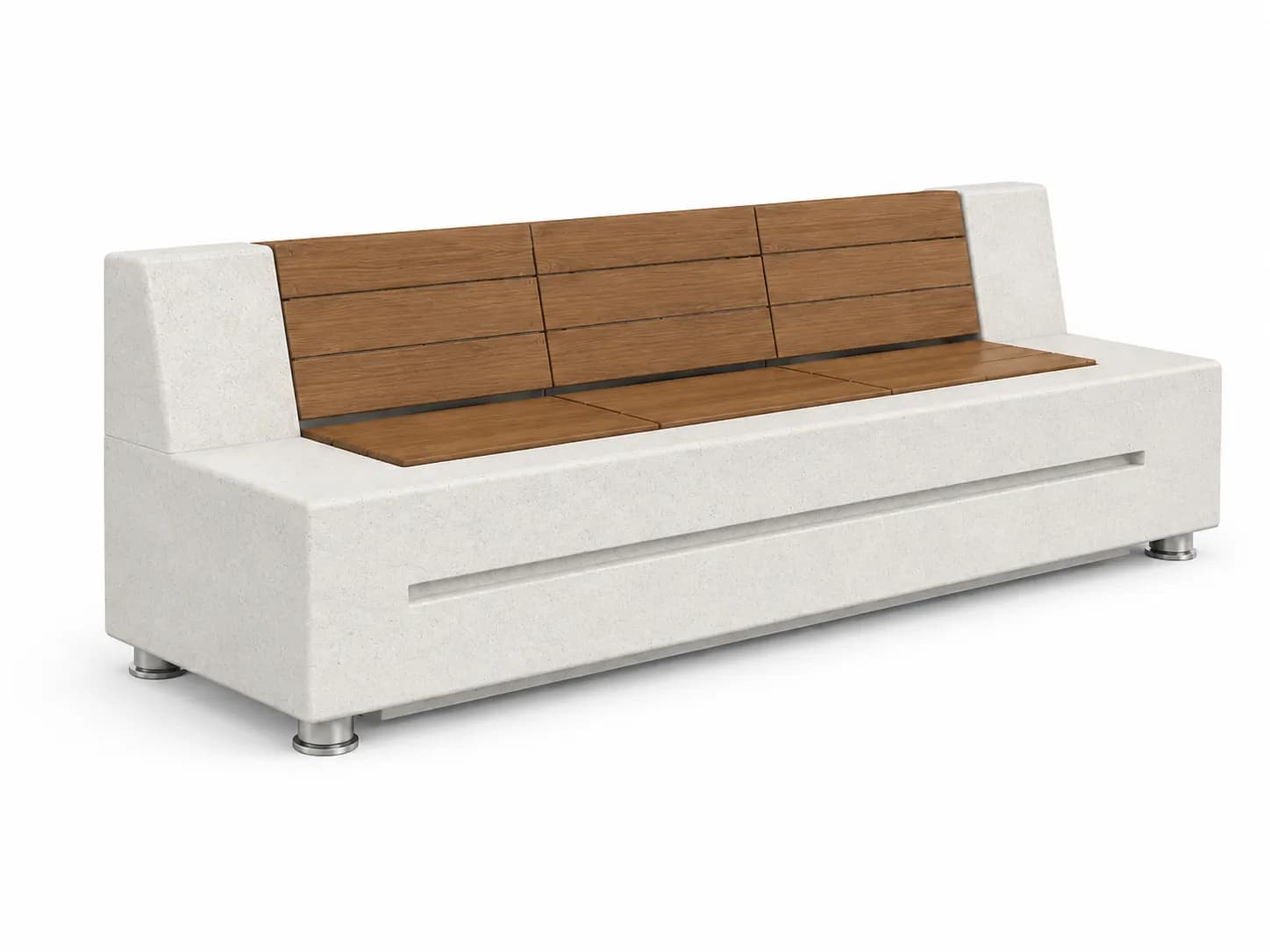
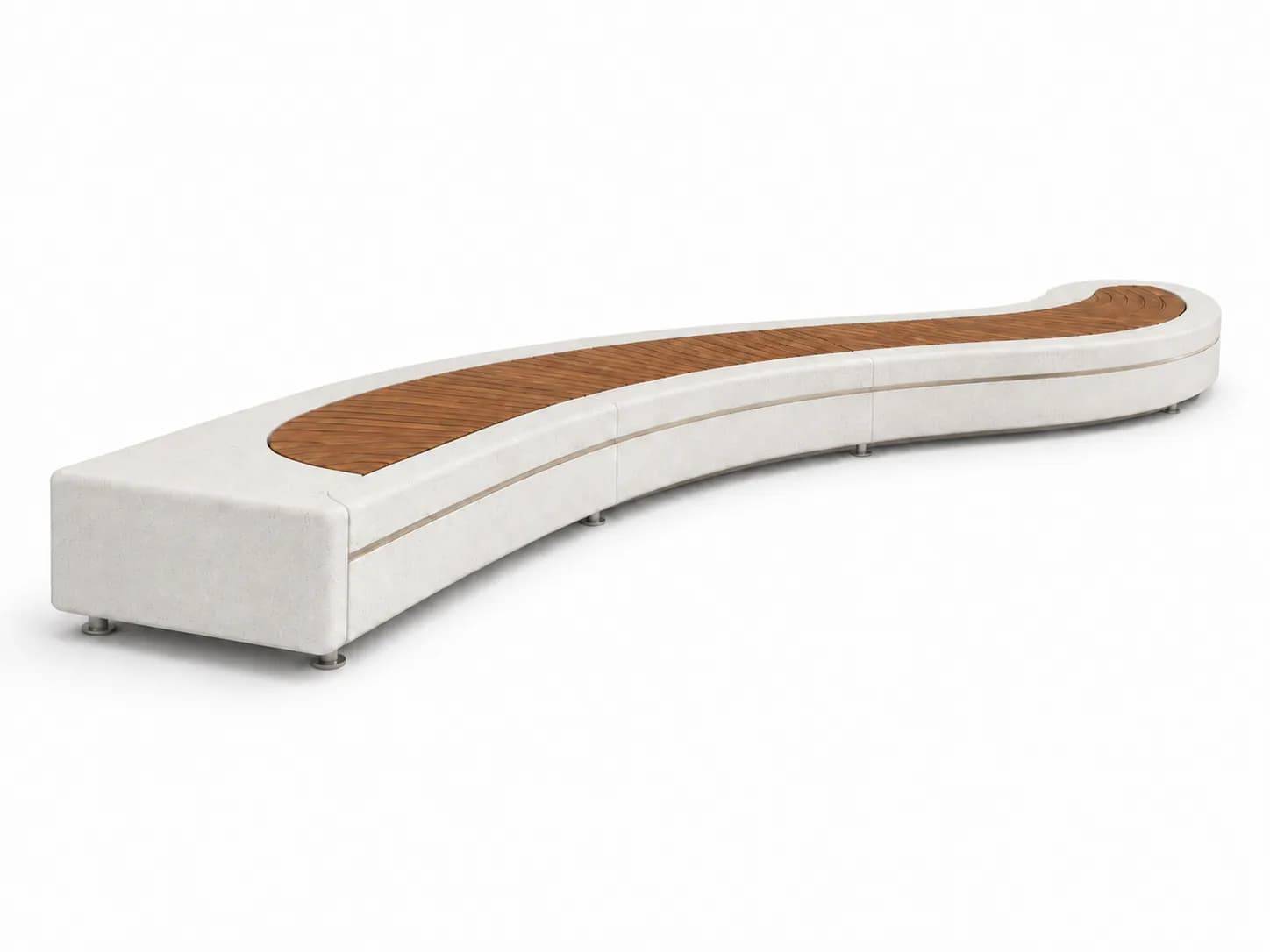
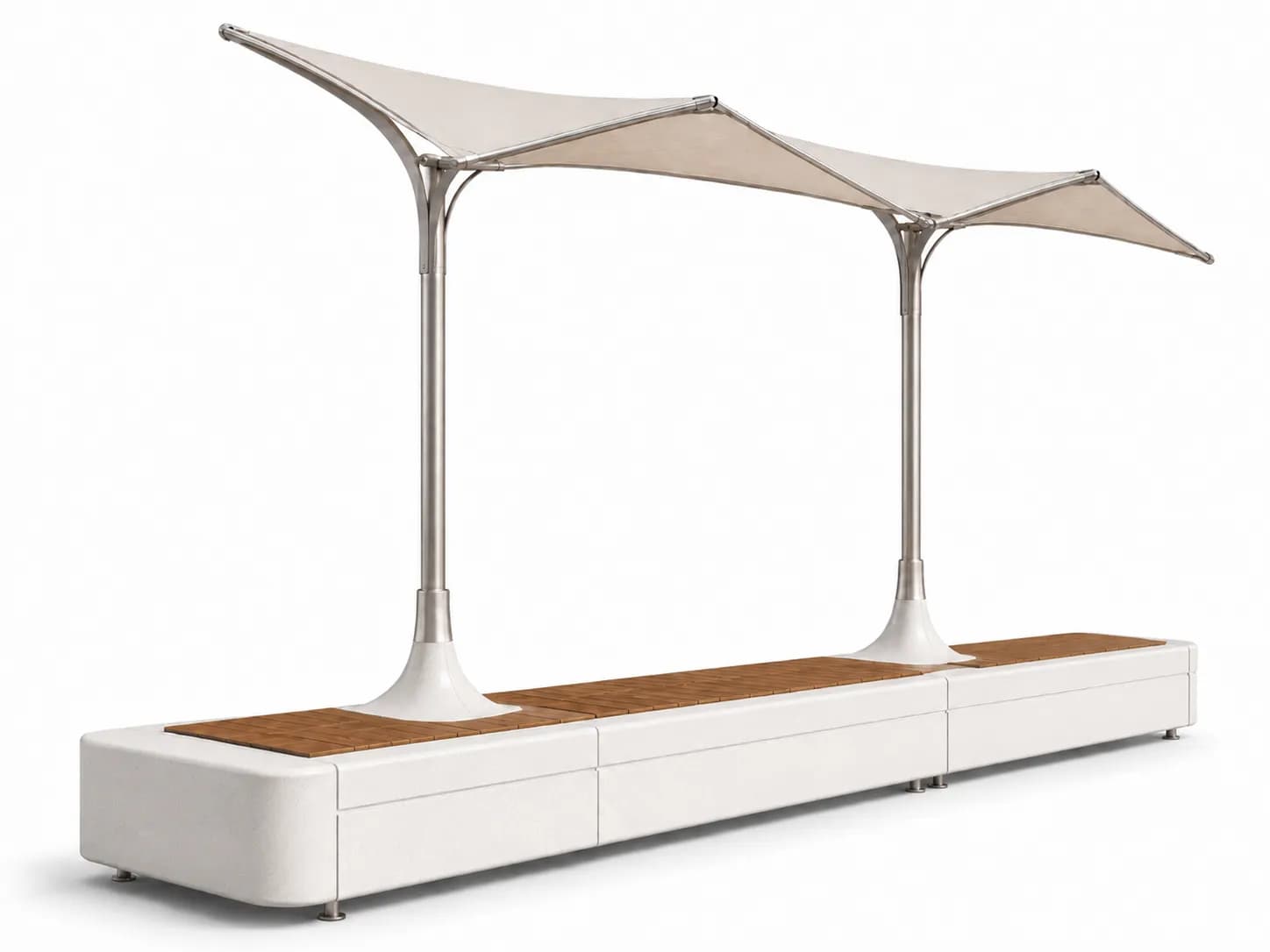
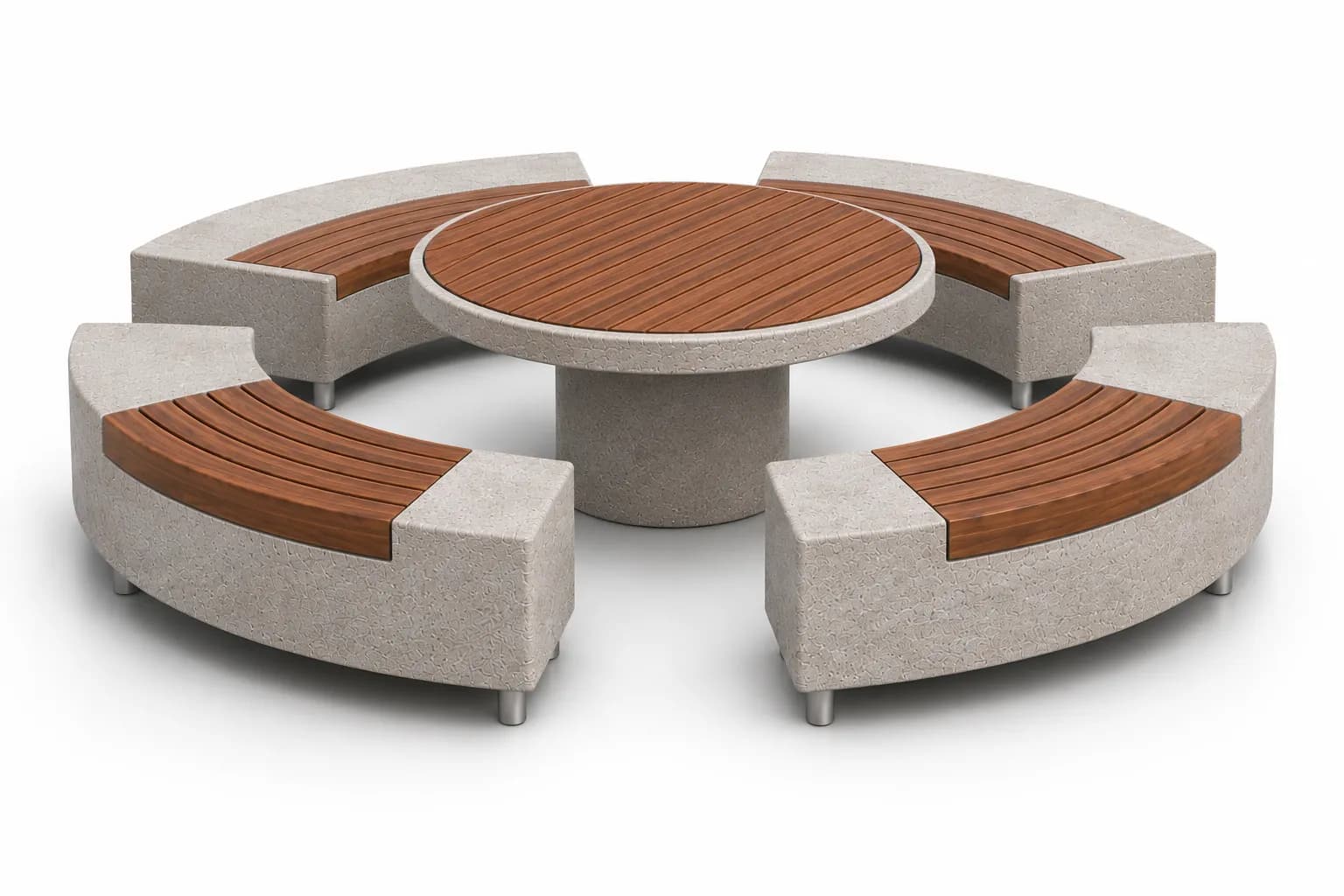
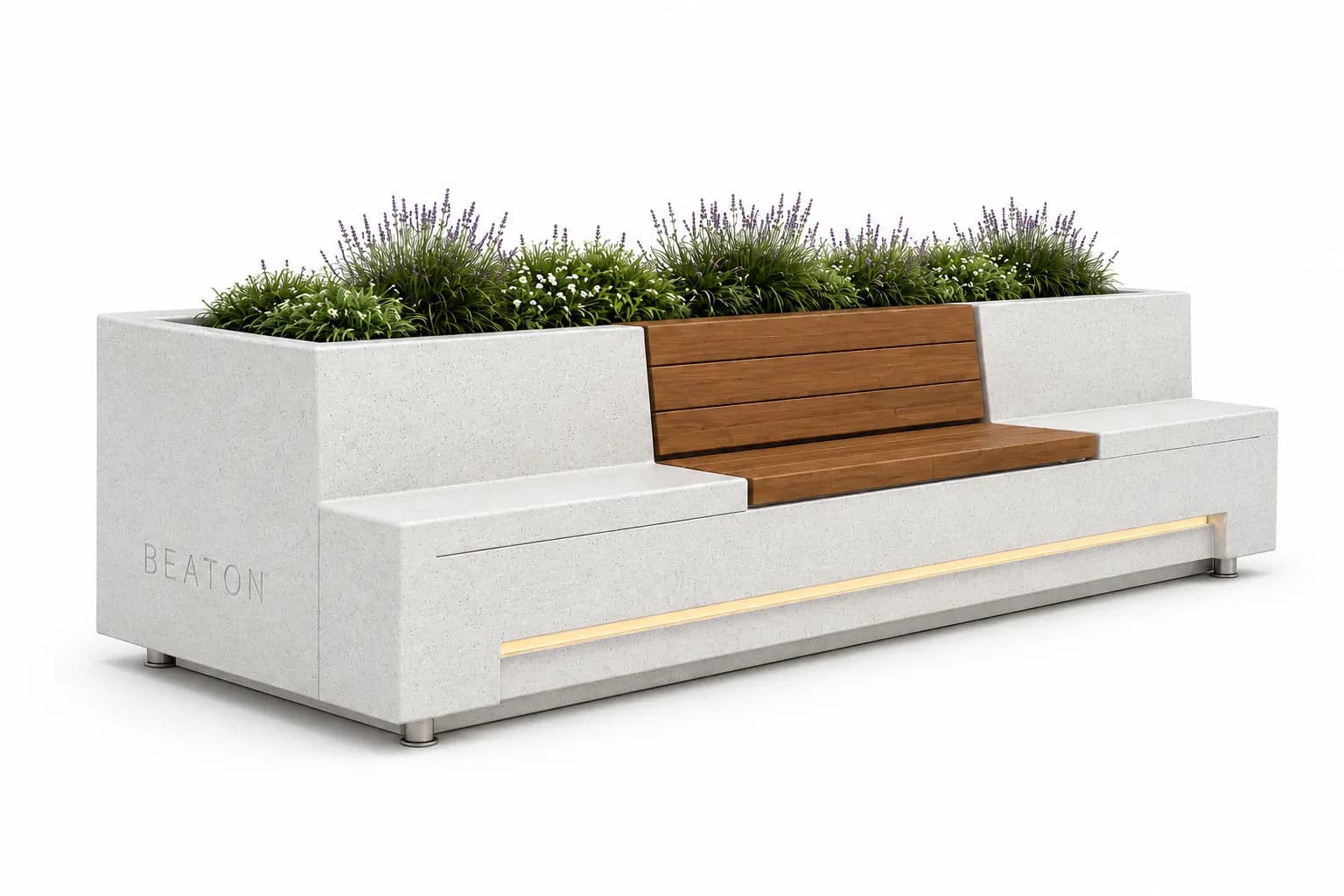
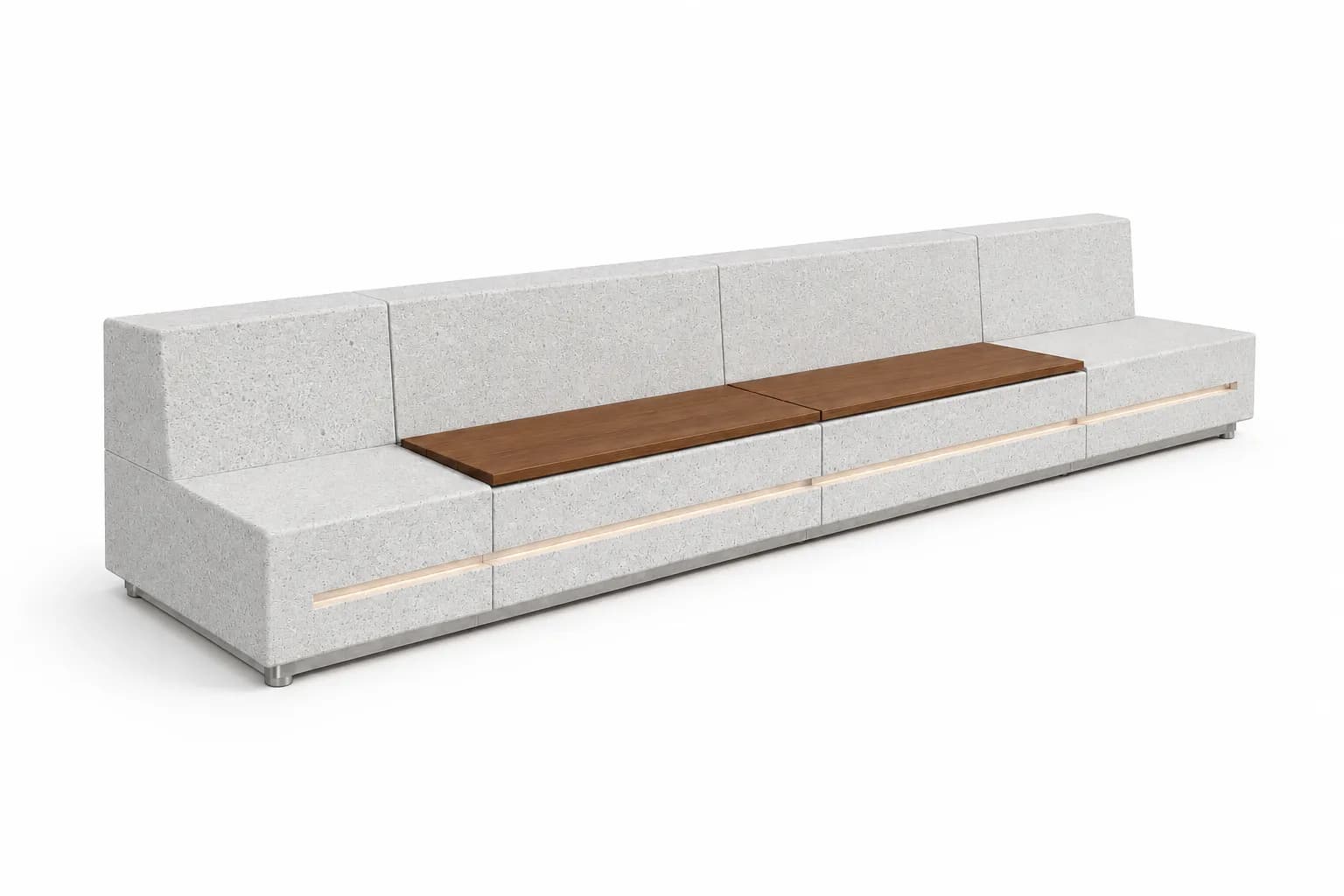
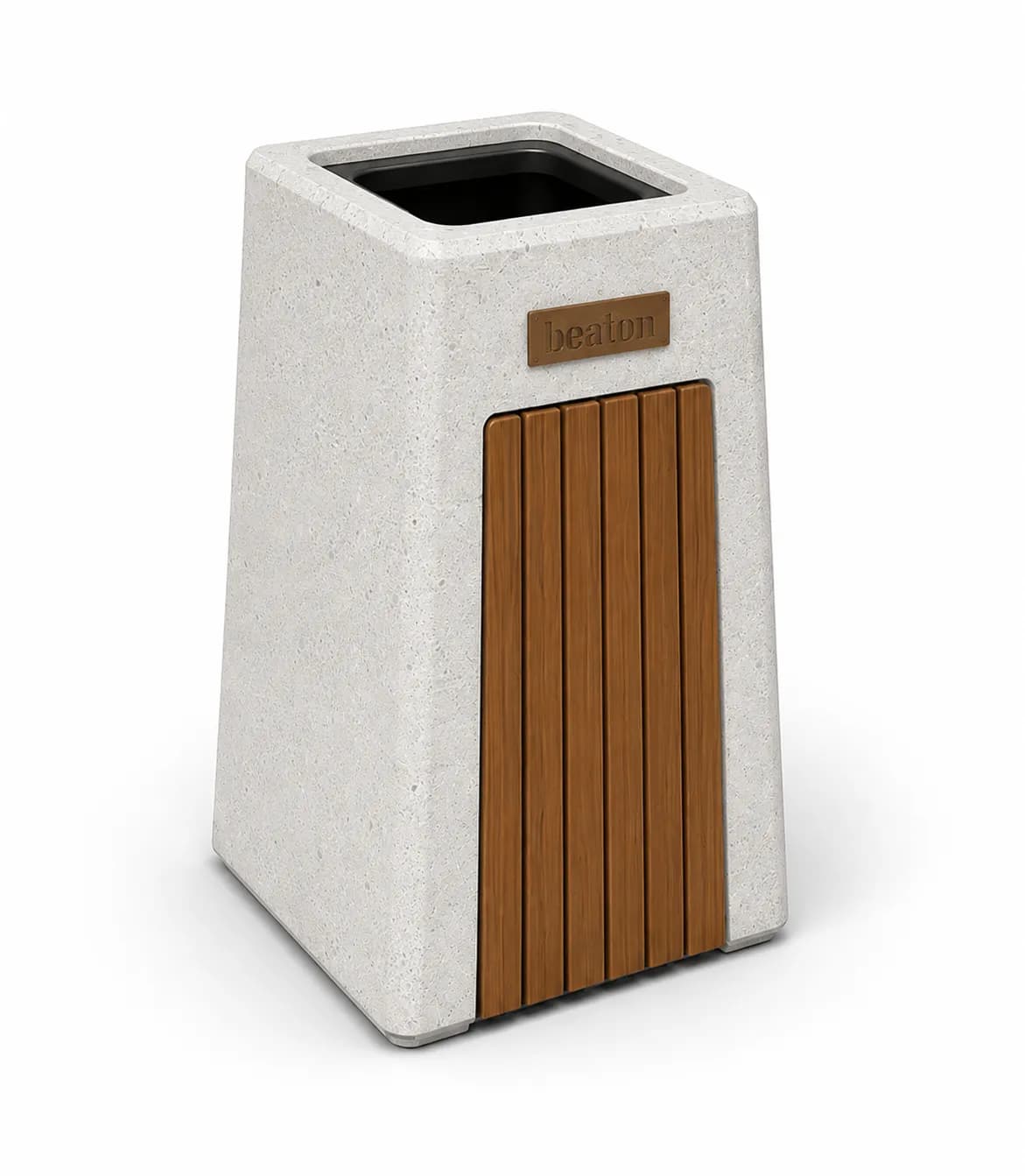
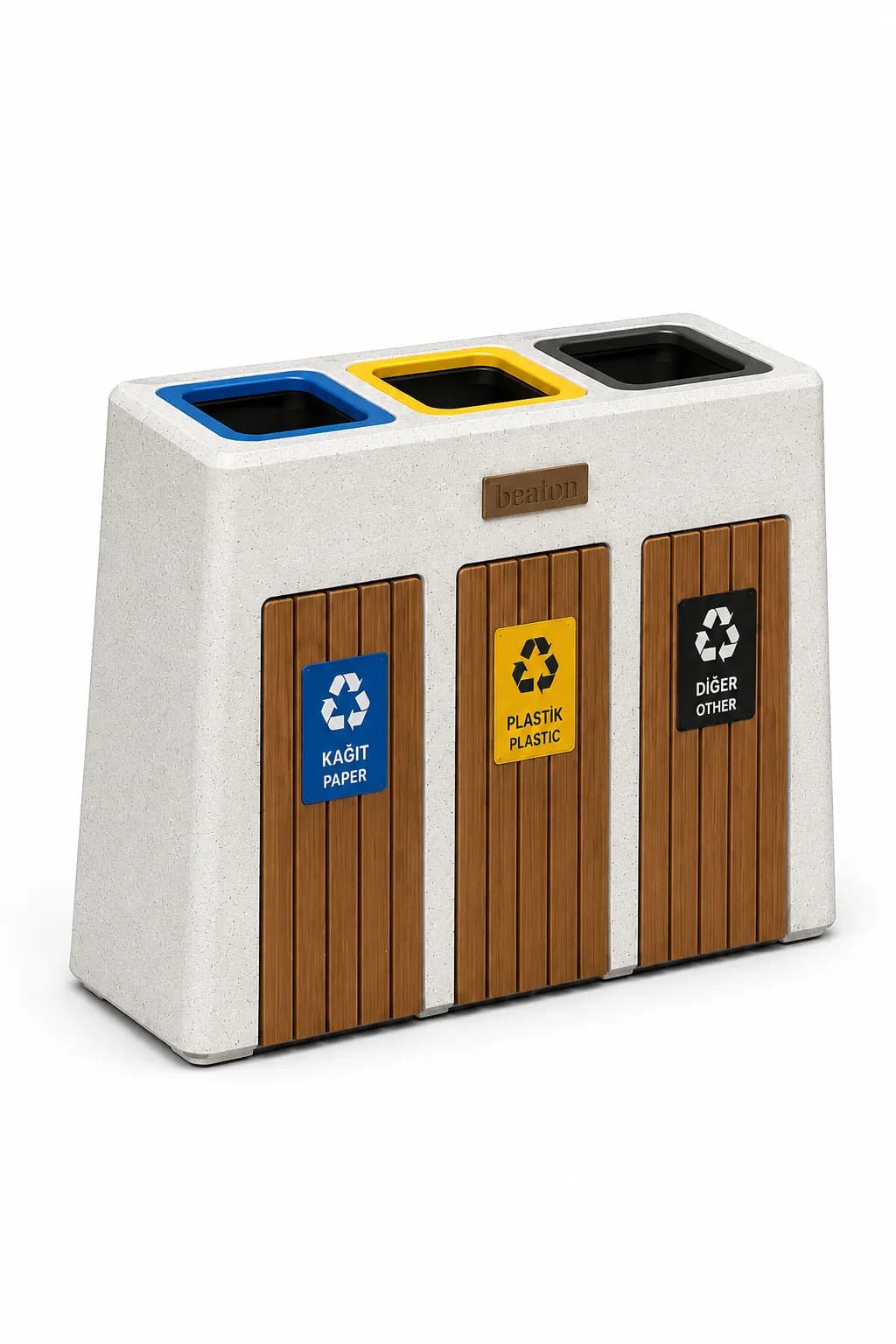
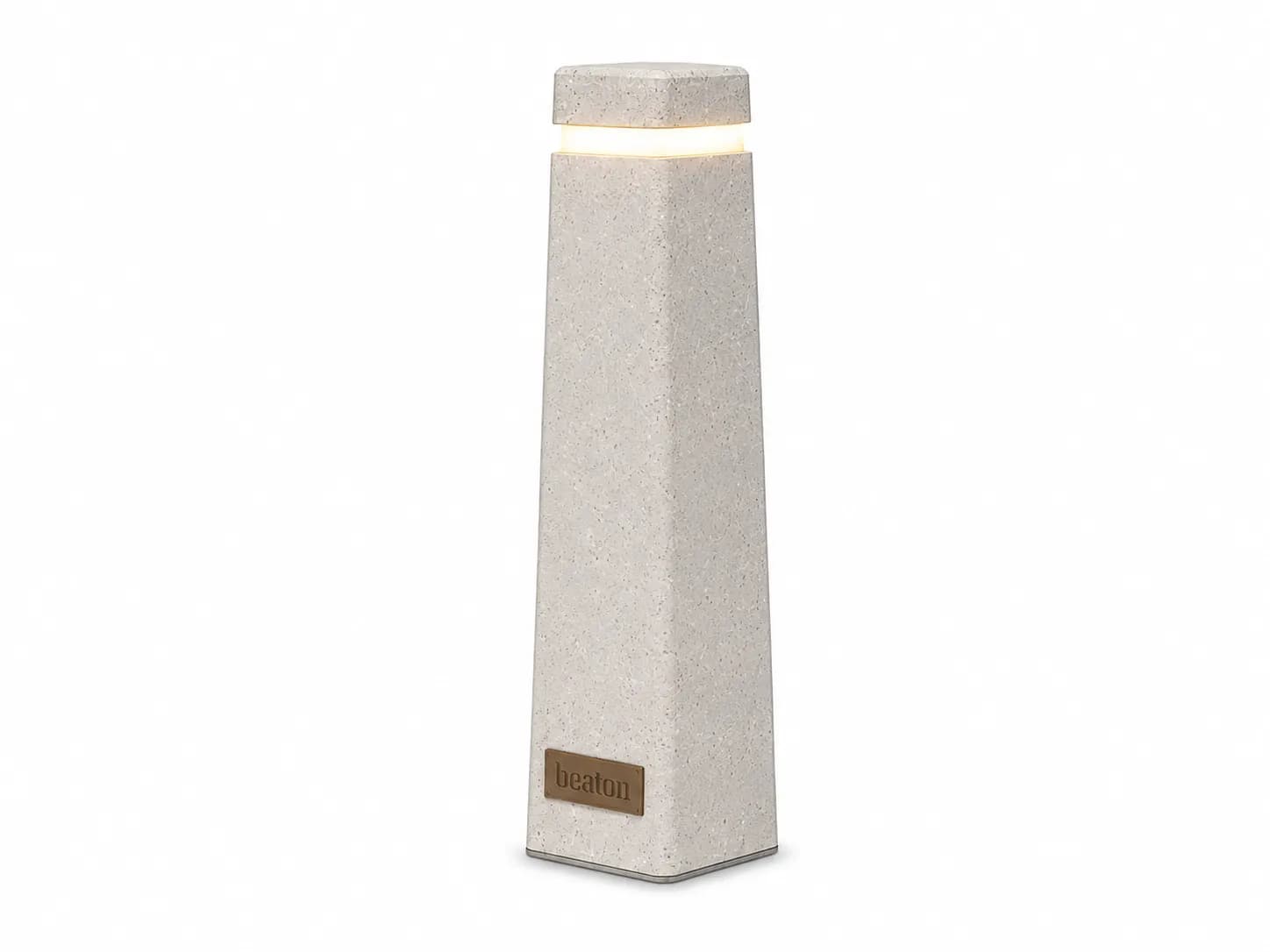
Caven is a comprehensive urban furniture family conceived not around a single object, but around a range of complementary elements capable of shaping public space at different scales. From linear and curved seating to table groups, shaded units, planters and tree-integrated benches, the system allows varied patterns of use to coexist within one consistent design language.
Read the design story
Its character is defined by restrained geometries, softened edges and a controlled relationship between concrete and timber. While strong linear elements can establish direction and order, curved and modular components allow for more flexible spatial compositions. Solutions combining planting and seating introduce landscape directly into hardscape environments, while shaded structures and table groups extend the family from short moments of rest toward gathering and longer periods of use.
This breadth makes Caven adaptable to anything from a small pause point to a larger public-space composition. Used individually or in combination, its elements can organize seating, social interaction, shade, planting and everyday urban functions as part of one coherent system.
Aura
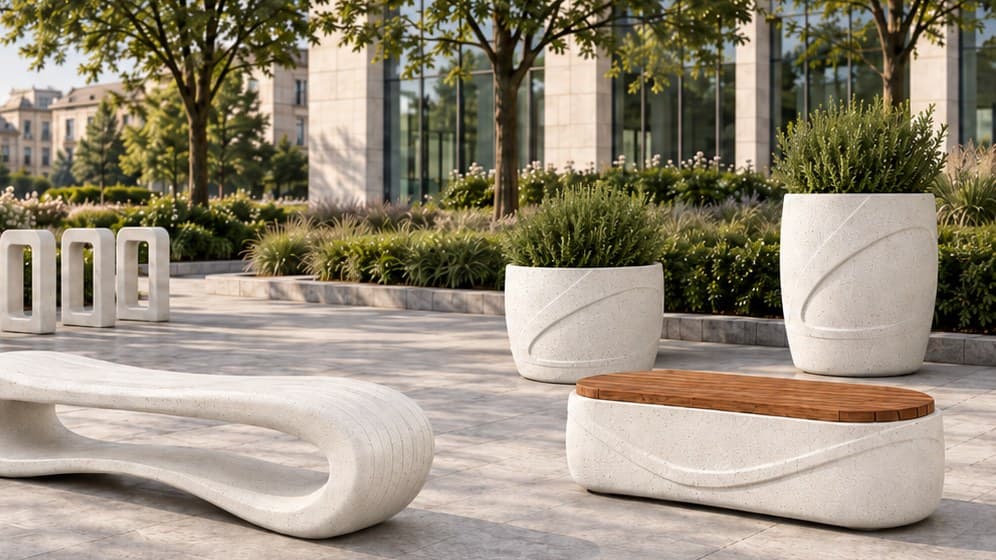
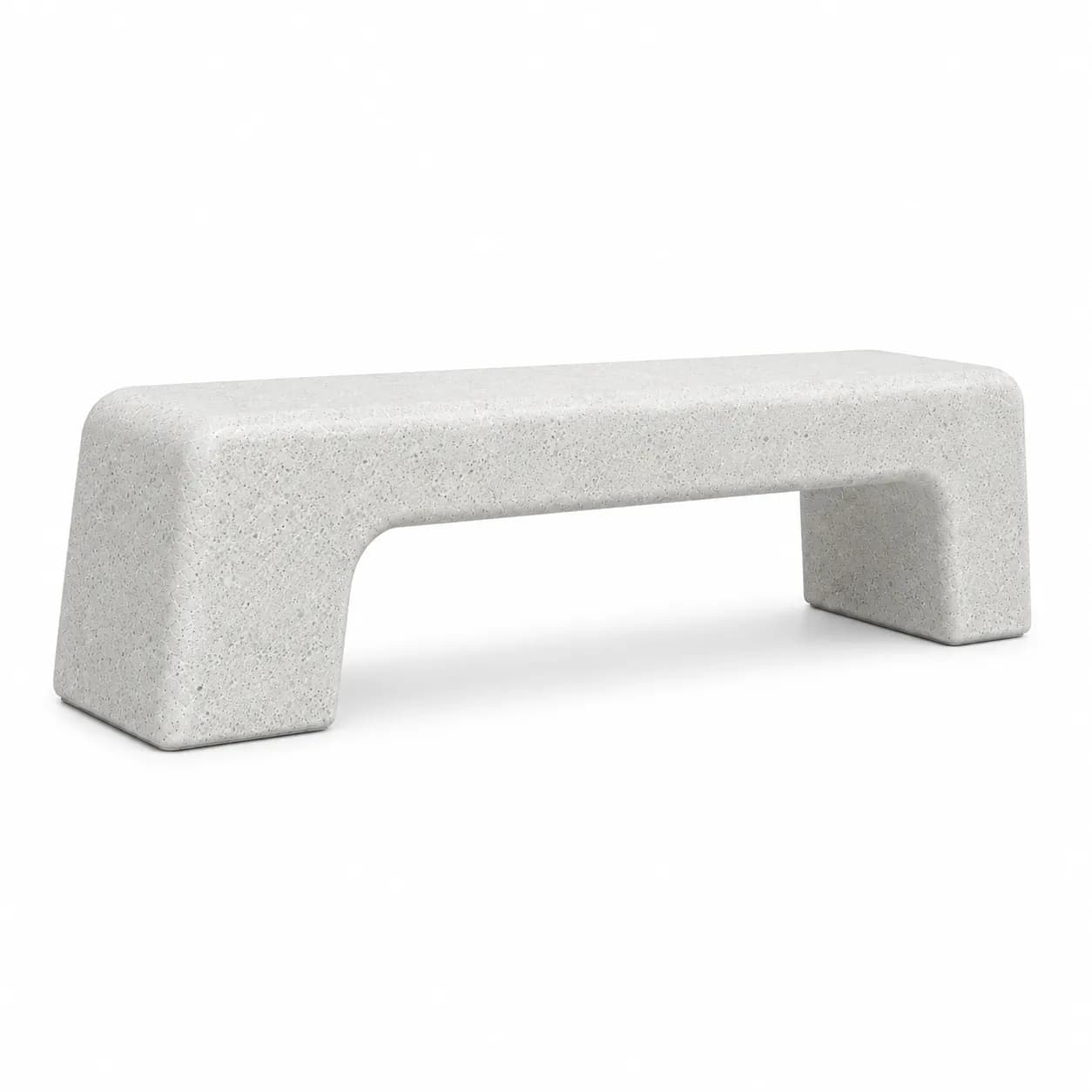
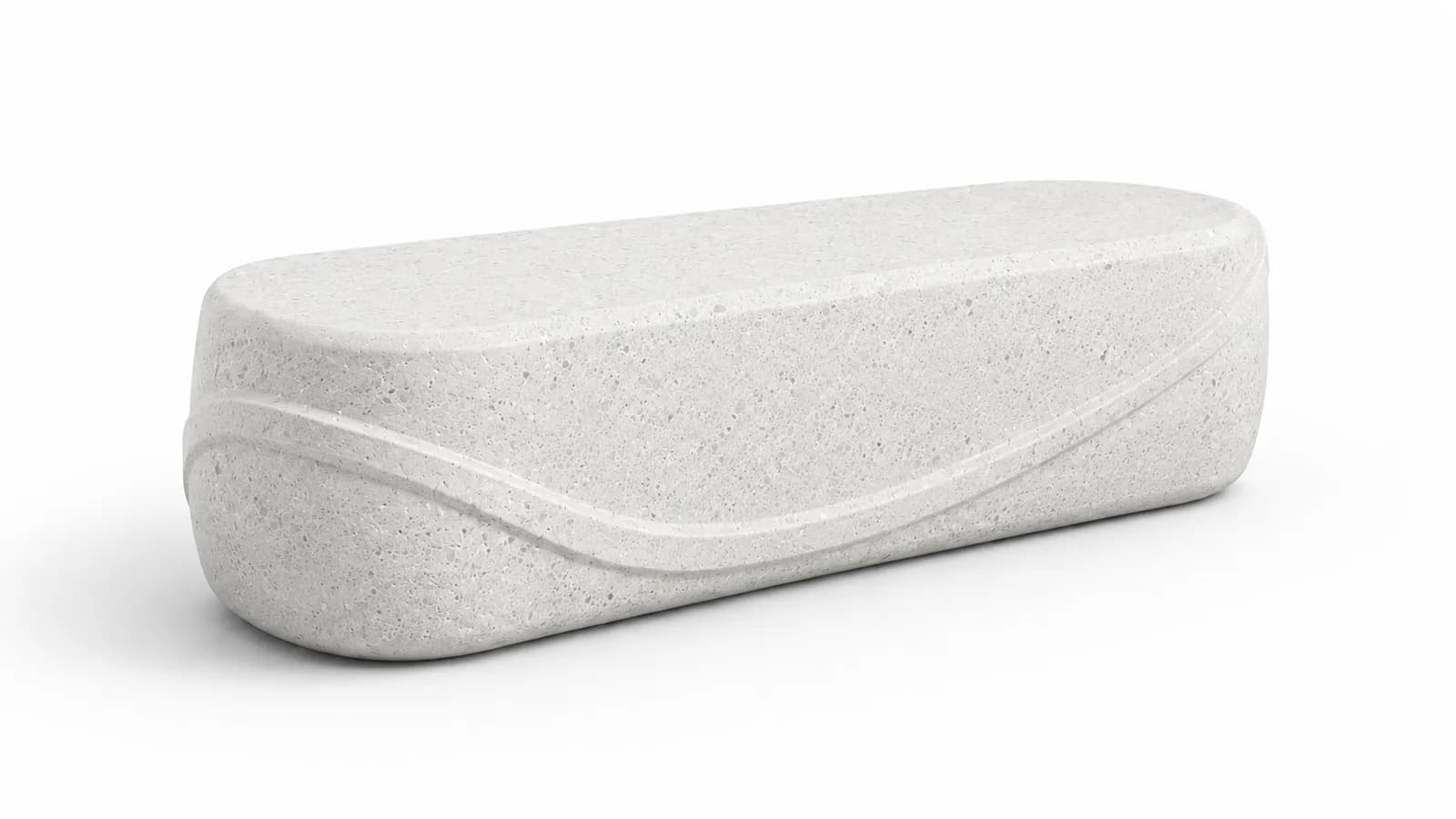
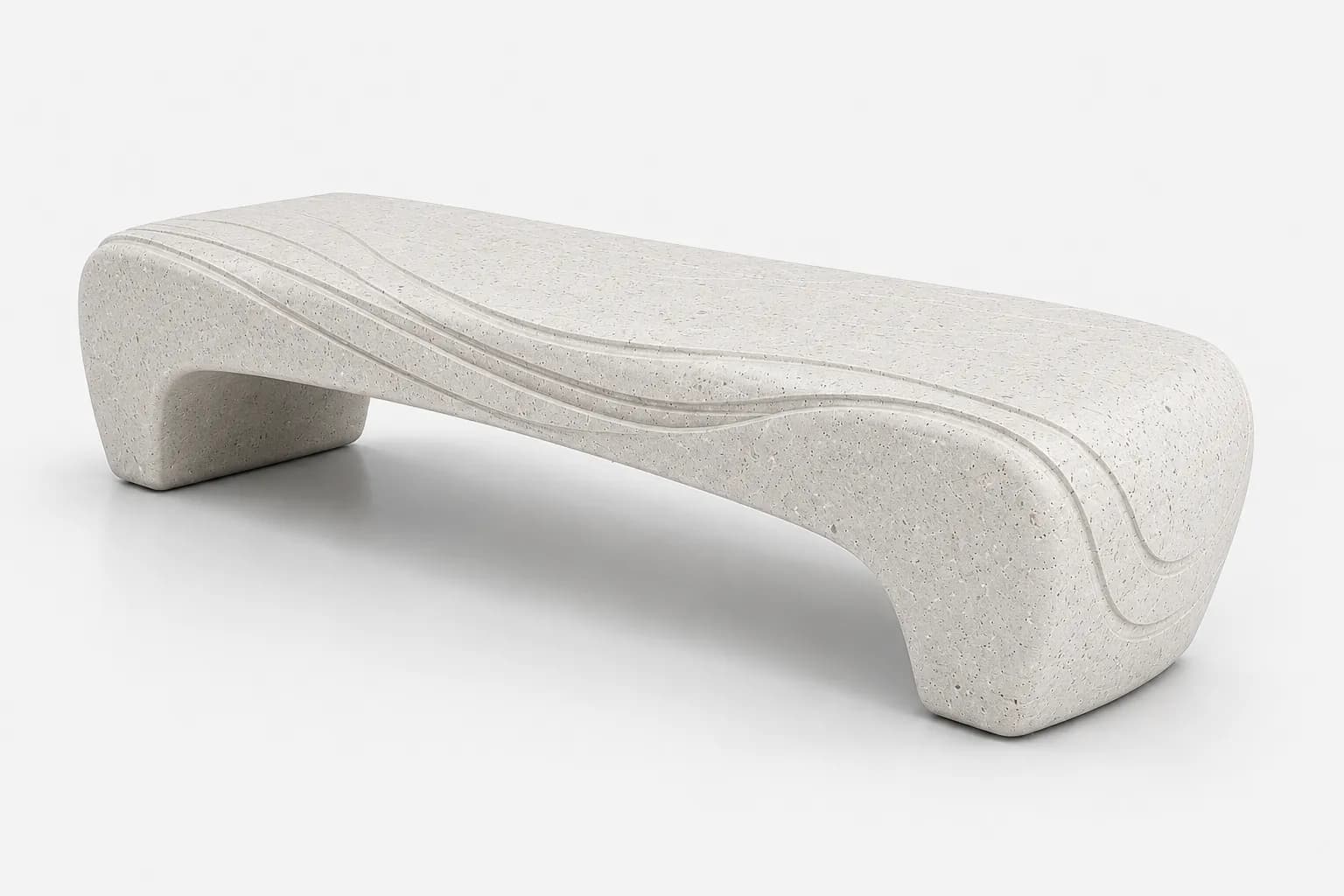
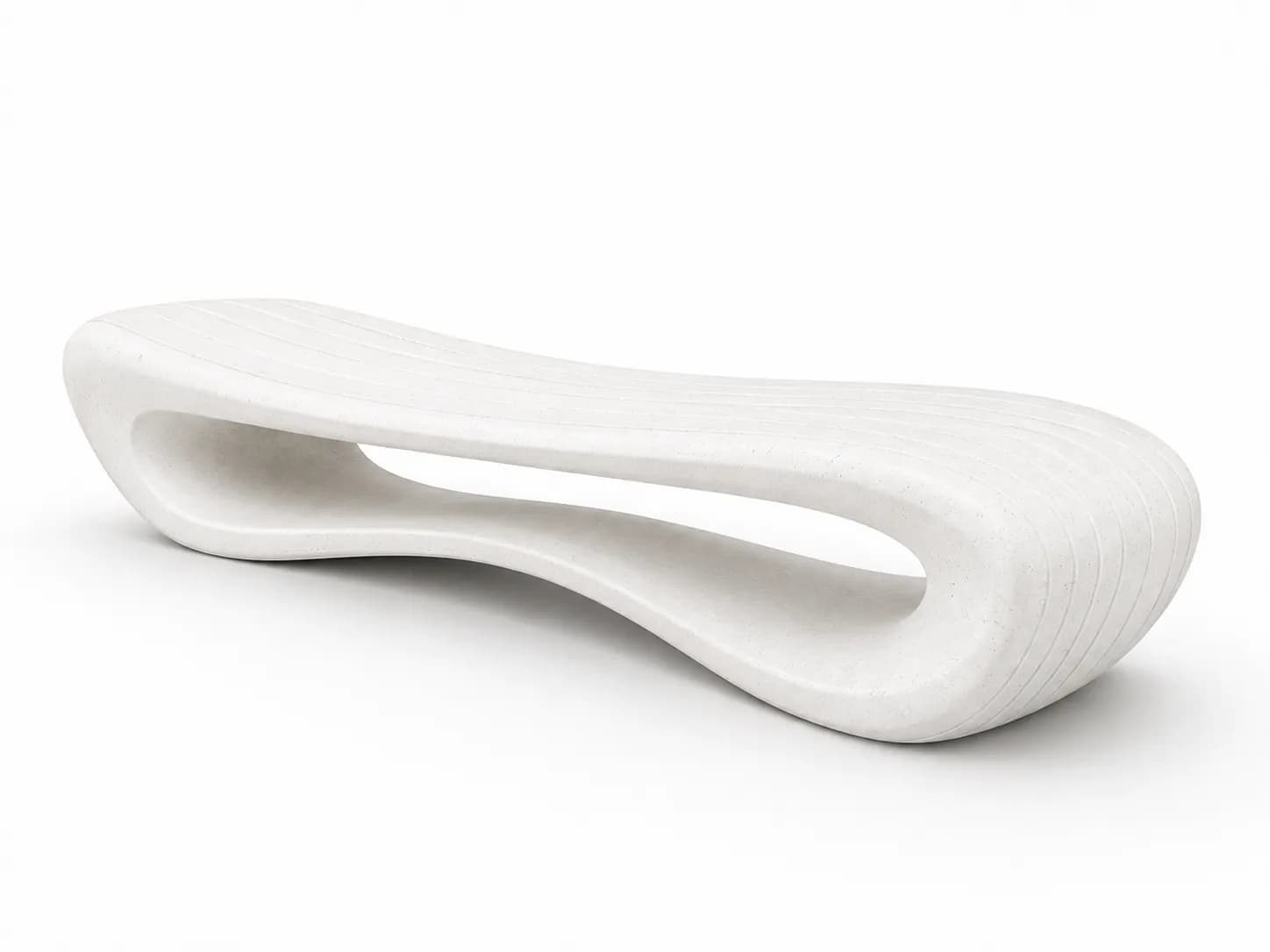
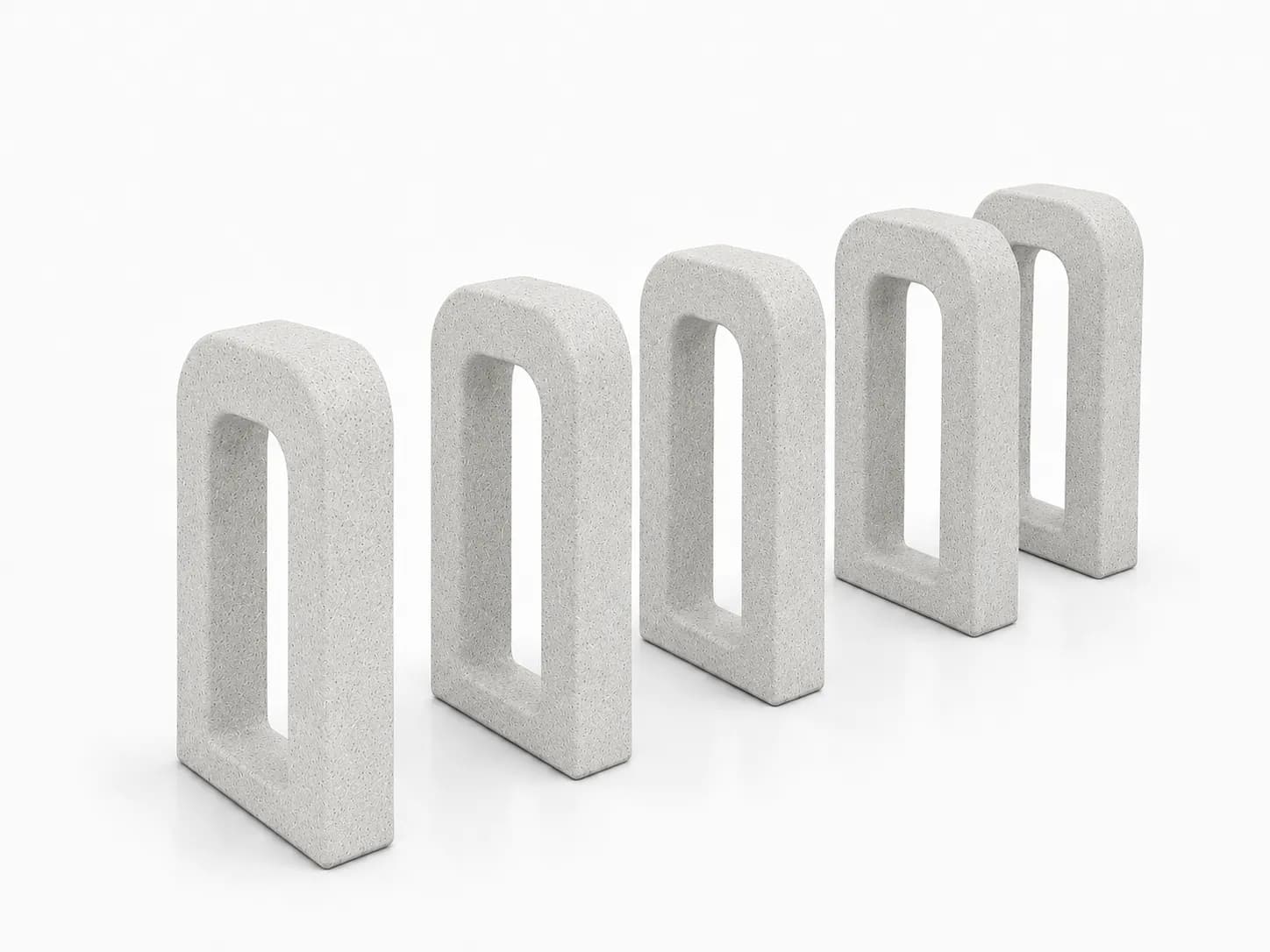
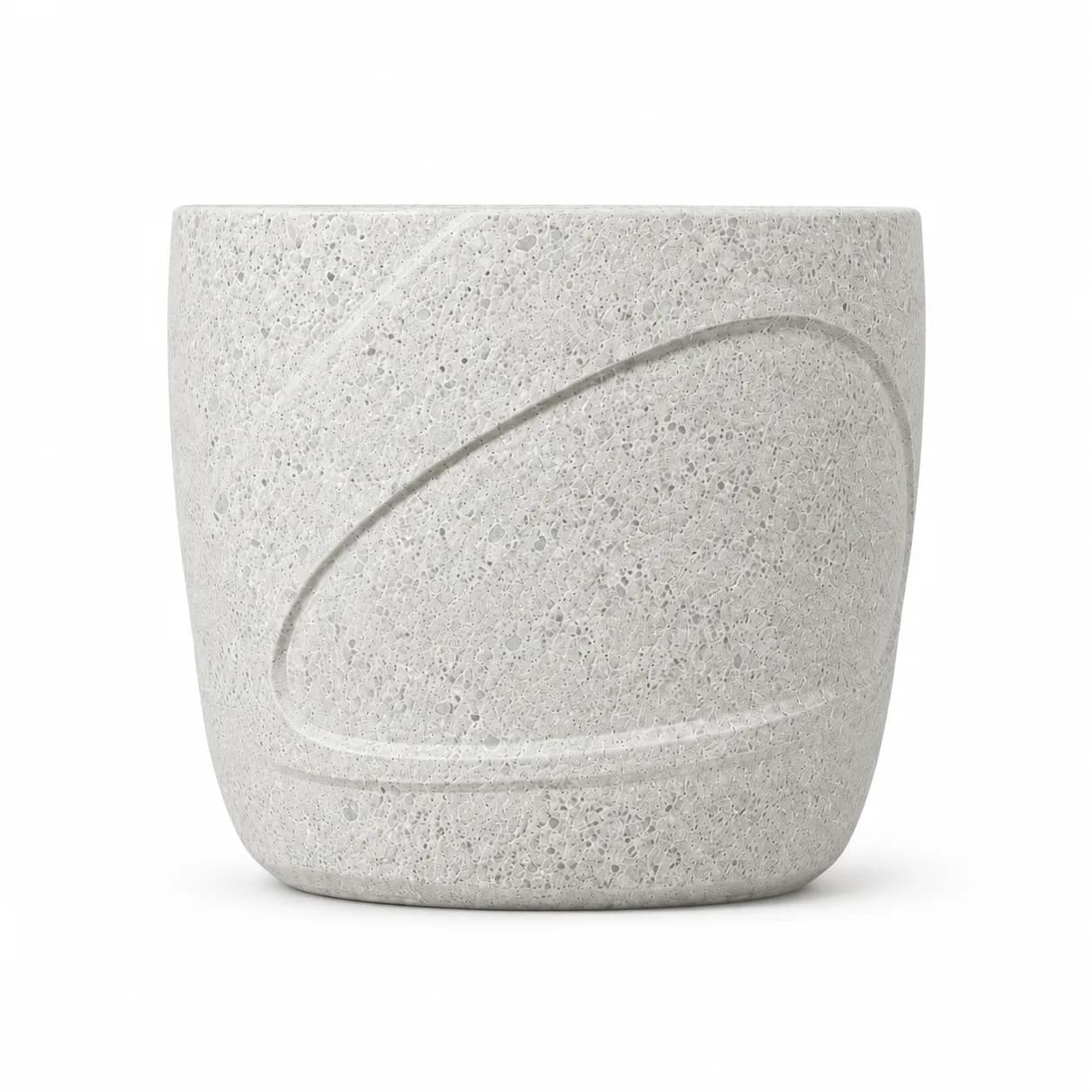
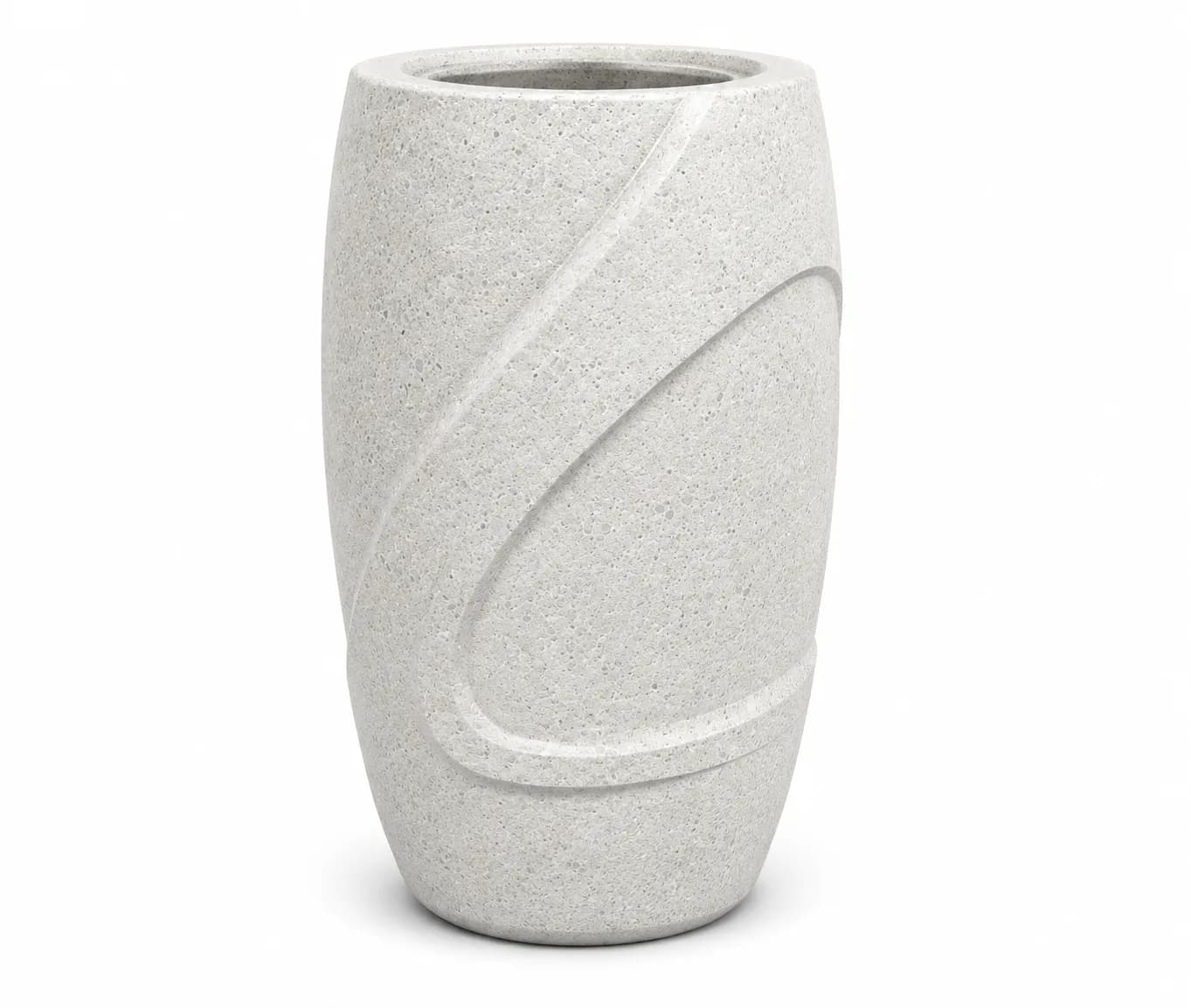
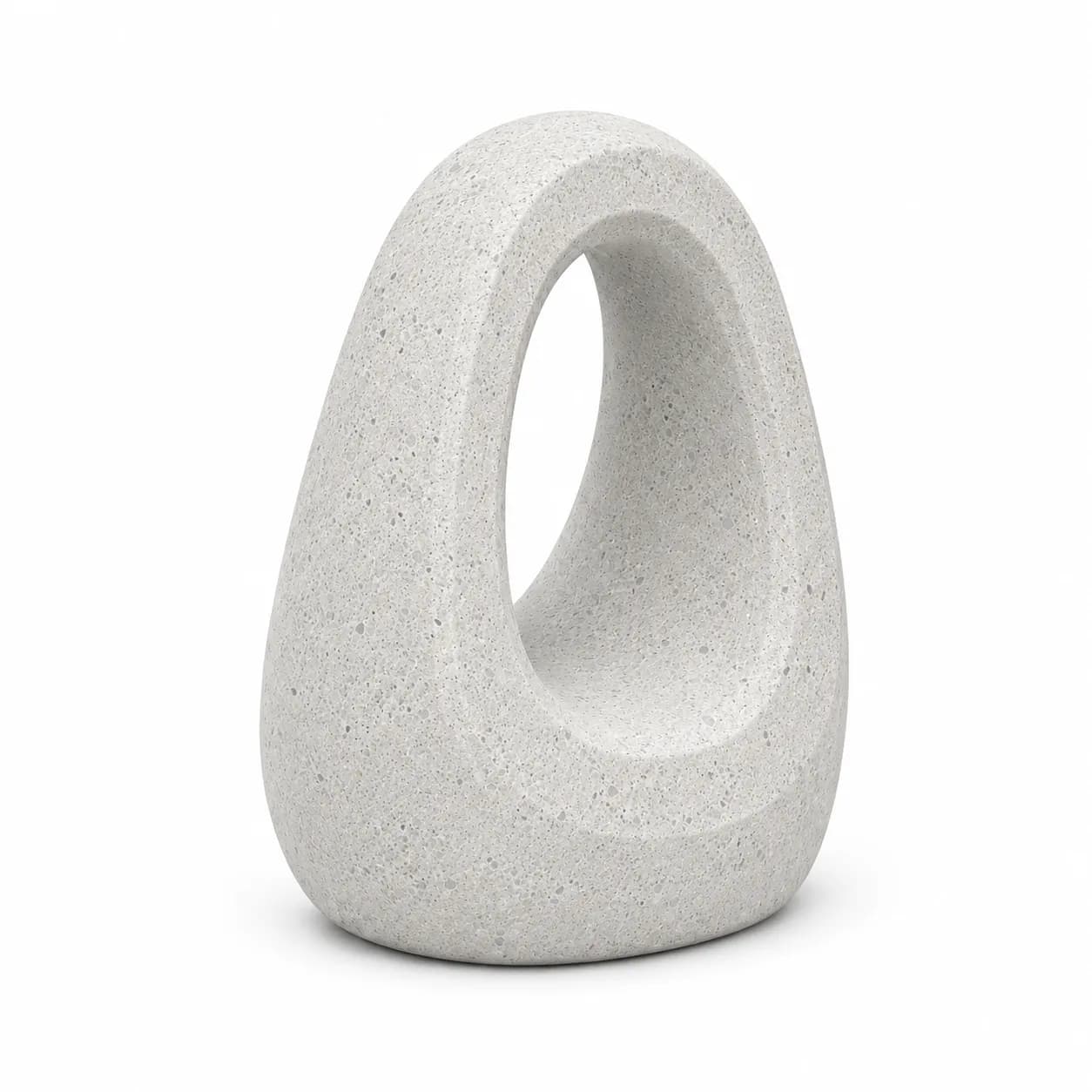
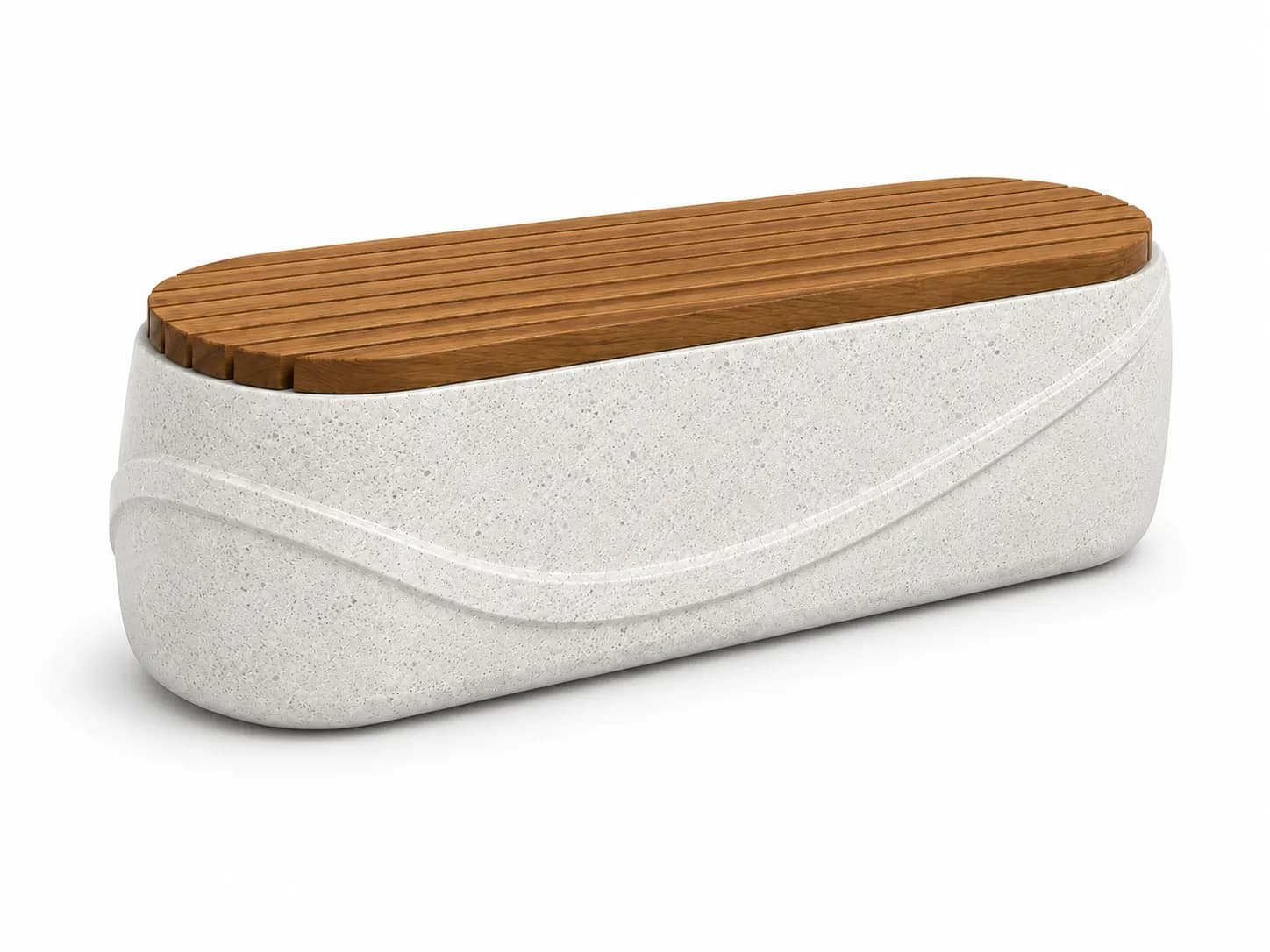
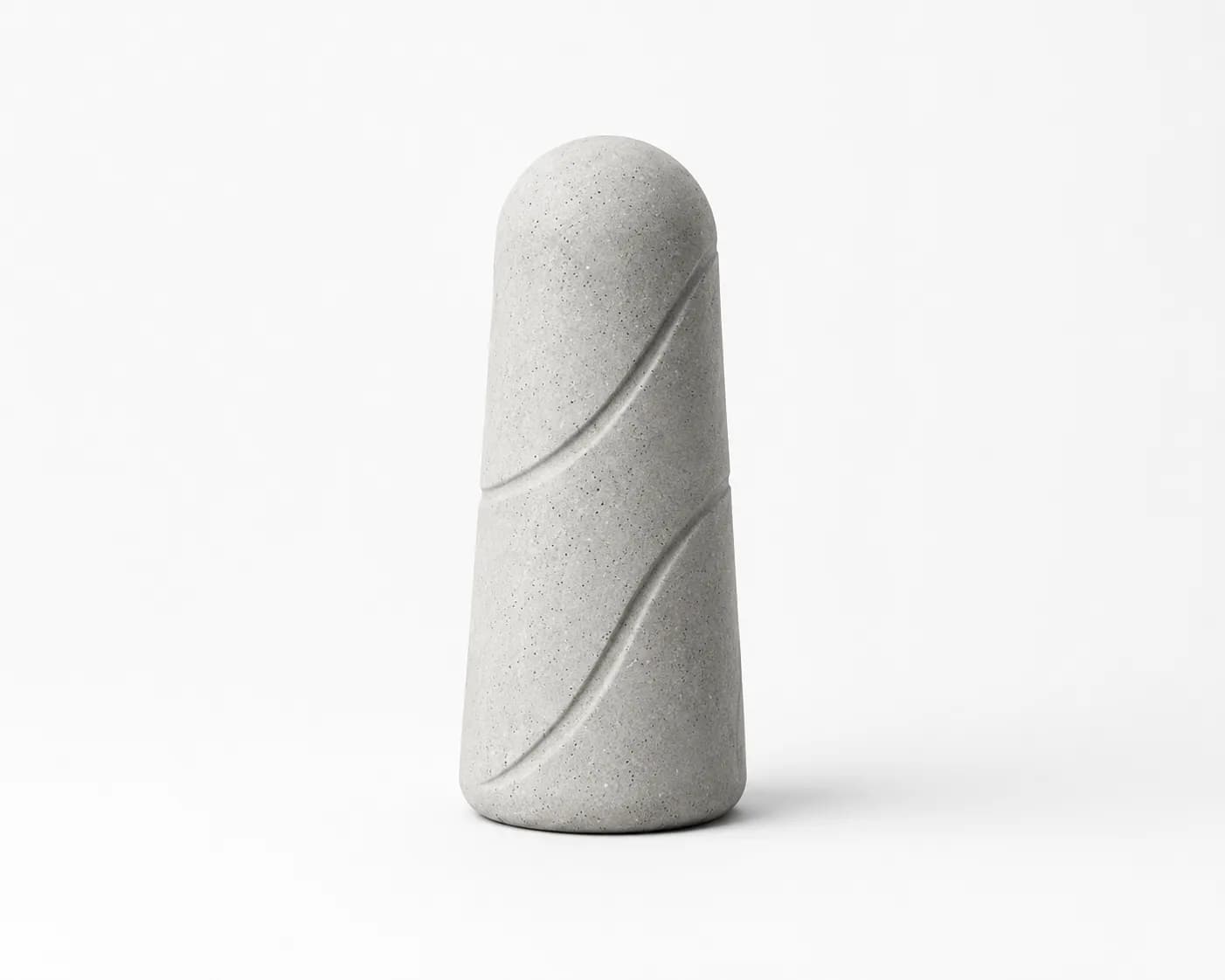
Aura is an urban furniture family that translates flowing lines into a range of public-space functions, giving each element a strong sense of movement. Instead of sharp transitions, soft contours and wave-like traces travel across the surfaces, visually lightening the solid character of concrete while creating a distinctive family identity.
Read the design story
In the seating elements, this flow becomes a continuous gesture that shapes the body and defines the user surface. Timber details add warmth to the substantial concrete form, while the bicycle stands reinterpret the same language as open, sculptural frames. In the planter, the rising line across the surface breaks down the mass and establishes a more organic relationship between the object and planting.
Through this recurring sense of flow, Aura allows different urban functions to be read as part of one coherent composition. Across parks, plazas, pedestrian areas and contemporary architectural settings, the family brings seating, planting and bicycle parking together within a fluid and recognizable design language.
Marea
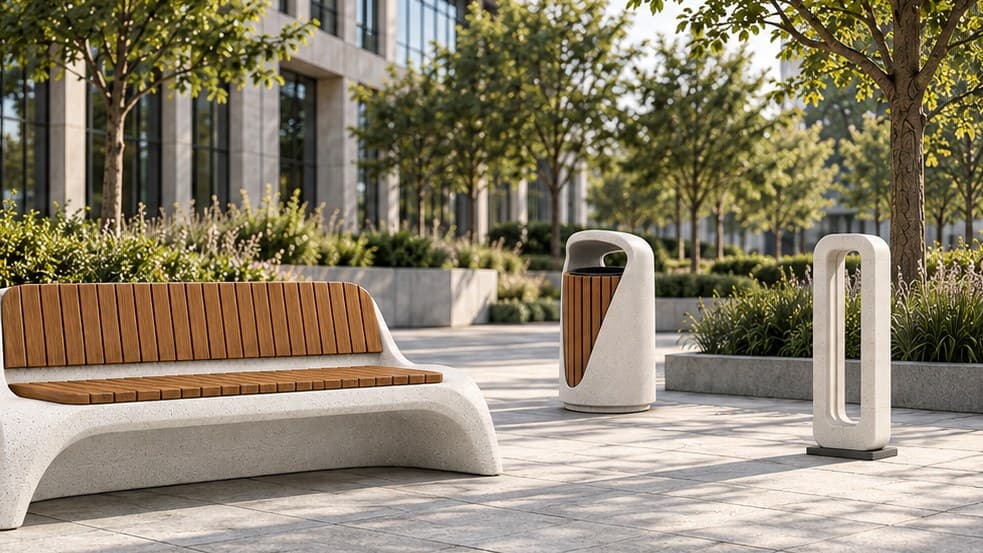
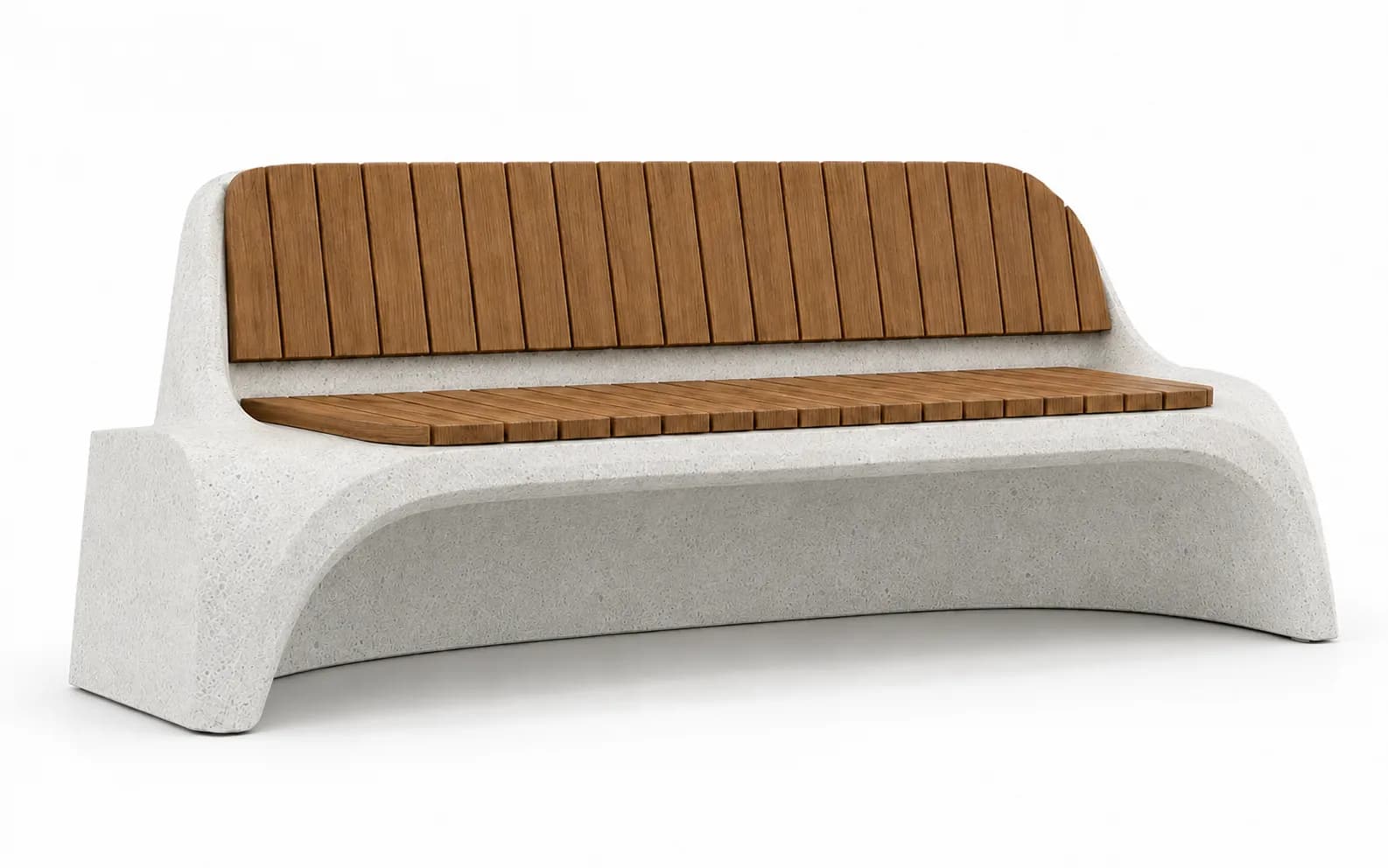
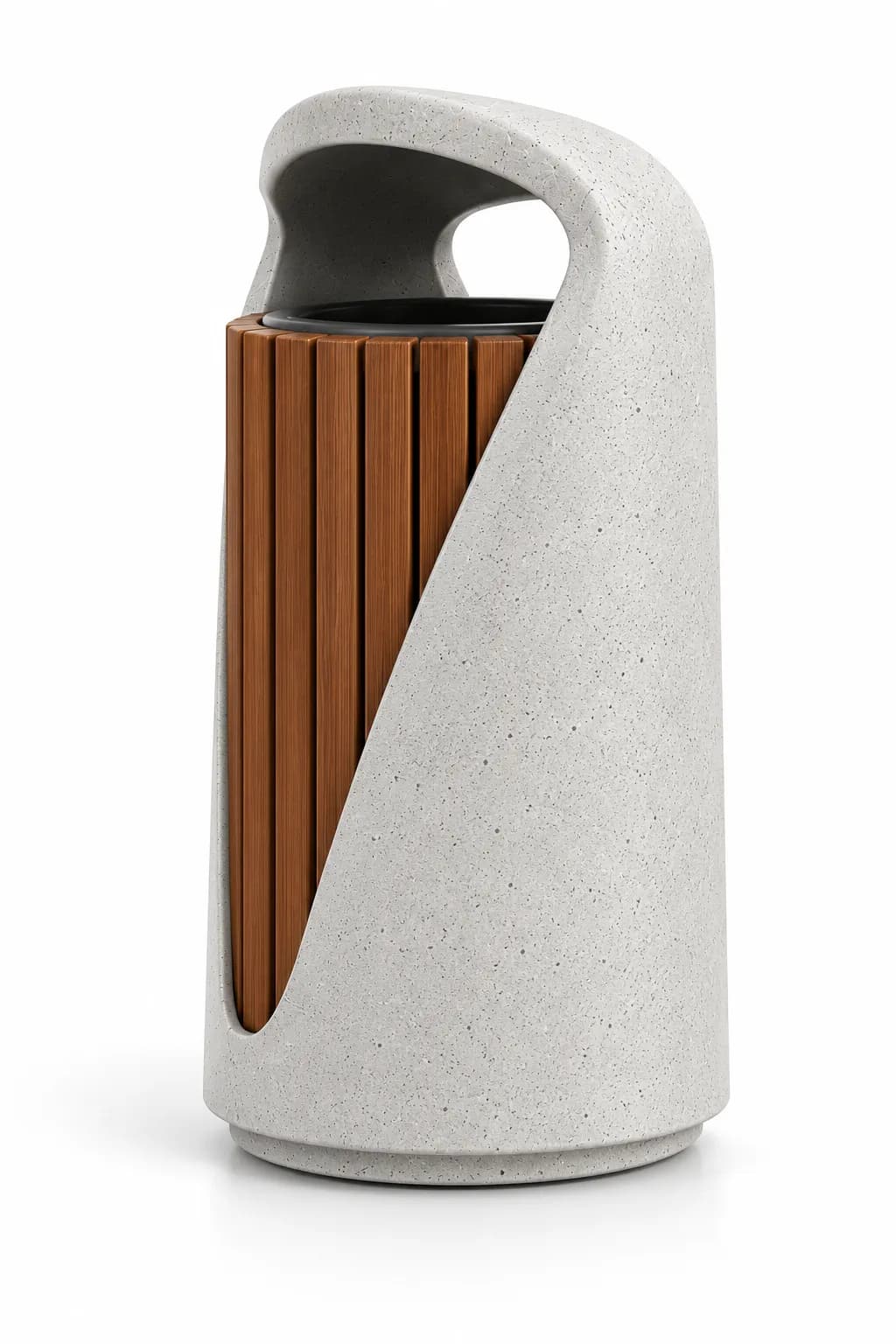
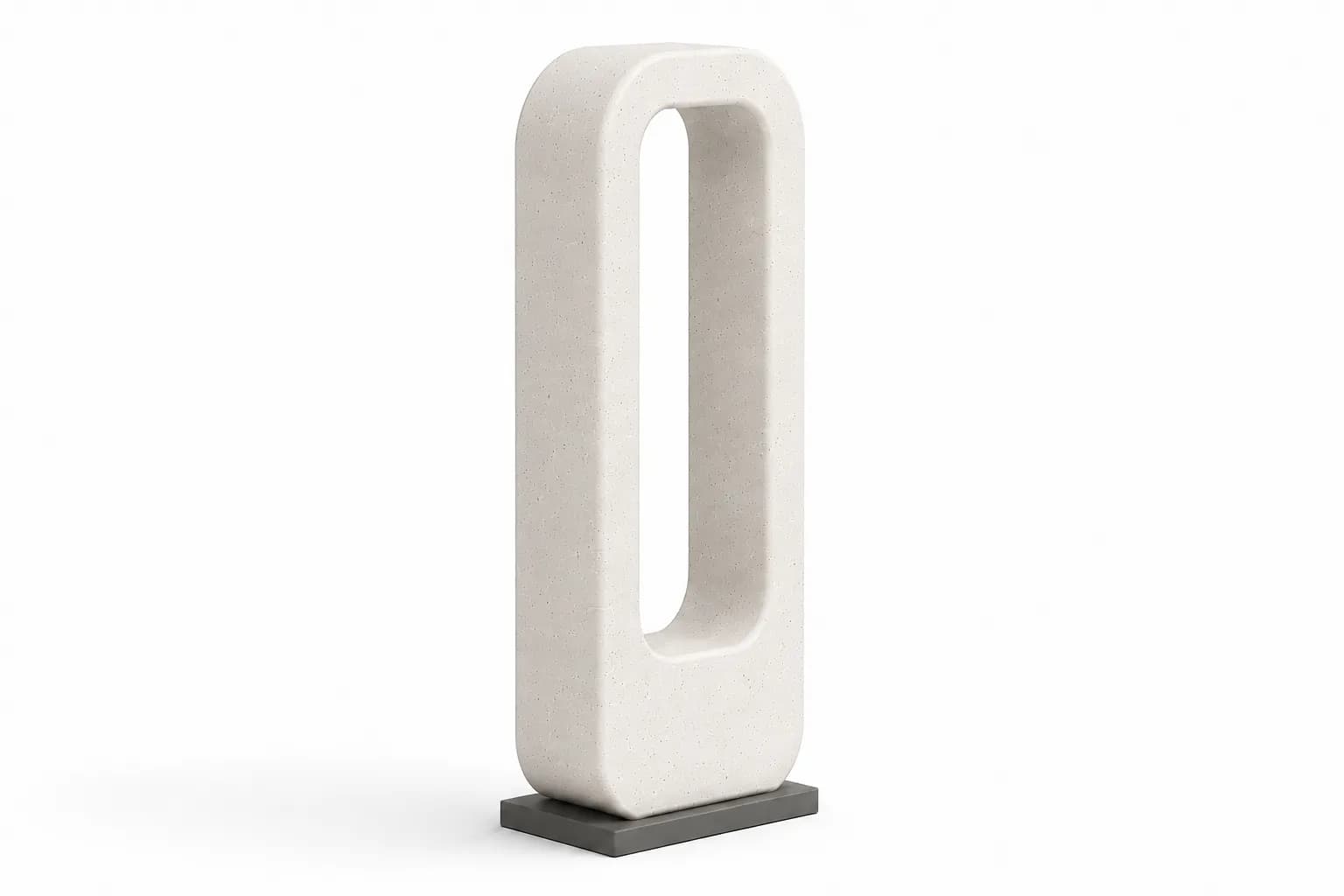
Marea is an urban furniture family shaped by the idea of continuous lines evolving into different public-space functions. Rounded transitions and carved openings visually lighten the solid nature of concrete, giving each element a sense of movement and flow.
Read the design story
In the bench, the form rises from the ground to create a continuous shell around the seating surface, while timber introduces warmth and tactile comfort. In the litter bin, the concrete body wraps around the functional inner volume, with the opening between materials becoming a defining design detail. The bollard reduces the same language to its purest expression: rather than a solid mass, it frames an open void with a slender, recognizable silhouette.
This shared formal language allows Marea's different elements to read as one coherent family across the public realm. Used individually or together in plazas, pedestrian routes, parks and contemporary architectural settings, Marea brings a fluid and unified identity to the surrounding space.
Stay
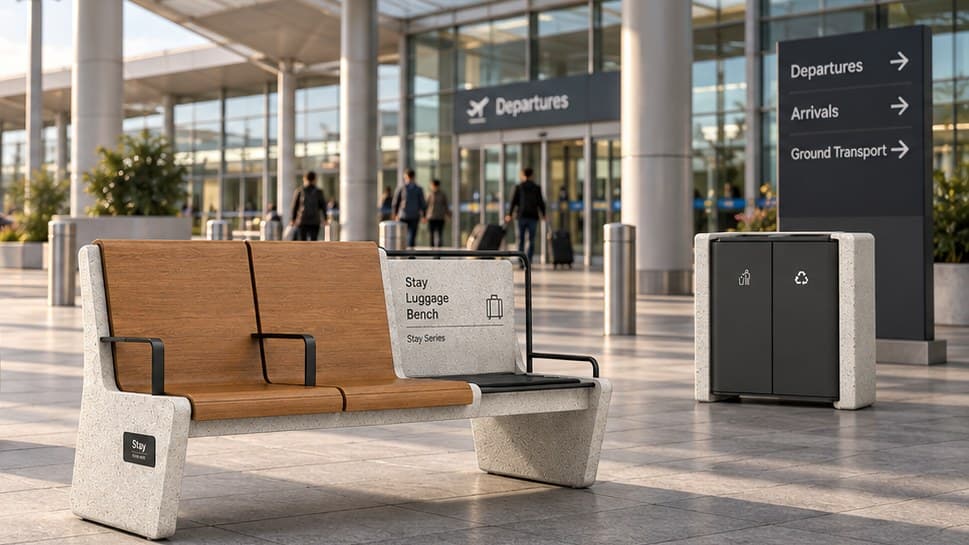
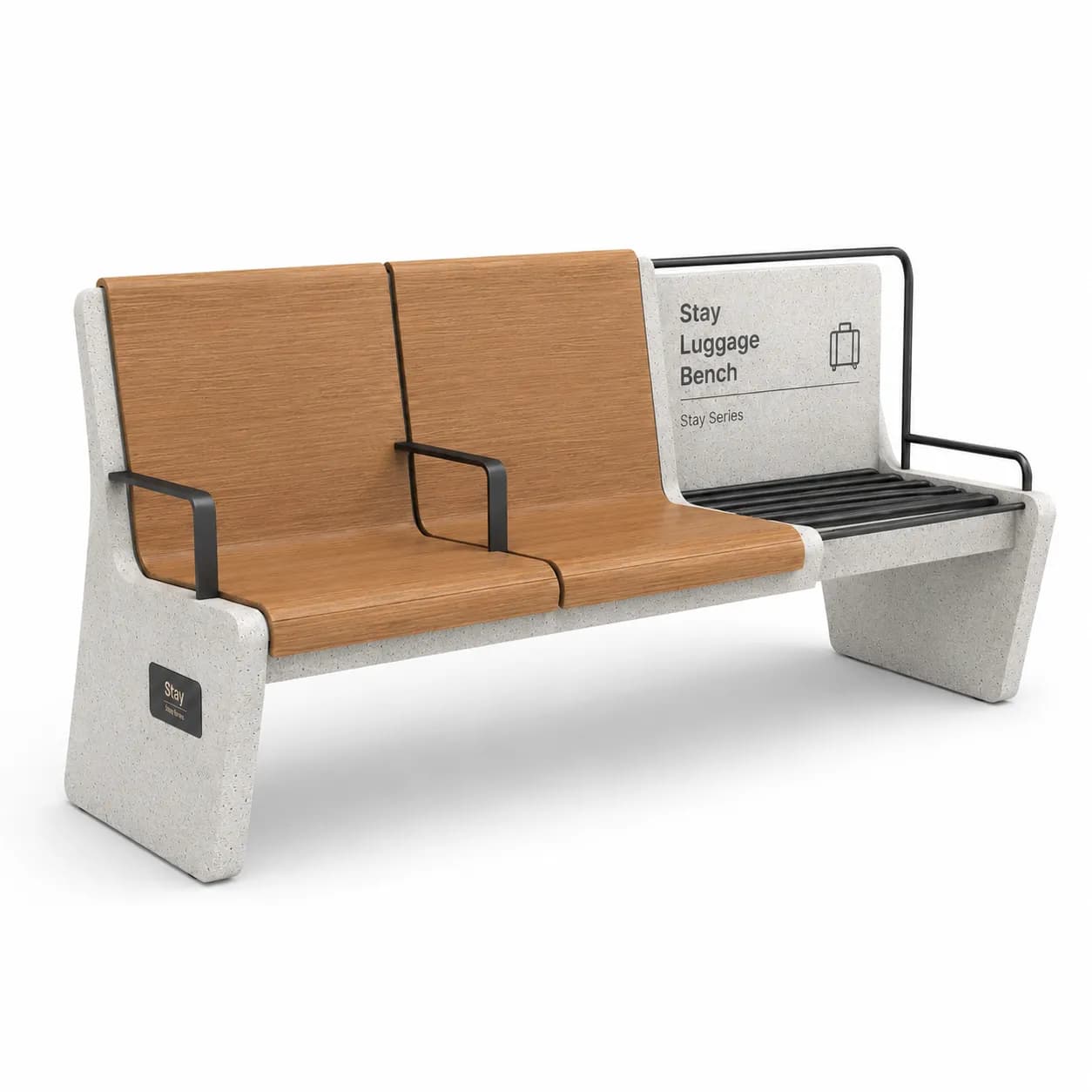
Stay is an urban furniture family developed for public environments shaped by movement, waiting and short moments of rest. Its design approach addresses user comfort not only through seating, but through the supporting functions that organize everyday use within transitional spaces.
Read the design story
The luggage bench combines a comfortable seating surface with a dedicated area for personal belongings, offering a more orderly experience in terminals, stations and waiting zones. Warm timber surfaces are balanced by the solid presence of concrete and the refined line of metal details, creating a clear visual identity without compromising functionality.
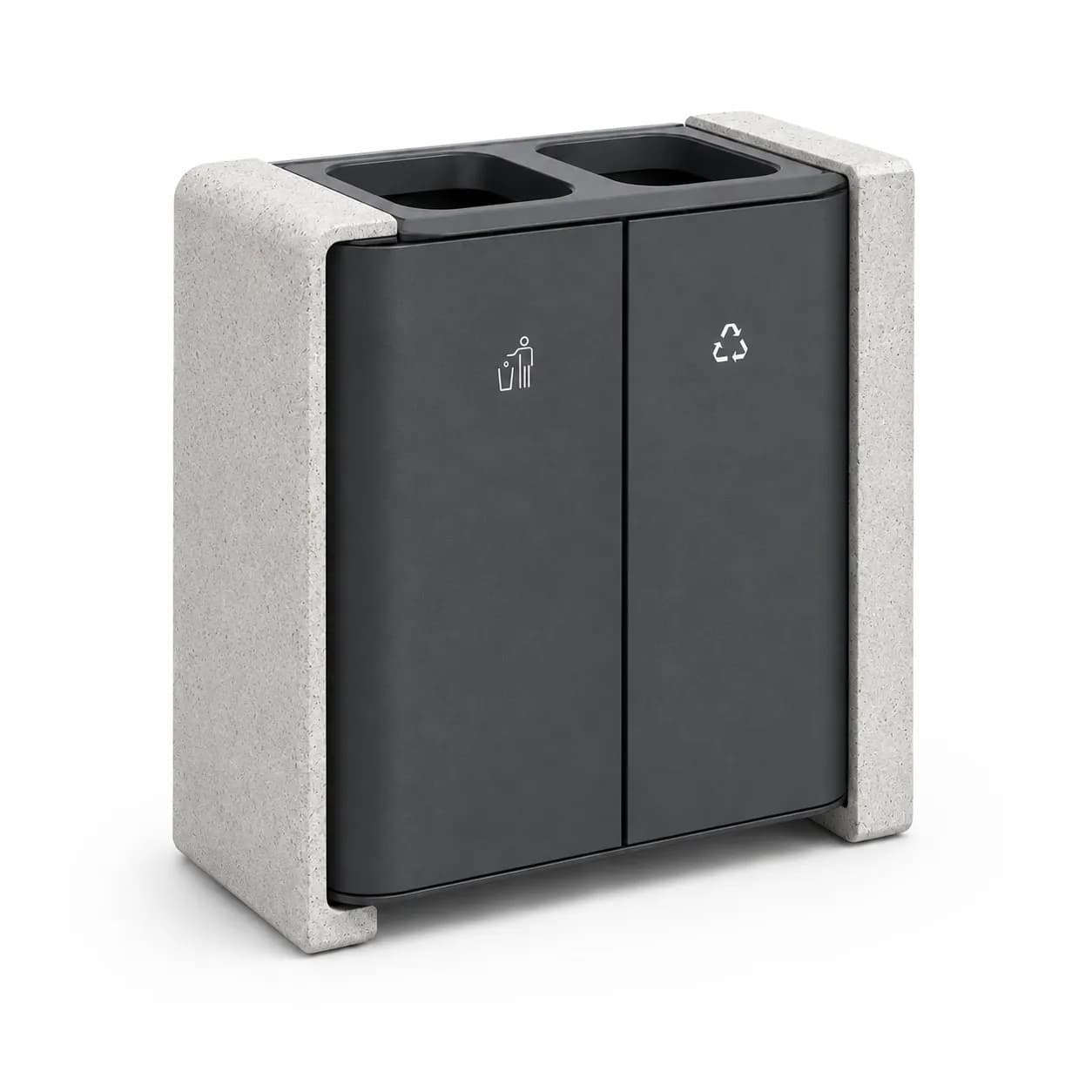
The litter and recycling units continue the same material and formal language, reinforcing continuity throughout the Stay family. Rather than functioning as isolated objects, the elements work together as part of a coherent system that helps structure spaces where people pause, wait and move on — making these environments more comfortable, legible and organized.
More from Beaton
Discover the other families in our catalogue.